


When your IA experiment goes wrong, it feels personal
The moment you realize your experiment has drifted off the map, your brain does something dramatic. It narrates. It claims you’ve ruined your IA. It tells you the data is useless, the deadline is close, and everyone else somehow has perfect results.
But science doesn’t work like that, and neither does a strong IA.
In real labs, “messing up” is often the most honest part of the process. Things spill, sensors fail, samples contaminate, room temperature changes, and someone forgets to zero the balance. The difference between a weak IA and a strong IA is rarely whether everything went smoothly. It’s whether you can recognize what happened, explain its impact, and take intelligent next steps.
This guide is a calm recovery plan for IB students preparing for exams and juggling coursework stress. We’ll turn the problem into a plan.
The quick checklist (do this before you touch anything)
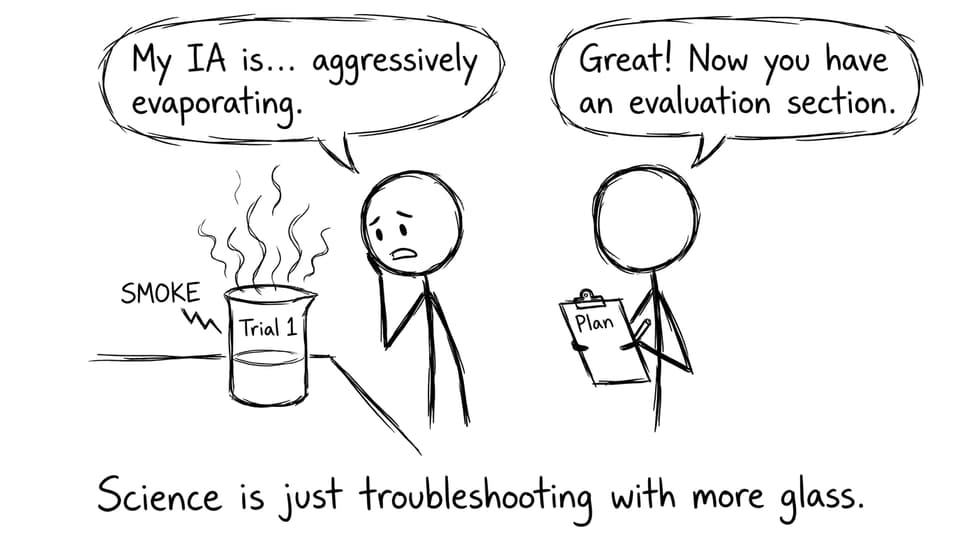
When your IA experiment goes wrong, use this short sequence to stop panic from making it worse:
-
Pause for 60 seconds and write what happened in one sentence.
-
Label the issue: procedural, measurement, materials, or environment.
-
Save evidence: photos, raw readings, instrument screens, timestamps.
-
Don’t “fix” the setup yet. Document first.
-
Identify what you can still use: method write-up, tables, pilot data, uncertainty analysis.
-
Book help early: teacher first, coordinator if it affects deadlines.
If you need models of what examiners reward in planning, method, and evaluation, start with RevisionDojo’s IB IA Guides. They’re useful when your brain is noisy and you just want structure.
Stay calm, but be specific: what kind of mess-up is it?
Not all experimental failures mean the same thing, and your response should match the failure.
Procedural errors (you did a step wrong)
Examples: wrong concentration, wrong timing, didn’t control a variable, misread a measuring cylinder, used the wrong setting on a sensor.
What to do:
-
Write the exact step that failed.
-
Explain why that step matters to the dependent variable.
-
Decide whether you can redo only that stage or must rerun trials.
This kind of error is painful, but it’s also the easiest to write about well in an IA because the cause-and-effect story is clean.
Measurement errors (the numbers are unreliable)
Examples: balance not tared, inconsistent human reaction time, parallax error, sensor drift, too few decimal places, values hitting a ceiling/floor.
What to do:
-
Check calibration and resolution.
-
Record uncertainties properly.
-
Add repeated trials if time allows.
If you’re unsure what “good” looks like, look at how sample reports present their data. RevisionDojo’s Sample IB Biology IA walkthrough is a practical benchmark even if you’re not a Biology student, because the structure transfers.
Materials problems (your stuff wasn’t what you thought)
Examples: contaminated cultures, old reagents, impure samples, wrong species, inconsistent masses, faulty batteries.
What to do:
-
Save labels and batch information.
-
Note storage conditions.
-
Replace materials and run a small pilot before committing.
Environmental issues (the room sabotaged you)
Examples: temperature fluctuations, humidity changes, vibration, light variability, background noise, airflow.
What to do:
-
Record the conditions as data.
-
Add controls or shielding.
-
If you can’t control it, acknowledge it and quantify the likely impact.
A strong IA doesn’t pretend the world is perfect. It shows you understand how reality affects results.
Document everything like it’s going into your IA (because it is)
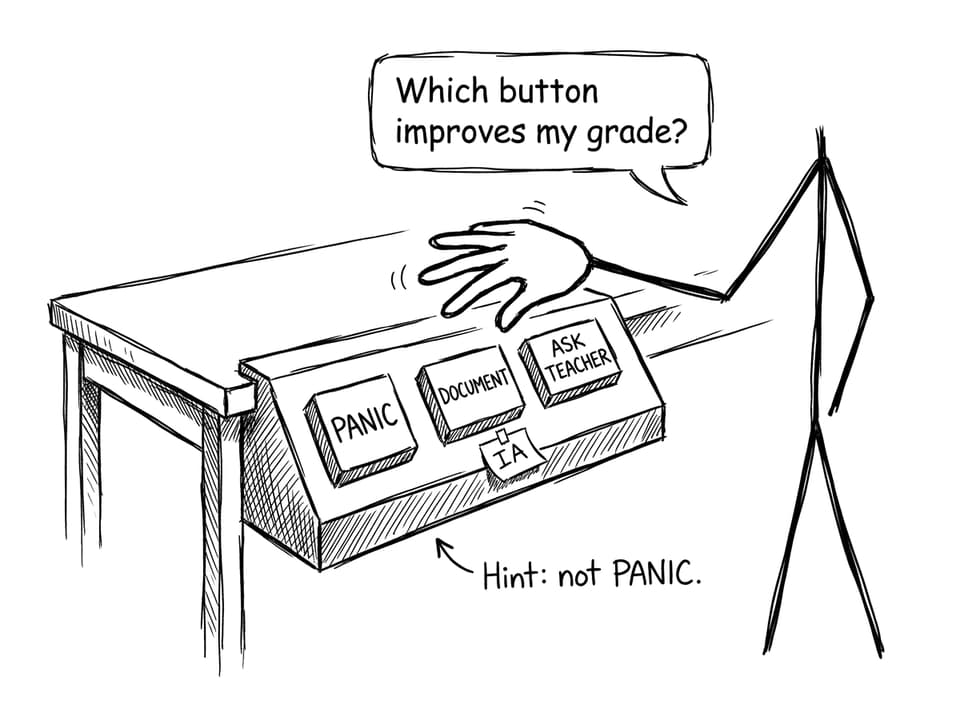
The most common mistake after a mistake is trying to erase it.
Your IA benefits when you can show an honest investigative trail. This doesn’t mean writing a diary. It means capturing the essentials:
-
Date/time and trial number
-
What changed (even accidental changes)
-
Exact measurements, including “weird” ones
-
Photos of setup and results
-
Screenshots of data-logger output
-
A short “possible reasons” list (not conclusions yet)
This becomes powerful material for evaluation. If you want to see what top-level evaluation looks like, use RevisionDojo’s guide on How to Write a Compelling IA Evaluation Section.
Talk to your teacher early (and bring a one-page brief)
A teacher meeting goes badly when you show up with panic but no clarity. Make it easy for them to help.
Bring a one-page brief:
-
Research question
-
Method summary (5-8 bullet points)
-
What went wrong (one paragraph)
-
Evidence (photo/data snippet)
-
Your best guess: 2-3 likely causes
-
Your proposed fix (even if you’re unsure)
Try language like:
“My IA results don’t match expectations. Here’s what I did, here’s where I think it failed, and here are two changes I can test quickly. Can you help me choose the most defensible next step?”
This shows ownership and saves time.
If the failure affects deadlines, loop in your IB coordinator
Not every error needs escalation. But if your experiment failure risks missing internal deadlines (or equipment booking windows), speak to your IB coordinator after you’ve spoken to your teacher.
Keep it professional and solution-focused:
-
Explain the issue in two sentences.
-
Show what you’ve already done to recover.
-
Ask for a realistic option: adjusted deadline, alternative method, or a narrower scope.
Calm communication is part of academic maturity, and it often unlocks flexibility.
Decide: redo, revise, or reposition your IA
Here’s the honest truth: you don’t always need perfect data to score well. You need defensible decisions.
Redo (best when the core method is sound)
Redo if:
-
You can control the key variables better.
-
The equipment works and time allows.
-
Your mistake was procedural and fixable.
Before redoing everything, run a small pilot. Ten minutes of piloting can save three hours of repeating the wrong method.
Revise (best when the method needs tightening)
Revise if:
-
Your range is too small to show a relationship.
-
Your increments are inconsistent.
-
You need more repeats for reliability.
-
Your controls weren’t explicit enough.
If you’re rebuilding your method, RevisionDojo’s guide on How to Design Effective Experiments for a Science IA helps you re-check variables, trials, and control strategies.
Reposition (best when “failure” is the finding)
Sometimes your “mess-up” reveals something real: an unexpected variable, a limitation of an assumption, or a method that’s not robust.
If you can:
-
explain why the issue occurred,
-
show how it influenced the results,
-
and propose a better design,
then you can write a thoughtful IA even if the final dataset isn’t beautiful.
This is where storytelling meets assessment: the examiner isn’t grading your luck, they’re grading your thinking.
Write the “recovery story” into your IA (without sounding defensive)
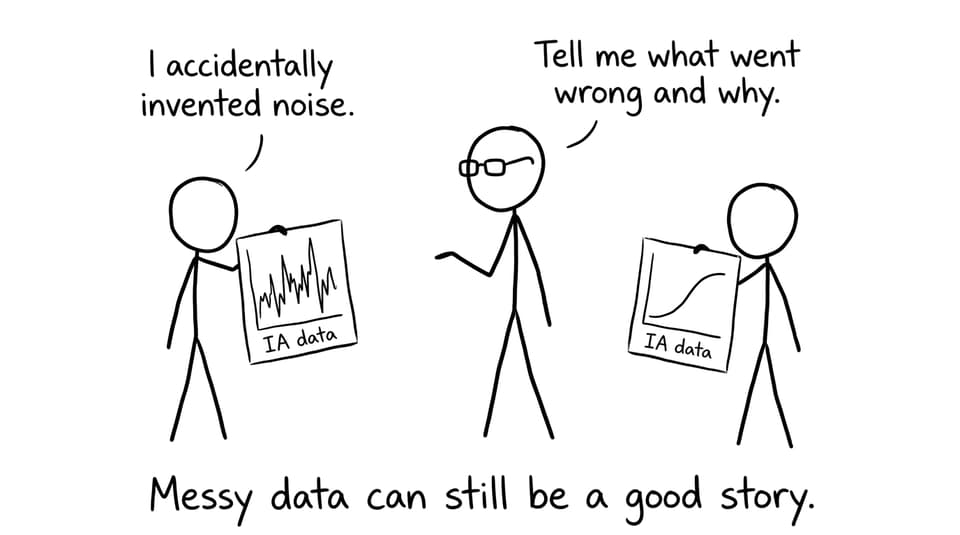
A strong IA reads like a controlled investigation, not an apology letter.
In your evaluation, you can include:
-
What went wrong (precisely)
-
The scientific reason it matters
-
The direction of impact (likely increase/decrease, random scatter, systematic shift)
-
What you did next (method change, extra repeats, better controls)
-
What you would do with more time
This is also a smart moment to “rubric-audit” your draft. If you’re unsure how moderation affects marks, RevisionDojo’s post on How IA Moderation Works (and How to Protect Your Grade) is a steadying read.
Keep exam prep alive while fixing your IA
When an IA breaks, it tries to consume all your attention. That’s dangerous during exam season.
Use a simple split:
-
90 minutes/day on the experiment and write-up (focused, not endless)
-
45-60 minutes/day on exam prep (non-negotiable)
RevisionDojo is built for this exact balancing act. While you repair your IA, you can keep marks moving with:
-
The RevisionDojo App workflow for IB exam prep to stay organized
-
Flashcards for daily recall when your brain is tired
-
Predicted Papers to rehearse timing and stamina under exam conditions
-
A reset routine like IB: I Study All Day but Remember Nothing when motivation collapses
And if your coursework stress is making everything feel heavier, RevisionDojo’s Coursework feature hub is a quick way to see what strong submissions look like and stop guessing.
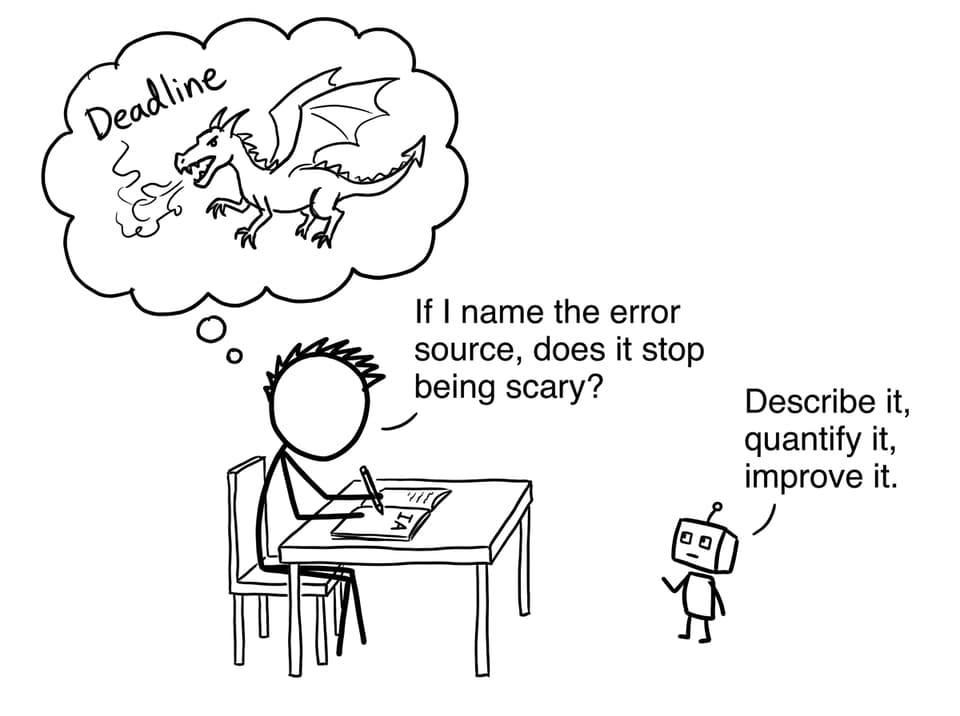
The calm ending: your IA isn’t broken, it’s becoming real
In the middle of a failed trial, it’s easy to believe your IA is a verdict on your ability. It isn’t. It’s a short research story, and research stories include corrections.
Do the simple things well: document clearly, ask for guidance early, revise the method with purpose, and write an evaluation that tells the truth with scientific precision. Then protect your exam prep routine so coursework doesn’t steal your final months.
If you want one home base for both parts of IB life, coursework and exams, RevisionDojo gives you the loop: Questionbank, Study Notes, Flashcards, AI Chat, Grading tools, Predicted Papers, Mock Exams, Coursework Library, and Tutors. Your next step is straightforward: open your IA draft, write the failure in one sentence, and start turning it into evidence of thinking.