

Education rarely changes your life in one dramatic moment.
It usually works quietly--a teacher who notices you’re struggling, a library with working lights, a timetable that makes tomorrow feel possible. Then, years later, the change shows up in national statistics: longer life expectancy, higher incomes, lower infant mortality, greater political participation.
That is why IB Geography treats education as more than a “social indicator.” It’s a multiplier. It amplifies what people can do with opportunities, and it shapes whether opportunities exist at all.
If you’re revising for exams, this topic is also a gift: it lets you connect IB Geography development indicators to real-world cause-and-effect chains, which is exactly what high-mark responses reward.
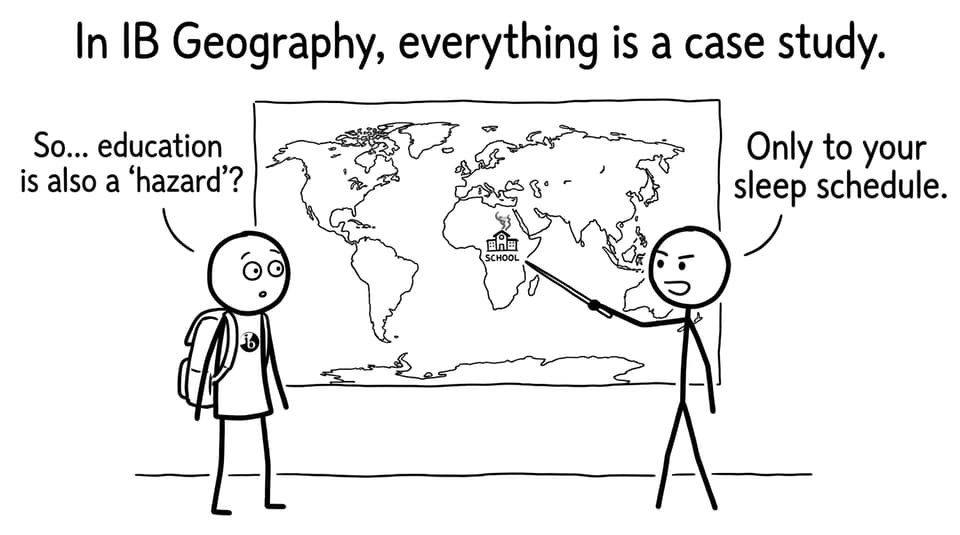
Quick exam checklist: how education drives human development
Use this as a fast planning frame in IB Geography essays and 10-mark answers:
-
Economic: skills, productivity, employability, structural change
-
Health: health literacy, service access, maternal education, life expectancy
-
Gender equality: empowerment, delayed marriage, lower fertility, labor force access
-
Social/political: literacy, civic participation, social cohesion, governance
-
Inequality lens: quality vs access, rural-urban gaps, conflict, marginalised groups
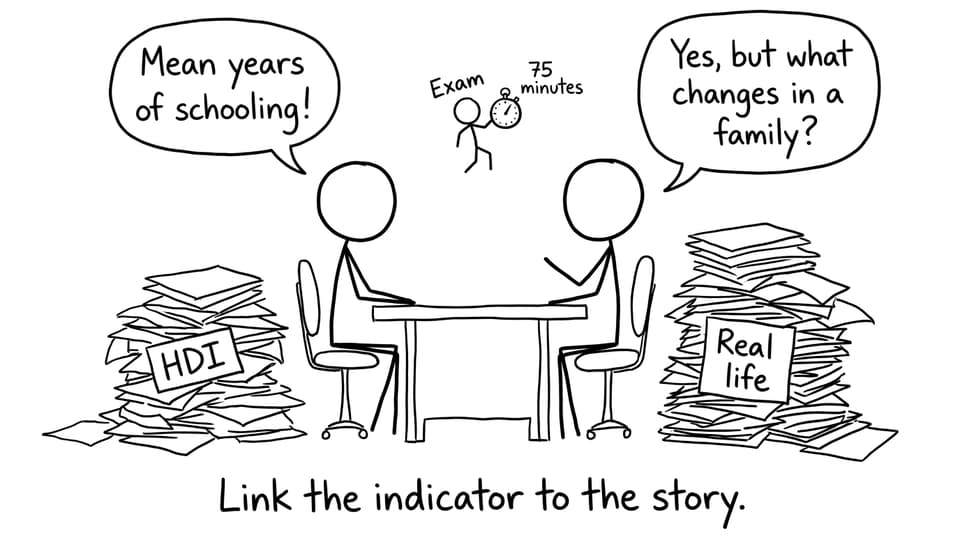
For measurement language, revise HDI and education components in Measuring Human Development Notes and the broader explanation in How Is Human Development Measured?.
IB Geography: education and economic development
In development debates, it’s tempting to treat income as the main plot and everything else as side characters. But education often writes the script.
At the individual scale, education raises human capital: literacy, numeracy, specialist training, and the soft skills that keep people employed when the economy shifts. That tends to increase lifetime earnings, and it lowers vulnerability when a single sector collapses.
At the national scale, education supports:
-
Productivity gains (more output per worker)
-
Innovation (research, entrepreneurship, technology adoption)
-
Diversification away from low-value primary activities toward manufacturing and services
In IB Geography, you can link this directly to changes in employment structure and indicators like GNI per capita. If you want practice turning this into evaluation, pair this topic with IB Geography: Does Economic Growth Guarantee Social Development? so you can argue both sides clearly.
IB Geography: education and health outcomes
Education doesn’t just increase wages; it changes decisions.
Educated individuals are more likely to interpret health information accurately, seek preventative care, and navigate systems that can be intimidating or expensive. Over time, that feeds into lower mortality rates and higher life expectancy.
A key IB Geography link is maternal education. When girls stay in school longer, families often see better child nutrition, higher immunisation rates, and reduced infant mortality. This is development as a chain reaction: education improves knowledge, knowledge improves choices, and choices improve outcomes.
To connect health and development disparities across places, use a supporting reference like Disparities in Health Indicators.
IB Geography: education, gender equality, and changing demographics
In many societies, education is one of the strongest predictors of women’s empowerment. It can increase bargaining power within households, open access to formal employment, and expand political participation.
In IB Geography, this relationship matters because it influences demographic outcomes too:
-
Lower fertility rates (often through delayed marriage and wider life options)
-
Improved child survival (through maternal education and health literacy)
-
Higher household incomes (through labor force participation)
The exam skill is to avoid making it sound automatic. Education can empower, but only if social norms, labor markets, safety, and policy allow that schooling to convert into real choices.
Inequalities in access and the “quality problem”
A classic high-mark move in IB Geography is to split education into access and quality.
Access asks: Can students attend school? Quality asks: Does school actually teach, support, and protect them?
Barriers to access include school fees, distance (especially rural areas), conflict, and discrimination against marginalised groups. Barriers to quality include overcrowding, under-trained teachers, weak resources, and curricula that don’t match local economic realities.
This is where evaluation lives: a country can increase enrolment statistics while learning outcomes stay low. Development improves slower than the numbers suggest.
If you need the exact vocabulary to keep your writing precise, revise key terms in the IB Geography Glossary.
How to revise this for exams with RevisionDojo
If education is a multiplier in human development, practice is the multiplier in exam performance.
RevisionDojo helps you convert IB Geography understanding into marks:
-
Build case-study-ready chains using the Human Development and Diversity Notes and Human Development and Diversity Lessons
-
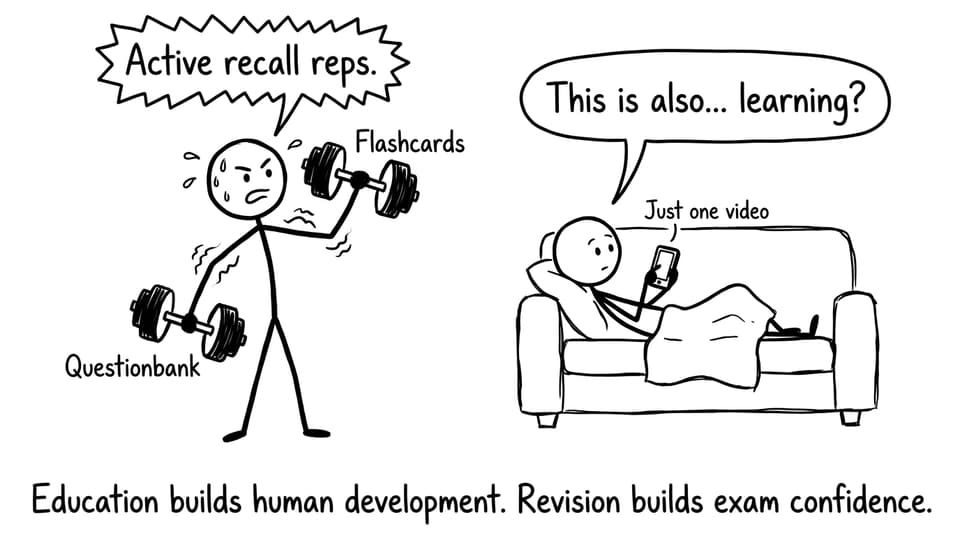
Train under pressure with the Human Development and Diversity Questionbank (and get feedback with AI Chat and grading tools)
-
Lock in definitions with Human Development and Diversity Flashcards
-
Run timed practice using RevisionDojo’s predicted papers and Mock Exams via IB Geography Predicted Papers and the broader IB Predicted Papers hub
If you want one home base for everything (Questionbank, Study Notes, Flashcards, AI Chat, grading, predicted papers, coursework library, tutors), start at IB Geography Resources.
Conclusion: education is the quiet infrastructure of development
In IB Geography, education is one of the cleanest examples of human development as a system: it touches income, health, gender equality, and governance all at once. It also reminds you that progress is rarely instant; it accumulates through small improvements that compound.
If you want to turn that understanding into exam marks, use RevisionDojo to practise the chains, not just read them: hit the Questionbank, drill Flashcards, test yourself with predicted papers, and use AI Chat and grading tools to tighten evaluation. IB Geography rewards clarity, links, and judgement--and education is the perfect topic to show all three.