
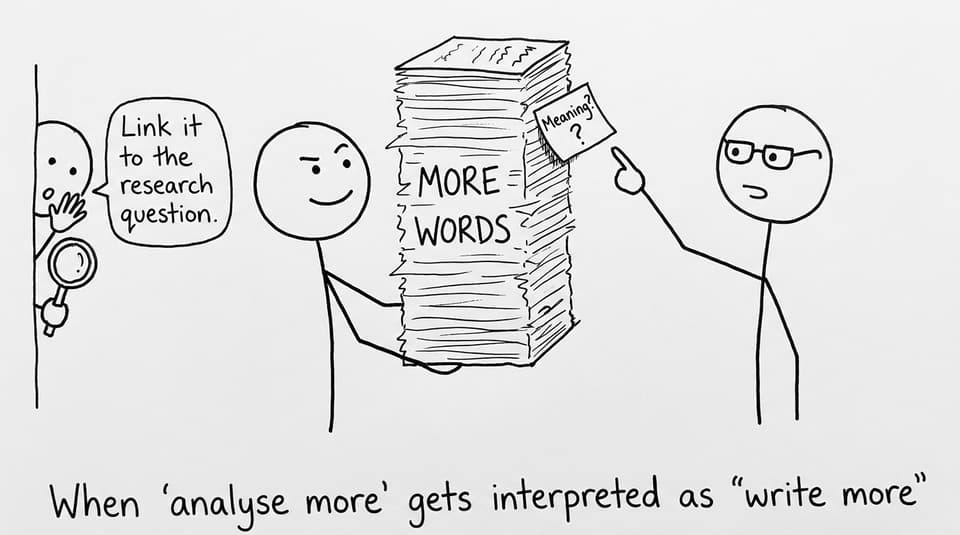
A funny thing happens in the final weeks before exams: you re-read your IA and realize you’ve written a lot while saying very little. The data is there. The quotes are there. The graphs look impressive. But the “analysis” your teacher kept asking for still feels like a mysterious ingredient.
In an IB IA, real analysis is not extra complexity. It’s the moment you stop reporting and start reasoning. You take what you found and explain what it means for your research question. That shift is where top mark bands quietly live.
The IA analysis checklist (quick and exam-ready)
Use this mini-checklist at the end of every paragraph in your IA:
-
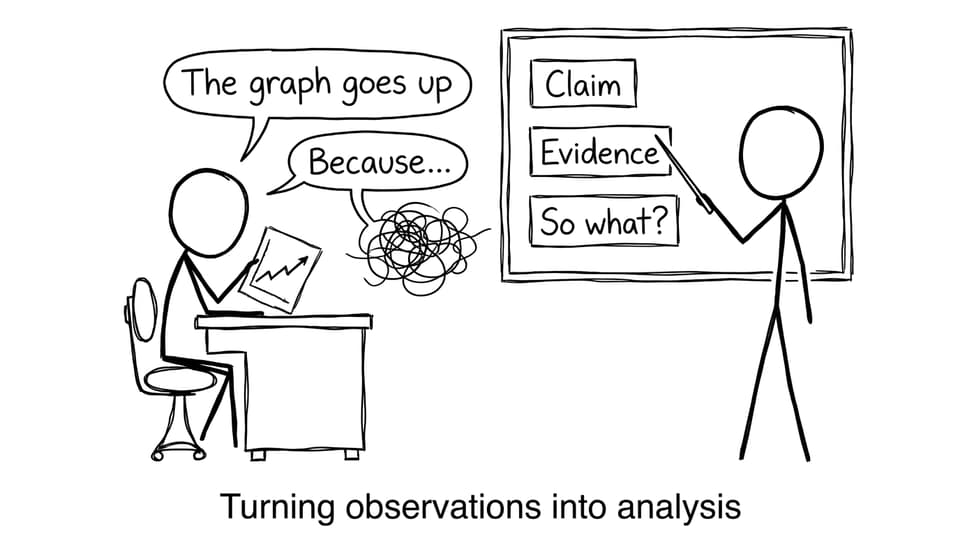
Did I state a claim (not just an observation)?
-
Did I use specific evidence (numbers, patterns, quotations, source details)?
-
Did I explain why the evidence supports the claim?
-
Did I connect it back to the research question explicitly?
-
Did I add one sentence of judgment (importance, implication, comparison, limitation)?
If you want a longer, criterion-focused walkthrough, start with RevisionDojo’s IB IA Guides.
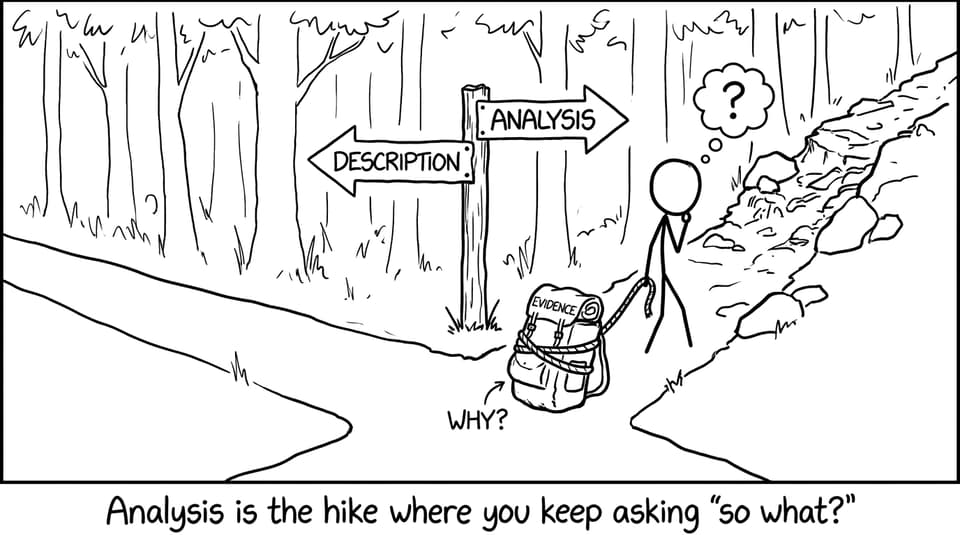
Real analysis in an IA is meaning, not information
Description tells the reader what happened. Analysis tells the reader what it suggests. In a science IA, that might mean interpreting why the trend bends after a certain point. In a humanities IA, it might mean explaining how a source’s context changes the weight of its claim. In a math IA, it might mean interpreting what your parameters imply in the real world.
A useful test: highlight every sentence in your IA that could be written by someone who didn’t understand the topic but could summarize. Those sentences aren’t “bad”; they’re just not analysis yet.
To see the common traps (and how to escape them), read Move From Description to Analysis in Your IB IA.
Analysis is always question-driven (especially in an IA)
Strong analysis is loyal. It keeps returning to the research question, even when interesting side facts tempt you away.
One practical move: end paragraphs with a “therefore” sentence.
-
“Therefore, this pattern suggests X because Y.”
-
“Therefore, this evidence supports the research question by showing…”
If your paragraph can’t end that way, it may be informative but not useful.
If your question still feels broad, tighten it using Refine Your IA Research Question for Clarity and Focus. That one adjustment often makes analysis easier because your writing becomes more selective.
What “real analysis” looks like on the page
Examiners tend to reward analysis that does three quiet things consistently.
It shows cause and effect, not just correlation
Instead of “as A increases, B increases,” add the reasoning: what mechanism (scientific, historical, mathematical, economic) could explain it? Then acknowledge alternatives.
It develops one idea fully
In a high-scoring IA, points are not thrown like confetti. They’re built.
A simple paragraph structure that works across subjects:
-
Point: what you argue
-
Evidence: what you use
-
Reasoning: why it supports your point
-
Link: how it answers the research question
If you’re working with datasets, keep your visuals purposeful using How to Use Data Effectively in Your IA Analysis.
It includes judgment backed by evidence
Judgment is not opinion. It’s prioritizing significance.
-
Which factor mattered most?
-
Which result is most reliable?
-
Which interpretation best fits the evidence?
That’s also why evaluation becomes easier after analysis: once you’ve explained why something matters, you can weigh limitations without sounding vague. For polishing, use How to Proofread and Polish Your IA Before Submission.
How RevisionDojo makes IA analysis easier (without making it robotic)
When your brain is tired, you don’t need motivation; you need a repeatable workflow.
RevisionDojo helps you build that workflow:
-
Use the Coursework Library and IB Coursework Guides to check what the criteria are really asking.
-
Compare your draft against real models in Maths AI IA Examples or IB Maths AA IA Examples.
-
Use AI Chat to pressure-test a claim: “What alternative explanation could an examiner expect me to address?”
-
Use Grading tools (and rubrics like the IB Maths AI IA Grader) to see where your writing is still descriptive.
-
Keep exam prep moving alongside your IA using Study Notes, Flashcards, and the Questionbank, then return to the draft with clearer thinking.
Final thoughts: the IA rewards clarity of thinking
Real analysis in an IB IA is the discipline of explaining significance: why evidence matters, how it answers the question, and what judgment follows. When you write that way, evaluation stops feeling like a separate section and becomes the natural next sentence.
If you want a calm, examiner-aligned system to build that kind of IA writing while still preparing for exams, start with RevisionDojo’s IB IA Guides and keep the checklist above open as you draft.