


Batch production is what happens when a business tries to be sensible in an unpredictable world.
Picture a bakery at 6 a.m. It doesn’t make one croissant at a time (too slow), and it can’t run a nonstop croissant river all day (too risky). So it makes 200 croissants, switches to muffins, then cookies. That quiet switching cost is exactly what you’re learning in IB Business Management when you study batch production: efficiency with interruptions.
If you want the syllabus version first, open RevisionDojo’s Batch production topic hub and keep it beside your notes.
What is batch production in IB Business Management?
In IB Business Management, batch production means producing a group of identical items together, stage by stage, before switching to the next batch. It’s common when firms need variety (different sizes, colours, flavours) but still want repetition and some economies of scale.
For wider context, connect it to the full Operations methods unit and compare it with Mass/flow production notes.
Quick exam checklist (easy marks)
-
Define batch production clearly.
-
Give a realistic industry example (baking, clothing, pharmaceuticals, seasonal goods).
-
Explain why a business chooses it (demand level, variety, costs).
-
Evaluate using trade-offs: flexibility vs downtime; quality control vs inventory risk.
For definitions that sound like the markscheme, use the IB Business Management glossary.
Advantages of batch production
Flexibility without starting from zero
Batch production lets a business change output without rebuilding the whole system. A clothing brand can run a batch of small sizes, then medium, then switch colours. In IB Business Management, this is a strong point for answers about responding to seasonal demand or shifting consumer preferences.
A clean way to frame it is: batch production creates controlled variety. It isn’t fully customised, but it isn’t locked into one product forever either.
Lower unit costs than job production
Because tasks repeat within a batch, labour becomes faster and materials can be purchased in mid-to-large quantities. So average costs usually fall compared to job production.
In exam terms: batch production can create economies of scale, but not as consistently as flow production.
Quality control is easier to contain
When output moves in batches, faults can be spotted and isolated. If something goes wrong, it may affect a single batch rather than days of continuous output.
If you want to link this to broader ops thinking, RevisionDojo’s post on how operations supports other business functions is useful for evaluation (quality affects marketing, finance, and brand trust).
Disadvantages of batch production
Downtime between batches (the hidden cost)
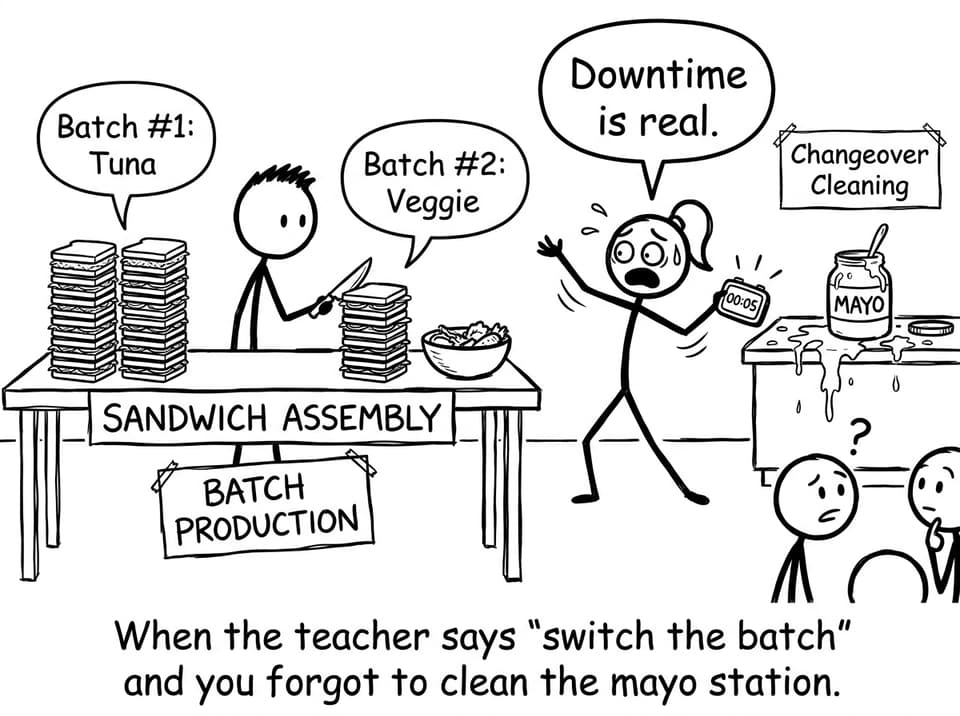
Switching batches often means cleaning, resetting machines, recalibrating equipment, retraining staff briefly, and rewriting schedules. In IB Business Management, this is the classic “changeover time” disadvantage.
The key is to explain the consequence: downtime reduces capacity utilisation and pushes up unit costs.
Higher inventory risk
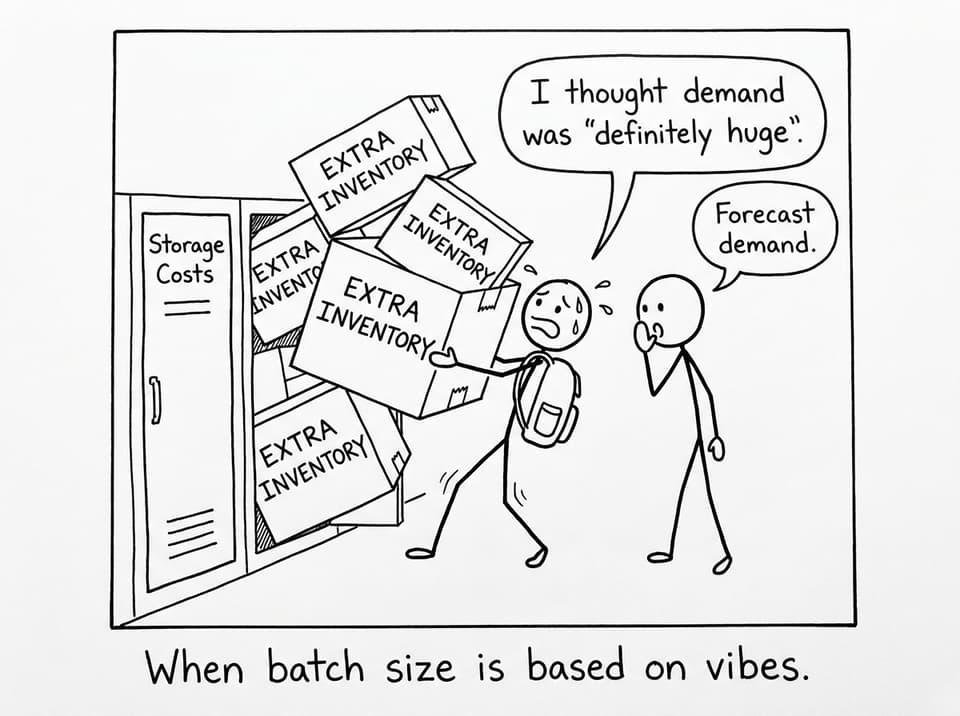
Batch production can tempt firms to make “a safe amount” that turns into too much. If demand falls, the business holds excess stock, paying storage costs and risking obsolescence or waste.
To extend evaluation, link it to planning tools like JIT and lean methods in RevisionDojo’s lean production methods notes.
Limited customisation compared to job production
Batch production offers variety across batches, but each item in a batch is still standardised. That’s a disadvantage when customers want personalised features, unique designs, or one-off specifications.
Bottlenecks can slow everything
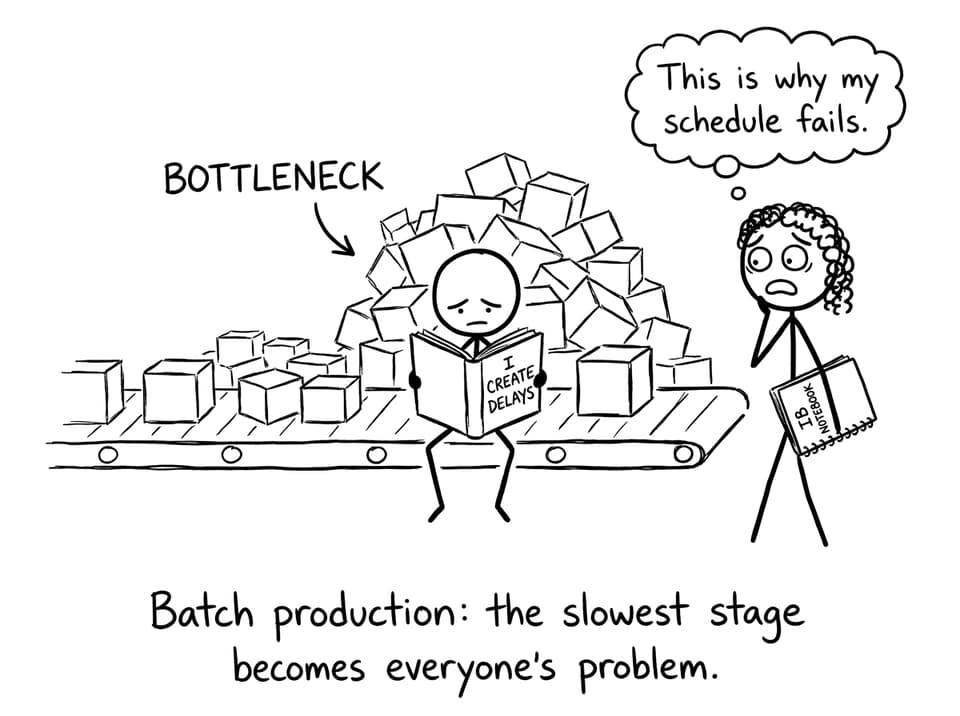
Because a batch moves through stages, the slowest stage sets the pace. If packaging is slower than baking, products pile up and lead times grow.
How to evaluate batch production like an examiner
In IB Business Management, evaluation is usually about fit: batch production works when demand is moderate, variety matters, and the firm can manage changeovers and stock.
A strong evaluative line is:
-
If demand becomes high and predictable, moving toward flow production may lower costs.
-
If customers demand uniqueness, moving toward job production (or mass customisation) may increase perceived value.
For a broader decision framework, RevisionDojo’s article on why businesses choose different production methods helps you justify the choice using factors like resources, demand, skills, and technology.
Conclusion: turn batch production into easy exam marks
Batch production is a practical compromise: it offers flexibility, moderate economies of scale, and manageable quality control, but it brings downtime, inventory risk, and bottlenecks. In IB Business Management, your score comes from stating that trade-off clearly, then applying it to the business in the question.
To practise writing those trade-offs under time, use RevisionDojo’s IB Business Management resources hub and the Unit 5 Operations Management page. RevisionDojo’s Questionbank, Study Notes, Flashcards, AI Chat, Grading tools, Predicted Papers, Mock Exams, Coursework Library, and Tutors make it easier to move from “I understand batch production” to “I can evaluate batch production like an examiner.”