


In IB Business Management, production methods can feel like a simple definition question. But in real businesses (and in good exam answers), they’re a decision under pressure: a manager staring at demand forecasts, quality complaints, a tight budget, and a workforce with mixed skills.
Pick the wrong method and you don’t just “lose efficiency” in theory. You miss delivery dates. You pile up unsold stock. You damage reputation. That’s why businesses choose different production methods: because the same product made for different customers, volumes, and standards becomes a different operational problem.
Quick checklist: what drives the choice?
Use this as a fast planning tool in IB Business Management 6-markers and 10-markers:
-
Product type (custom vs standard)
-
Demand level (high/steady vs seasonal)
-
Cost structure (capital vs labour)
-
Quality expectations (craft vs consistency)
-
Workforce skills (specialist vs repetitive tasks)
-
Flexibility needs (frequent change vs stable output)
-
Technology and automation (advanced systems vs manual processes)
For the full syllabus context, keep Unit 5 close: IB Business Management Unit 5: Operations Management.
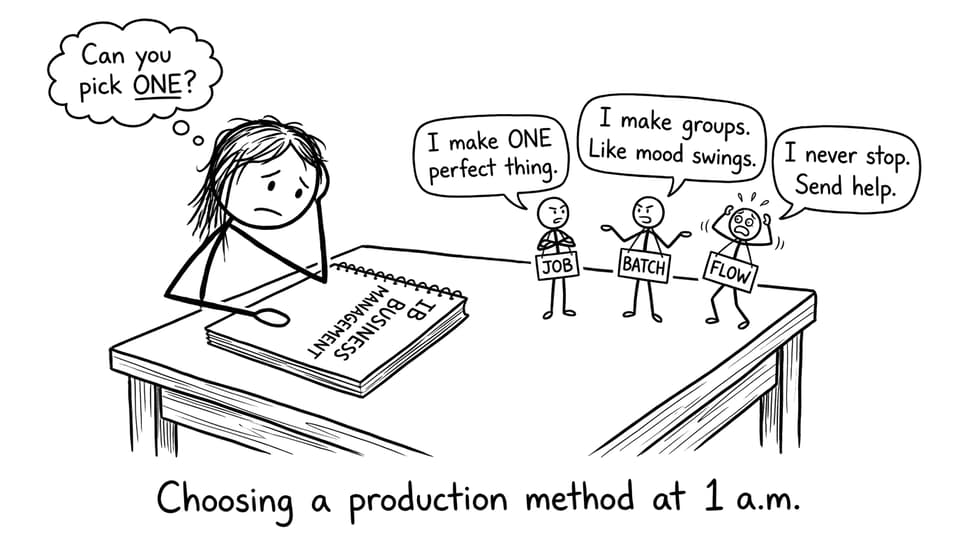
IB Business Management basics: job, batch, and flow
In IB Business Management, you’re usually comparing:
-
Job production: one-off, made to order, high customization.
-
Batch production: produced in groups, then equipment/processes switch to another batch.
-
Flow (mass) production: continuous production of standardized goods.
If you want precise wording for definitions, use: IB Business Management Key Definitions.
Factor one: the nature of the product
The product quietly tells you what’s possible.
A bespoke dining table, a tailored suit, or a custom software build pushes the business toward job production because each output is unique. Standardized items like packaged snacks or basic electronics fit flow production because consistency matters more than personalisation.
Batch production often sits in the middle: the product is standard within the batch, but batches change based on size, flavour, or model. To revise this with strong examples, see Batch Production Notes.
Factor two: demand level and predictability
Demand is the rhythm of operations.
When demand is high and predictable, flow production can reduce unit costs and speed up output. When demand is moderate, seasonal, or uncertain, batch production reduces the risk of overproduction while still offering efficiency. For small-scale or one-off demand, job production avoids excess inventory and fits made-to-order expectations.
To anchor this to the topic, revise: IB Business Management 5.2 Operations Methods.
Factor three: costs, resources, and the technology available
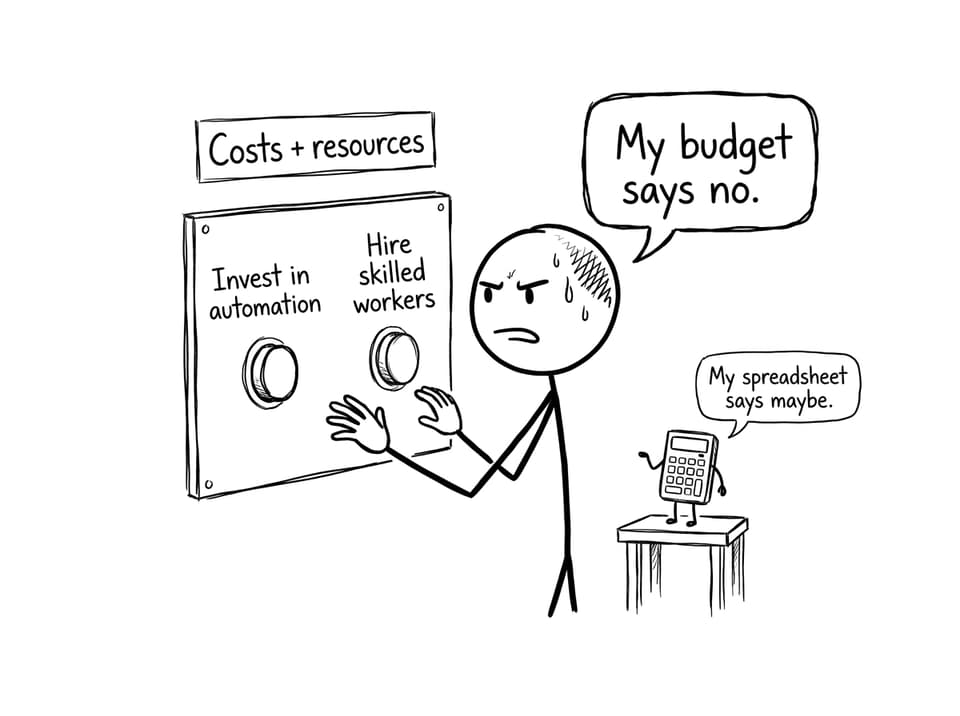
This is where many exam answers become sharper: connect method choice to capital investment and operational capacity.
Flow production often requires expensive machinery and set-up costs, but the payoff is low unit cost at scale. Job and batch production typically need less capital equipment, but they rely more on labour (and often higher labour costs per unit). Technology matters too: advanced automation makes flow production easier to control, while manual processes often suit job or batch.
Factor four: quality requirements, skills, and flexibility
Quality isn’t one thing. It’s what customers notice.
Job production supports craftsmanship and careful custom checks. Flow production supports consistent quality across thousands of units, especially if quality assurance is built into the line. Skills follow the same logic: job production needs highly skilled workers; flow production can involve repetitive tasks with narrower training.
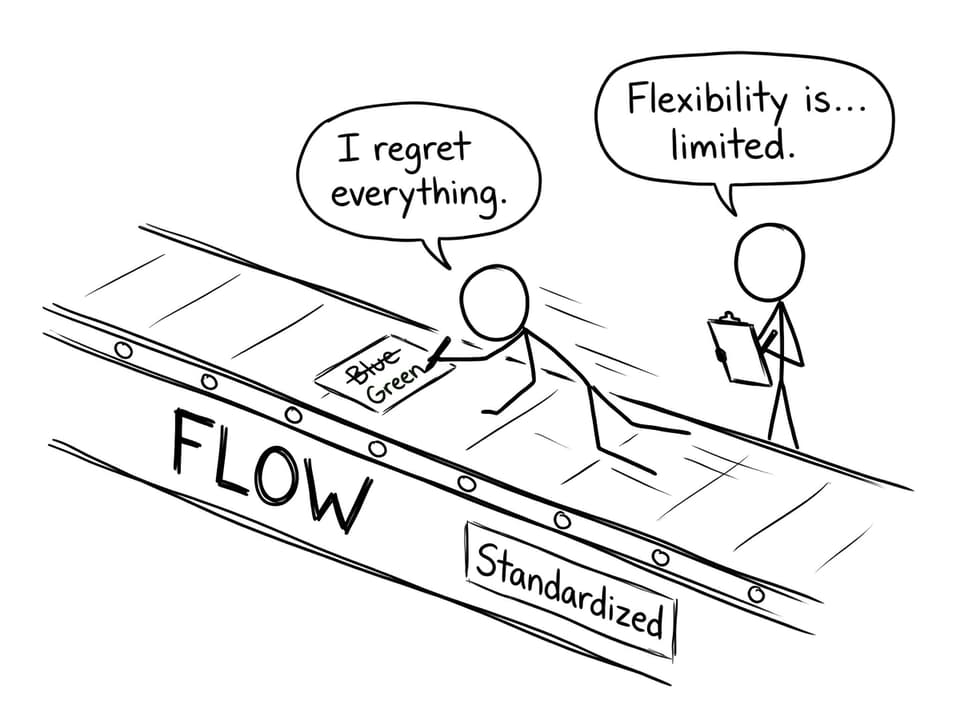
Flexibility is the trade-off that examiners love. Batch and job production can adapt when customer preferences change. Flow production, by design, resists change because switching the system is disruptive and costly.
How to turn this into exam marks
In IB Business Management, don’t just list factors. Link them.
A strong chain looks like: high demand + standardized product + available capital == flow production, leading to lower unit cost and consistent quality, but reduced flexibility if trends change.
To build that exam style quickly, practice with RevisionDojo’s Questionbank, then tighten your phrasing using AI Chat and Grading tools. When you want timed practice, use Predicted Papers and Mock Exams. And if you’re stuck, Tutors can help you turn a messy paragraph into an examiner-friendly argument.
For a wider view of the subject, use: IB Business Management Resources Hub and the broader course overview: Understanding IB Business Management.
Conclusion: the decision is really about trade-offs
Businesses choose job, batch, or flow because operations is the art of trade-offs: customization vs consistency, flexibility vs speed, and labour skill vs automation. If you can explain why a business chooses a method, you’ve moved beyond definitions into real IB Business Management thinking.
To lock this topic in, revise 5.2 Operations Methods, drill questions in RevisionDojo’s Questionbank, and use Flashcards plus AI Chat to make the trade-offs feel automatic under exam timing.


