
The best wellbeing May 2028 IB advice is to build a routine you can repeat without sacrificing sleep, movement, relationships, or recovery. Start small in DP1, ask for help before stress becomes a crisis, and treat wellbeing as part of your academic strategy rather than a reward for finishing your work.
Two years can look like an enormous stretch of time. Yet the Diploma Programme often feels more like a series of crowded weeks: subject tests, internal deadlines, activities, coursework decisions, and eventually final revision. Sustainable progress comes from noticing problems early and adjusting before one difficult week becomes an exhausting month.
Your wellbeing checklist for May 2028
A sustainable plan should include:
- A consistent sleep window, including on most weekends
- A weekly plan that protects rest as well as study
- Short, focused revision sessions instead of repeated late nights
- Regular movement, meals, hydration, and time away from screens
- At least one trusted adult who knows how you are coping
- Early conversations about workload and subject concerns
- Clear warning signs that tell you when to seek help
- A simple system for tracking progress without obsessing over results
This is not a checklist for becoming perfectly calm. Some IB stress in 2028 will be normal. The goal is to stop ordinary pressure from quietly becoming unmanageable.
Build a routine that can survive two years
A plan is sustainable when it still works during a difficult week. If your timetable assumes perfect concentration, no unexpected homework, and unlimited evening energy, it is a best-case scenario rather than a reliable plan.
Begin with a weekly structure instead of a minute-by-minute schedule. Mark lessons, travel, meals, activities, sleep, and genuine downtime first. Then assign realistic study blocks to specific tasks. A block called “Biology questions on cell respiration” is easier to begin than one called “revise Biology.”
For balance in IB DP1, use three types of academic session:
- Learn: understand a concept through class materials or IB Study Notes
- Retrieve: recall ideas with Flashcards or closed-book summaries
- Apply: answer targeted questions and inspect mistakes
Let approaching assessments, current weaknesses, and teacher feedback decide where your time goes. RevisionDojo brings Study Notes, Flashcards, the Questionbank, and AI Chat into one environment, making it easier to move from understanding to practice without maintaining a complicated system across several apps.
Protect sleep before borrowing from tomorrow
Sleep is often treated as flexible because its cost arrives later. One late night can seem productive. Repeated late nights can reduce attention, memory, emotional regulation, and the quality of the work produced during those extra hours.
For teenagers aged 13-18, sleep experts generally recommend 8-10 hours per 24 hours. Individual needs differ, but repeatedly cutting sleep to complete ordinary schoolwork suggests that the workload, expectations, or planning system needs attention.
Choose a reasonably consistent waking time and work backwards to create a sleep window. Give demanding tasks an earlier place in the evening and set a stopping point. If something remains unfinished, record the next action so your mind does not have to keep rehearsing it in bed.
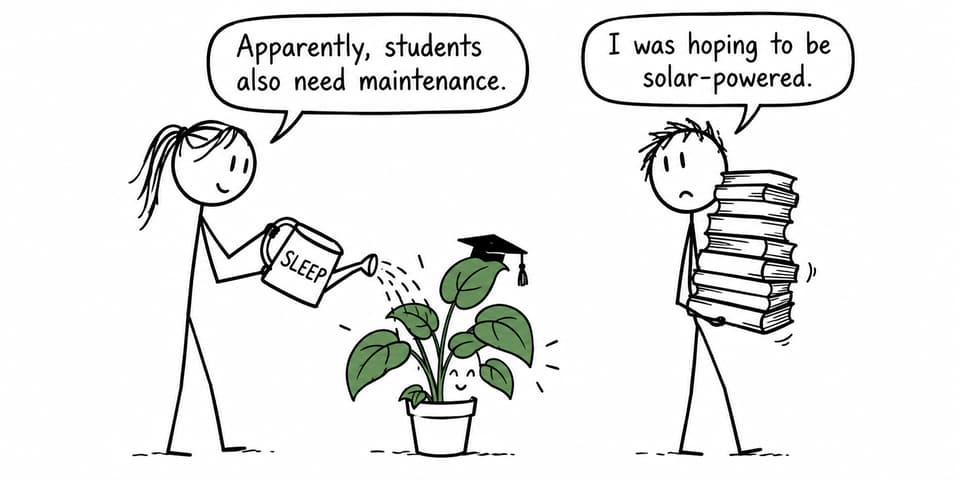
Sleep is maintenance, not lost study time. A tired student may sit at a desk for longer while learning less.
Use feedback without constant self-judgment
Progress becomes easier to manage when it is treated as information rather than identity. A disappointing quiz might reveal weak retrieval, unfamiliar question styles, or a topic that needs reteaching. It does not determine whether you belong in the IB.
Use a weekly review with three questions:
- What did I understand this week?
- Where did I hesitate or lose marks?
- What is the smallest useful action I can take next?
The RevisionDojo IB Study Planner can turn those answers into visible tasks. Targeted Questionbank practice and Grading tools can provide feedback, while AI Chat can unpack a difficult explanation. If you remain stuck, take the exact question and your attempted reasoning to a teacher or Tutor.
Later in DP2, Predicted Papers and Mock Exams can support timed practice. Use them as diagnostic tools, not daily measures of self-worth. The same principle applies to the Coursework Library: study examples to understand structure and expectations, not to compare your unfinished draft with someone else’s polished endpoint.
Keep recovery inside the week
A common mistake is postponing recovery until the next holiday. The IB keeps generating work, so if rest begins only when everything is finished, it may never begin.
Build small forms of recovery into ordinary days. Eat away from your desk. Walk, train, stretch, or participate in a sport you enjoy. Protect time for friends, family, music, reading, faith, games, or anything that reconnects you with life beyond assessment.
Public-health guidance recommends that school-aged children and adolescents accumulate about 60 minutes of physical activity daily. This can include walking, cycling, sport, active travel, and shorter periods throughout the day. Movement should support your wellbeing rather than become another performance target.
When overthinking consumes study time, name the specific worry, identify what is controllable, and choose one next action. The strategies in How to Stop Overthinking Before IB Exams can help separate useful preparation from rumination.
Recognise when IB stress in 2028 needs attention
Stress becomes more concerning when it is intense, persistent, worsening, or interfering with ordinary life. Warning signs can include:
- Major or lasting changes in sleep or appetite
- Frequent physical complaints without a clear explanation
- Persistent sadness, panic, irritability, or hopelessness
- Losing interest in activities and people you usually value
- Difficulty attending school or completing basic daily tasks
- Increasing isolation, exhaustion, or inability to concentrate
- Using substances or risky behaviour to cope
- Thoughts of self-harm, suicide, or not wanting to be alive
One sign does not automatically reveal a particular condition. Patterns matter, and a qualified professional should assess mental-health concerns. You do not need to prove that your situation is “serious enough.” If distress is affecting daily life, that is enough reason to start a conversation.
RevisionDojo’s mental-health resources for IB families explain warning signs and routes to support. You can also share guidance on helping students manage IB stress with a parent or caregiver if beginning the conversation feels difficult.
Know where to get help at school
Your first contact might be a teacher, school counsellor, nurse, year leader, safeguarding lead, or IB coordinator. Start with an adult you trust and explain what has changed, how long it has been happening, and how it affects sleep, attendance, concentration, eating, or daily functioning.
You might say: “I have been struggling for several weeks, and it is affecting my sleep and schoolwork. I need help making the workload safer.”
Depending on your needs and local policies, support may include deadline coordination, a workload review, regular check-ins, counselling, communication with teachers, or referral to an external professional. The IB parent checklist from DP1 to results can help families understand where wellbeing conversations belong throughout the programme.
If you think you may harm yourself or someone else, tell a trusted adult immediately. Contact local emergency services or an appropriate crisis service in your country, and do not remain alone with the risk. Academic work can wait. Immediate safety cannot.
Let the plan become lighter as it becomes clearer
Good systems reduce decisions. By the middle of DP1, you should know when you work best, which subjects require frequent practice, and which habits protect your energy. Review the system at the end of each term instead of rebuilding it every anxious Sunday evening.
RevisionDojo can serve as the ultimate IB resource throughout that process. Its Questionbank, Study Notes, Flashcards, AI Chat, Grading tools, Predicted Papers, Mock Exams, Coursework Library, and Tutors support different stages of learning. The principle remains simple: choose the smallest tool that solves the current problem.
Create a free RevisionDojo account, open the IB Study Planner, and add one achievable task for each subject this week. A sustainable two-year plan rarely begins with a dramatic transformation. It begins with one week you can realistically repeat.