
An unfinished essay sits beside six subject folders. A phone displays another deadline. Your child says they are fine, but their sleep, mood, or confidence suggests otherwise.
If you are wondering how to help your child manage IB stress, the clearest answer is this: listen before solving, protect the routines that keep them well, and help them turn an overwhelming workload into specific next steps. Your role is not to become another teacher. It is to make home feel safe while ensuring your child has a workable system for studying.
Some exam stress is expected. The IB Diploma Programme combines six subjects with internal and external assessment, alongside the Extended Essay, Theory of Knowledge, and Creativity, Activity, Service. But stress deserves closer attention when it becomes persistent, disrupts everyday life, or leaves a student unable to rest, study, eat, attend school, or enjoy anything outside the IB.
A quick IB stress support checklist
Start with these practical steps:
- Ask how your child feels before asking how much work they completed.
- Listen without immediately offering advice.
- Break large concerns into one manageable action.
- Protect sleep, regular meals, movement, and genuine downtime.
- Reduce avoidable household pressure during demanding periods.
- Agree on check-ins instead of monitoring constantly.
- Contact the school when deadlines or workload appear unmanageable.
- Seek professional support when distress is severe, persistent, or affecting daily life.
- Give them a repeatable revision system, not encouragement alone.
Recognise when IB stress is becoming too much
Stress does not always look like panic. It may look like procrastination, irritability, silence, perfectionism, or studying long after productive concentration has disappeared.
Health guidance for parents identifies possible signs such as headaches, stomach discomfort, disrupted sleep, appetite changes, withdrawal, low mood, hopelessness, and loss of interest in previously enjoyable activities. One difficult evening is not automatically a crisis. Patterns and changes from your child’s usual behaviour matter more.
Watch for three broad levels:
| What you notice | A proportionate response |
|---|---|
| Temporary nerves, frustration, or tiredness | Listen, reassure, and help identify the next task |
| Repeated sleep problems, withdrawal, physical complaints, or inability to concentrate | Speak with your child and involve an appropriate school contact |
| Hopelessness, self-harm, suicidal thoughts, or inability to function safely | Seek urgent professional or emergency support |
Never dismiss comments about self-harm, death, disappearing, or being a burden as ordinary exam talk. Stay with your child, listen calmly, and contact local emergency or crisis services immediately if there is an imminent risk. For persistent anxiety or low mood, a doctor or qualified mental health professional is an appropriate starting point.
Start with a conversation, not an investigation
A worried parent naturally wants information. How much revision is left? What was the mock result? Has the essay been submitted? Yet a rapid series of questions can feel like another assessment.
Try beginning with an observation rather than an accusation:
- “You seem more tired than usual. How are things feeling?”
- “Would you like me to listen, help you plan, or give you some space?”
- “What feels hardest right now: the amount of work, a specific subject, or the pressure to perform?”
The second question is particularly useful. It gives your child some control over the conversation. A student who wants to be heard may become more distressed when offered ten solutions; a student who feels stuck may welcome help choosing the first step.
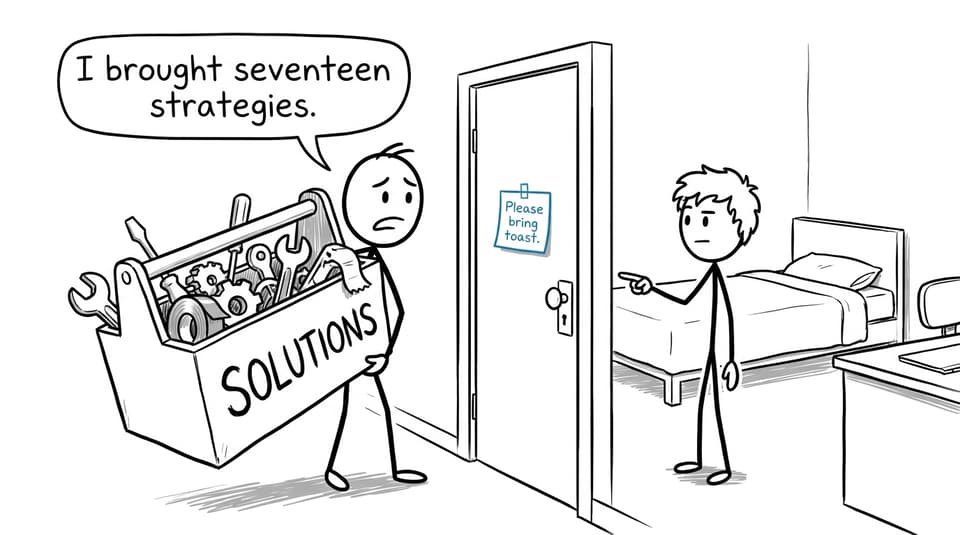
Avoid comparisons with siblings, classmates, or your own school experience. Avoid saying that everyone is stressed or that the exams will soon be over. Those statements may be technically true, but they can make a child feel that their particular struggle has not been heard.
Reduce uncertainty by making the work visible
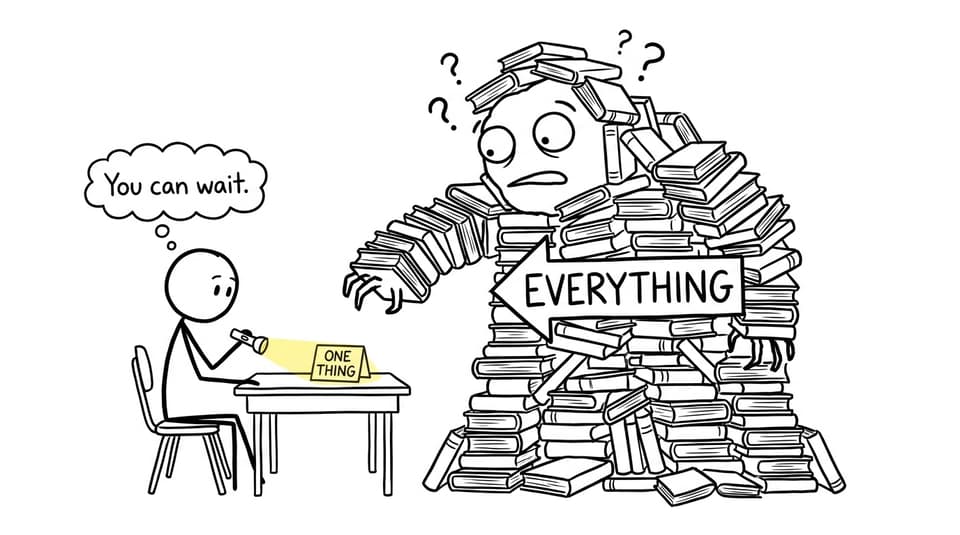
Stress grows easily in vague spaces. “Revise Chemistry” has no clear finish line. “Complete ten questions on equilibrium, review errors, and stop after 45 minutes” does.
Help your child create a simple overview of:
- examination dates confirmed by the school
- coursework and school deadlines
- subjects or topics requiring the most attention
- realistic study blocks
- meals, sleep, exercise, and rest
- a weekly review point where the plan can change
The aim is not to fill every available hour. It is to decide what matters and make stopping legitimate. RevisionDojo’s low-stress daily IB study schedule offers a useful starting structure, while the guide to planning final revision around the examination timetable can help students anticipate demanding sequences.
Let your child own the plan. You can ask whether it appears realistic, but resist turning it into a household contract enforced minute by minute. A plan should lower uncertainty, not create another source of judgment.
Protect the foundations of concentration
When students feel behind, sleep and breaks often look expendable. They are not. NHS guidance for young people preparing for exams recommends adequate sleep, including roughly eight to ten hours for teenagers, and a wind-down period before bed. Regular meals, hydration, movement, and time away from study also support wellbeing and concentration.
Parents can make these habits easier without policing them:
- Keep meals predictable and make simple food available.
- Encourage a fixed evening stopping point.
- Maintain a quiet, comfortable study space where possible.
- Offer a walk or snack without turning it into a lecture.
- Temporarily reduce non-essential chores during peak periods.
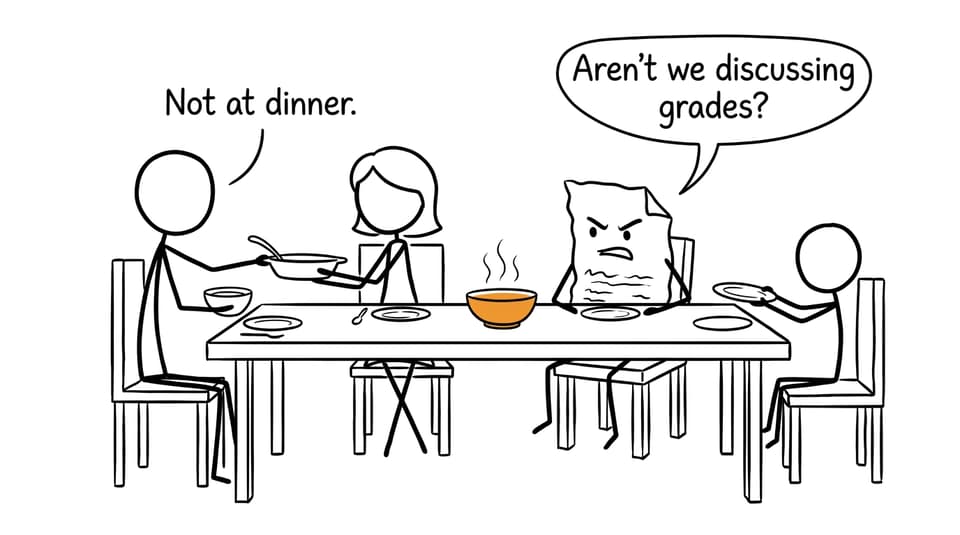
- Keep some family conversations entirely unrelated to school.
Rest should not be presented as a reward that must be earned through exhaustion. It is part of sustainable preparation. Students who feel guilty whenever they stop may benefit from the RevisionDojo guide to studying for IB exams without burning out.
Support revision without taking control
IB diploma parents often face a difficult balance: stepping back can feel neglectful, while stepping in too far can make a teenager feel mistrusted.
Agree on the kind of support your child wants. You might handle practical logistics, help protect quiet time, test a few flashcards, or sit nearby while they begin a difficult task. You should not write, rewrite, or substantially edit assessed work. Academic integrity still applies when everyone is stressed.
Keep check-ins brief and predictable. A ten-minute conversation once or twice a week is usually less intrusive than repeated questions throughout the day. Discuss the system rather than demanding reassurance about results:
- What did the practice reveal?
- Which topic needs attention next?
- Is the plan still realistic?
- What support would make this week easier?
If anxiety is concentrated around the examination room, the student guide to managing IB exam stress effectively and these strategies for beating IB exam anxiety provide practical routines students can use themselves.
Involve the school before the situation becomes a crisis
The IB coordinator, subject teacher, form tutor, counsellor, pastoral lead, or learning-support team may see a different part of the picture. Contact the school when your child is repeatedly missing deadlines, avoiding attendance, experiencing panic, or unable to create a manageable plan.
Be specific about what you have observed. “They have slept poorly for five nights and cannot begin their assignments” is more useful than “The IB is making them stressed.” Ask what deadlines are fixed, what support is available, and who will check in with the student.
Involve your child wherever possible. Support is more likely to feel helpful when it is done with them rather than around them.
Give them a system, not just encouragement
“You can do it” matters. But encouragement cannot tell a tired student what to do at 7:30 tonight.
A good system can. It reduces the number of decisions a student must make while stressed. The basic loop is simple:
- Learn one small concept.
- Recall it without looking.
- Apply it to exam-style questions.
- Review errors and choose the next target.
- Stop at the agreed time.
This is where RevisionDojo’s all-in-one IB resources can become the practical structure behind a parent’s reassurance. Study Notes clarify a small topic, Flashcards support retrieval, and the Questionbank turns understanding into targeted practice. AI Chat helps students resolve a precise misconception, while Grading tools make feedback more specific.
As confidence grows, Predicted Papers and Mock Exams provide structured timed rehearsal. The Coursework Library can help students understand appropriate standards and structure, while Tutors add human guidance when a subject remains difficult. The RevisionDojo app preparation guide explains how these tools fit into one repeatable workflow.
Parents do not need to manage every feature. The more useful role is to help the student choose a modest routine, review whether it is working, and preserve the boundaries that keep it sustainable.
Calm is built through small, repeatable actions
You cannot remove every demanding deadline or guarantee that your child will never feel anxious. You can make home a place where stress is noticed without becoming the only subject discussed.
Listen first. Watch for meaningful changes. Protect sleep and ordinary family life. Bring in school or professional support early when necessary. Above all, give your child a system, not just encouragement.
A natural next step is to explore RevisionDojo’s IB support for parents and families together. Choose one subject, one weak topic, and one manageable study block. Progress often becomes less frightening when the next action is finally clear.