


The moment IB Film stops being “just movies”
You know the feeling: the lights go down, the first frame appears, and your brain relaxes. Then IB Film arrives and quietly asks you to do the opposite. To stay alert. To notice how a cut changes meaning, how a sound cue steers emotion, how a costume choice becomes a thesis.
That shift is the real magic of IB Film. It turns watching into reading, and reading into making. And if you understand the syllabus structure early, exam prep becomes less like guessing what matters and more like building a calm, repeatable system.
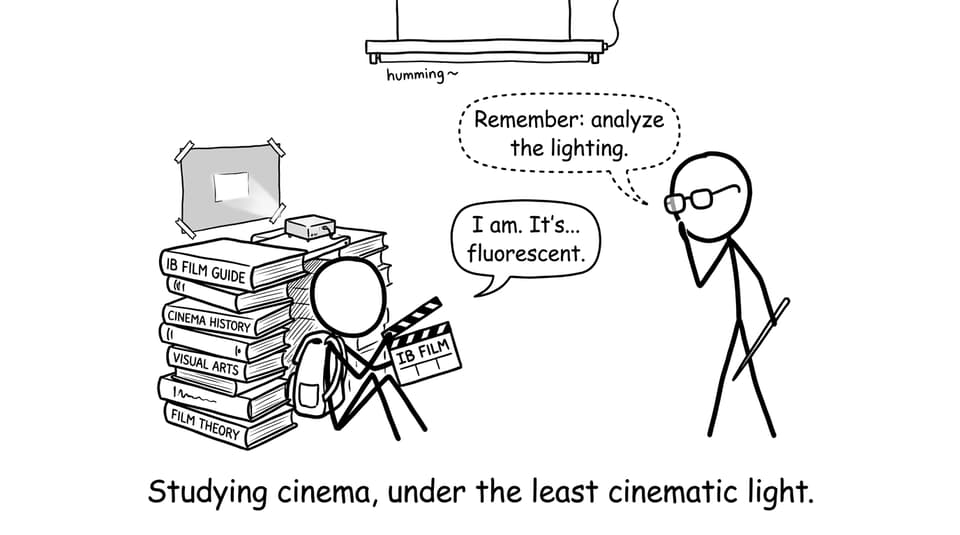
IB Film syllabus at a glance (save this checklist)
Use this mini-map to keep IB Film revision focused:
-
Learn core film language: cinematography, editing, sound, mise-en-scène
-
Practice textual analysis: technique -> effect -> meaning
-
Study film theory and history to deepen interpretation
-
Build a strong comparative study across different cultures/contexts
-
Create practical work with clear intentions and honest reflection
If you want a hub of targeted support, start with the IB Film article collection.
Textual analysis in IB Film: where marks quietly hide
Textual analysis is the heartbeat of IB Film because it trains the exact skill examiners reward: precise explanation of how meaning is constructed.
A strong IB Film paragraph usually does three things:
-
Names a technique accurately (not “camera angle,” but “high-angle long shot”)
-
Explains the effect on the viewer
-
Connects it to a larger idea (theme, character, context)
To sharpen this, borrow structures from high-scoring models in the IB Film exemplars, and practice the technique->effect->meaning loop with RevisionDojo’s Study Notes and Flashcards.
Film theory and history: your shortcut to deeper analysis
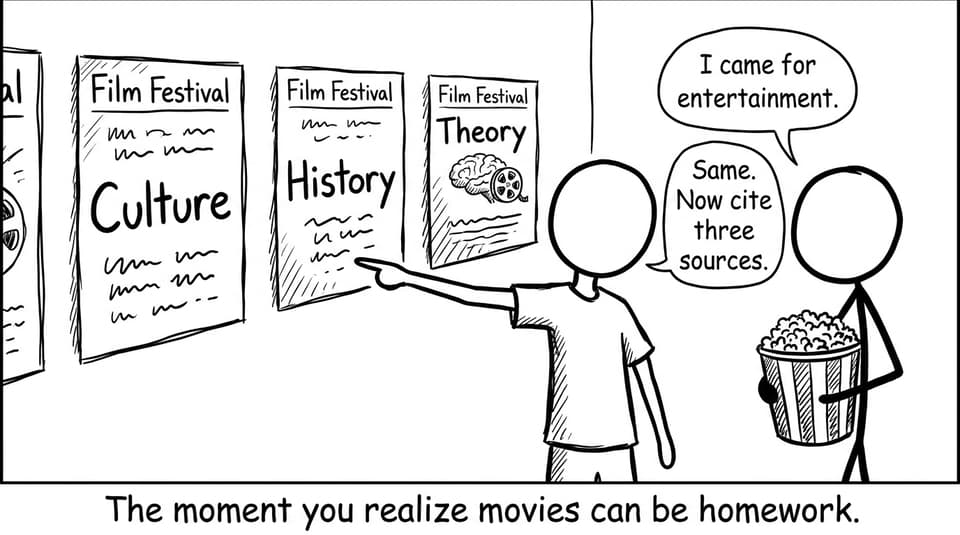
In IB Film, theory and history are not trivia. They are lenses. A film becomes more analyzable when you can frame it through ideas like formalism vs realism, or authorship, or movement-based conventions.
When you watch with context, you stop writing generic lines like “this creates tension” and start writing specific ones like “this handheld realism positions the viewer as a witness, not a spectator.” That specificity is what separates a competent response from a top-band one.
Need a practical way to apply context in coursework? The guide on world cinema analysis for IB Film shows how to research like a minimalist and still sound sophisticated.
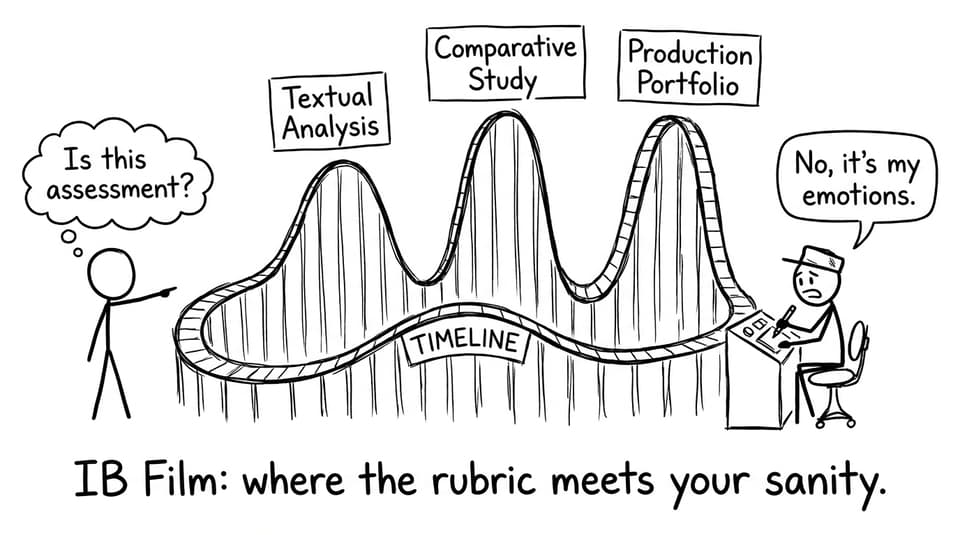
The creative process: production work with examiner-friendly reflection
The practical side of IB Film is where students either thrive or spiral. The filming is fun. The documentation and reflection are where grades appear.
Two rules help:
-
Plan like your future self will forget everything (because they will)
-
Reflect like an evaluator, not a diarist
If deadlines feel like quicksand, use IB Film study routines for coursework deadlines and time management tips for IB Film students to turn big tasks into smaller weekly wins.
Comparative study: comparison is a skill, not a format
The comparative study in IB Film rewards students who compare deliberately. Not plot summaries side-by-side, but ideas and techniques in conversation.
A quick upgrade is writing in comparative language from the start: “Where Film A uses silence to isolate the character, Film B uses layered ambient sound to suggest community pressure.” For examiner-aligned structure, read how to meet examiner expectations in IB Film comparative essays.
How RevisionDojo makes IB Film revision feel lighter
Most students don’t struggle because IB Film is impossible. They struggle because the workflow is unclear.
RevisionDojo is built to make that workflow obvious:
-
Questionbank practice to apply film language under time pressure: Questionbank
-
Study Notes and Flashcards to lock vocabulary and frameworks
-
AI Chat when you need a fast explanation without losing your rhythm
-
Grading tools and the Coursework Library to improve drafts with rubric awareness
-
Predicted Papers and Mock Exams to rehearse performance, not just knowledge
-
Tutors when you want human feedback that turns into a plan
To see the full study loop in one place, use the guide: RevisionDojo App: The Smarter Way to Prep for IB Exams.
The real “magic” of IB Film is control
At the start, IB Film can feel like trying to catch meaning with your bare hands. By the end, it can feel like the opposite: you can name choices, predict effects, and build arguments that don’t drift.
If you want that steadiness before exams, build your routine around RevisionDojo: Study Notes for clarity, Flashcards for recall, Questionbank for application, and Mock Exams to rehearse calm. Master IB Film like a filmmaker works: one intentional choice at a time.