




The quiet moment when IB Film becomes real
There’s a specific kind of panic that shows up in IB Film: you’ve watched the films, you’ve got opinions, you’ve even got a few beautiful shots on your camera roll… and then the coursework hits you with a question you can’t dodge: Can you explain your choices like a filmmaker, not a fan?
That’s the hidden challenge behind IB Film coursework. It’s not only creative. It’s not only analytical. It’s the ability to move between the two without losing clarity.
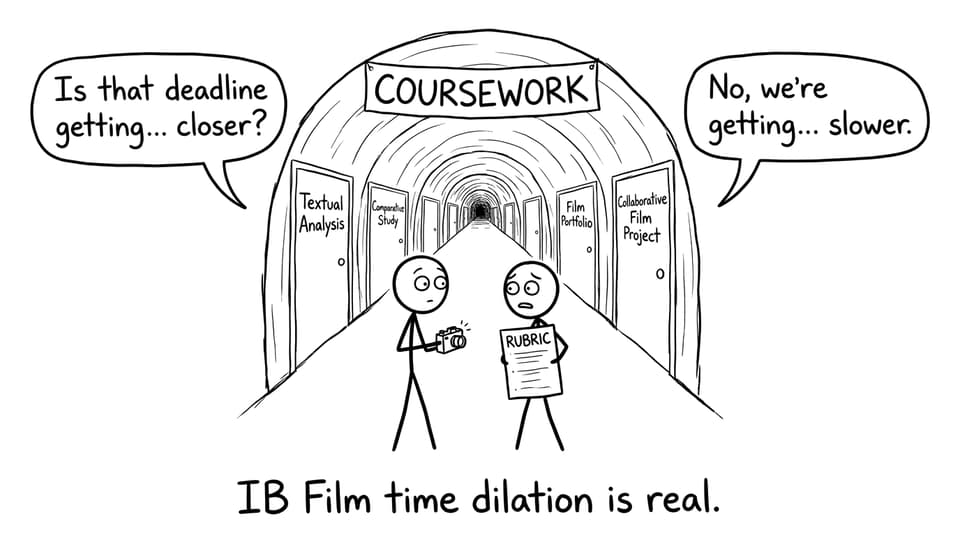
IB Film coursework at a glance (quick checklist)
Use this as your calming reset before you write, shoot, or edit in IB Film:
-
Pick a film extract or films that reward technique-based analysis
-
Write in the pattern: choice -> effect -> meaning -> context
-
Document process as you go (reflection is easier when it’s fresh)
-
Make your production decisions intentional, not accidental
-
Use criterion language to self-check before submitting
If you need a course-level map first, keep Dive into the World of IB Film: A Comprehensive Syllabus Guide open while you plan.
Textual analysis in IB Film: what strong work actually looks like
In IB Film, high-scoring textual analysis doesn’t list techniques like a shopping receipt. It argues that techniques construct meaning.
A strong example approach (without copying any one student’s voice) might look like this:
-
Film choice: a film with clear control of editing rhythm, sound design, and framing
-
Focus: one or two central ideas (memory, power, identity, time) that are visible in the film language
-
Evidence: precise moments you can describe accurately, not vague “the director makes it intense” statements
If you want to improve the “context” layer that examiners reward, read IB Film: Connect Culture and Context in Analysis.
Comparative study: examples that create real contrast (not just different plots)
A useful IB Film comparative study pairing isn’t “two films I like.” It’s “two films that force me to explain why they feel different.”
Example angles that tend to produce insight:
-
Narrative structure: fragmented vs linear storytelling, and what that does to truth and audience trust
-
Cultural context: how industry, censorship, tradition, or audience expectations shape technique
-
Style systems: realism vs formalism, restraint vs spectacle, silence vs musicality
To avoid the common trap of surface-level comparison, build your notes using How to Analyze World Cinema in IB Film Coursework.
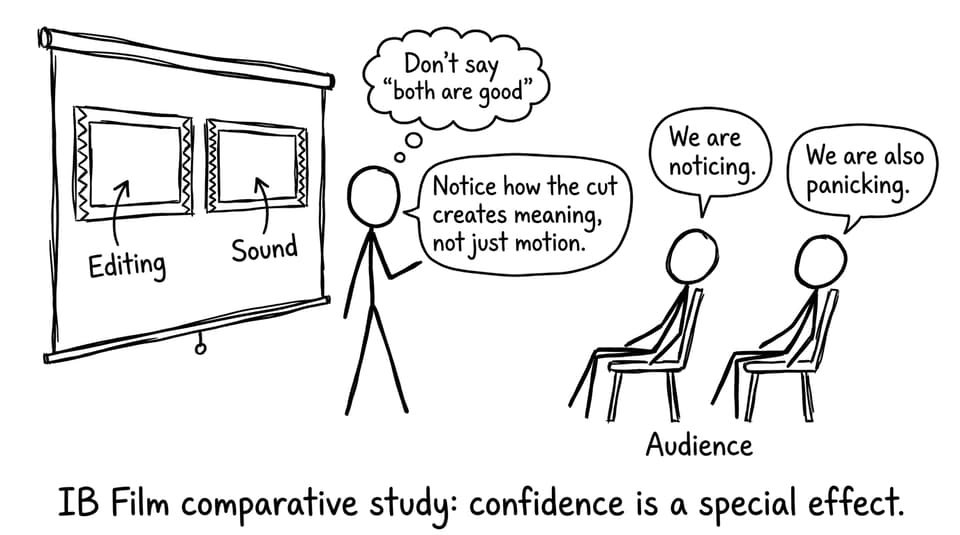
Film portfolio: the difference between “cool” and “criteria-ready”
The IB Film portfolio is where students often do great work but lose marks in the explanation. Examiners can’t grade intentions you didn’t articulate.
A strong portfolio usually shows three things:
-
Range of roles: you can create value as director, cinematographer, editor, sound designer, etc.
-
Repeatable decision-making: you test, evaluate, adjust, and explain why
-
Reflection that evaluates: not “we filmed a scene,” but “this choice failed because…, so I changed…”
Two practical upgrades:
-
Use mise-en-scène vocabulary precisely (setting, props, blocking, lighting, composition). Here’s a focused guide: Best Ways to Use Mise-en-Scène in IB Film Analysis and Production.
-
Write reflections weekly, not at the end. Use IB Film Journal Reflections: Write Like a Filmmaker.
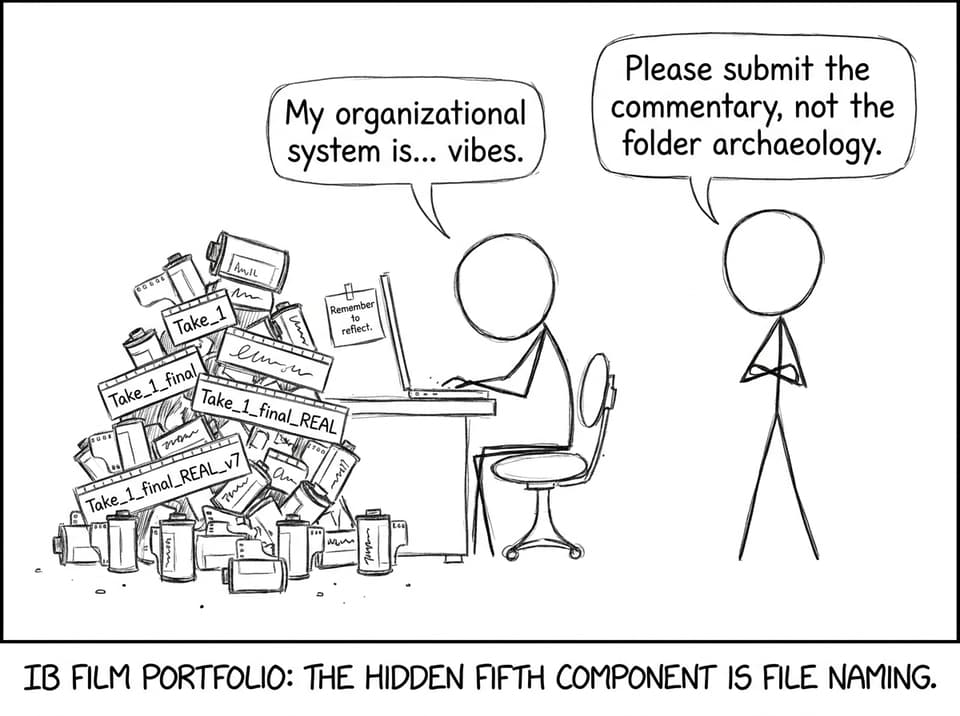
Collaborative film project: group work that doesn’t drift
Collaboration in IB Film is less about “sharing tasks” and more about building one coherent vision with documented choices.
What helps most is boring professionalism:
-
Define roles early (director, producer, cinematography, sound, editor)
-
Lock a schedule you can actually keep
-
Keep records of decisions, problems, and fixes (gold for your report)
If your project is getting messy, use How to Manage a Film Set for IB Coursework as your reset.
How RevisionDojo helps you level up IB Film coursework (and exams)
The best part of IB Film is that improvement is visible. You can literally see your thinking get sharper.
RevisionDojo makes that process calmer:
-
Use the Coursework Library to study real models via IB Film Examples and the broader Coursework feature
-
Patch theory gaps with Study Notes and rapid retrieval using Flashcards
-
Practise exam-style thinking with the Questionbank
-
Get unstuck fast with AI Chat (Jojo), then polish with Grading tools
-
Build confidence under time with Mock Exams and Predicted Papers
-
Get strategy support from Tutors when you want human feedback loops
If your goal is a top grade, keep this close: How to Achieve a Level 7 in IB Film.
Closing: make your IB Film choices explainable
The most powerful shift in IB Film is realizing that your job isn’t to impress someone with taste. It’s to show that you can see what cinema is doing, name how it does it, and apply those ideas in your own work.
If you want your coursework to feel less like guesswork, start with models in IB Film Examples, then build your weekly loop using RevisionDojo’s Questionbank, Study Notes, Flashcards, AI Chat, Grading tools, Predicted Papers, Mock Exams, Coursework Library, and Tutors. That’s how IB Film stops being overwhelming and starts becoming a craft you can control.