
The moment you start building your UCAS shortlist, a quiet fear tends to show up: What if my English qualification is the one thing that trips me at the finish line? For many students, that worry centers on IB English, specifically IB English B. You’ve done the work, you can communicate confidently, and yet every university page seems to hide a different rule in the fine print.
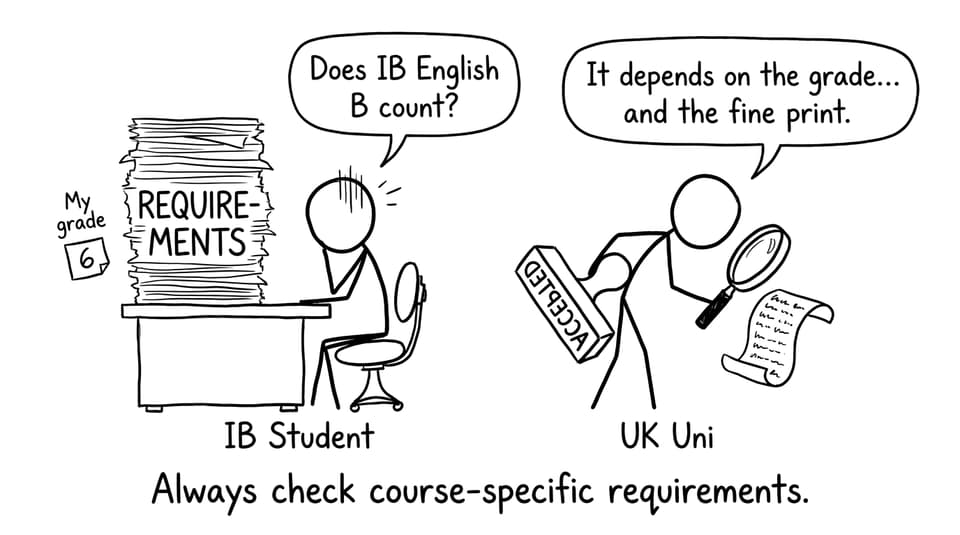
The good news is that IB English B is often considered seriously in the UK. The catch is simple: “often” depends on the course, the grade, and sometimes even whether a requirement is for admission or for visa/compliance.
A quick checklist before you assume IB English B is enough
Use this short checklist to avoid surprises later. It’s also a good way to email admissions with clear, specific questions.
-
Confirm whether your target programme lists IB English B as accepted proof of proficiency.
-
Check if they specify HL vs SL for IB English B.
-
Look for a minimum score (commonly 5+, sometimes higher).
-
Separate “language requirement for admission” from “language requirement for visa/professional registration.”
-
If anything is unclear, ask the university directly and keep a screenshot of the policy.
For the bigger picture, keep this guide open while you research: Is IB English Enough for University Language Rules?
What IB English B is (and what it signals to UK universities)
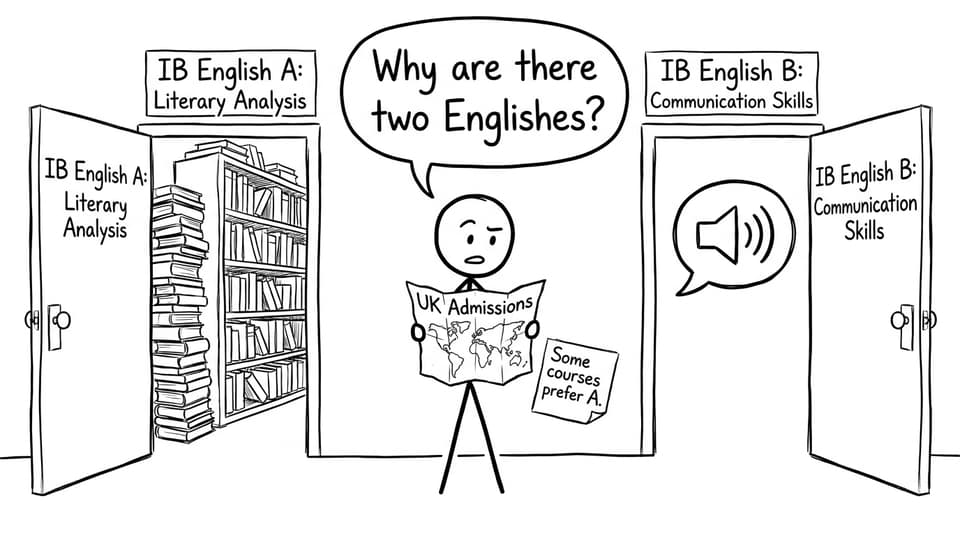
IB English B is designed for language acquisition. That matters because UK universities interpret it differently from IB English A, which is aimed at native or near-native proficiency and leans heavily into literary analysis.
In admissions terms, IB English B generally signals: “This student can operate academically in English across reading, writing, listening, and speaking.” That is exactly what many universities want to know. But some departments, especially those that depend on heavy critical writing, may still prefer English A.
If you want a grounded overview of how UK universities think about English B specifically, read: Will UK Universities Consider You If You Take English B?
How IB English B is typically considered in the UK
Most of the time, the decision comes down to a simple matrix: institution competitiveness, course demands, and your final grade.
Grade expectations you’ll see most often
While every university sets its own threshold, many policies cluster around a familiar number: a 5 or above in IB English B can meet language requirements for a wide range of UK programmes. More competitive courses may expect 6 or 7, or specify HL.
Because policies change and are course-specific, treat any “typical grade” as a starting point, not a guarantee. If your goal is to reduce risk, build a margin early: moving from a 5 to a 6 in IB English B can widen your options.
When you might still need an external English test
Sometimes universities accept IB English B for admission but still recommend or require another test if:
-
your score falls below their threshold,
-
the programme has stricter communication demands,
-
or the requirement is tied to visa/professional rules rather than the department’s preference.
If you’re comparing different ways universities grant exemptions, these two are useful references:
And for the visa side of the conversation, see: Understanding UK Visa Exemptions for English B Students
How to strengthen your case as an IB English B student
The most persuasive applications aren’t louder; they’re clearer. If IB English B is your pathway, aim to make your proficiency easy to trust.
-
Document the policy: screenshot the university’s requirement and store it with your application notes.
-
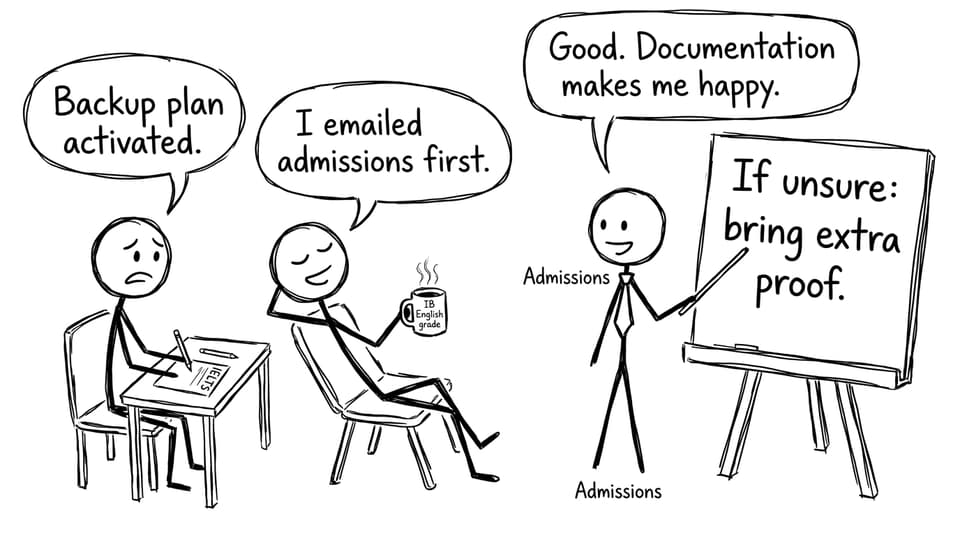
Email admissions early: ask, “Does IB English B SL/HL with a predicted X meet your requirement for this course?”
-
Build a backup plan: if your mock grades are borderline, prepare for an external test.
-
Show evidence of academic English: sustained writing and confident speaking matter.
On the study side, keep your revision measurable. RevisionDojo helps you turn “I hope it’s enough” into “I can prove it” using Questionbank practice, targeted Study Notes, and quick Flashcards for language accuracy. When you want feedback fast, AI Chat can pressure-test your phrasing, and the Grading tools can help you spot what’s holding your score back. If you’re building realistic exam stamina, the Predicted Papers and Mock Exams make practice feel like the real thing. And when you want examples of what strong performance looks like, the Coursework Library plus Tutors can close the gap quickly.
Start here for course-specific support: English B - RevisionDojo
Closing: make IB English B work for you
UK universities don’t reject students for taking IB English B, they reject uncertainty. If you replace guesswork with a checklist, a clear email to admissions, and a plan to secure a strong IB English grade, your application becomes calmer and more controllable.
If you’re revising right now, start building that margin today with English B - RevisionDojo and the wider IB English hub: All IB English posts. Your future self will thank you for doing the boring, practical steps early, because they’re the ones that keep doors open.