
If you’ve ever found yourself three tabs deep into a university website, staring at a sentence like “proof of English proficiency required,” you know the feeling: your plan for the evening quietly becomes a spiral.
Here’s the reassuring truth: IB English is often enough to meet university language requirements. But “often” is the important word. The decision usually depends on the institution, the programme, and sometimes non-academic rules (like visa or professional accreditation requirements). This guide will help you interpret those requirements calmly, and build a simple plan so you can focus on exams instead of guessing.
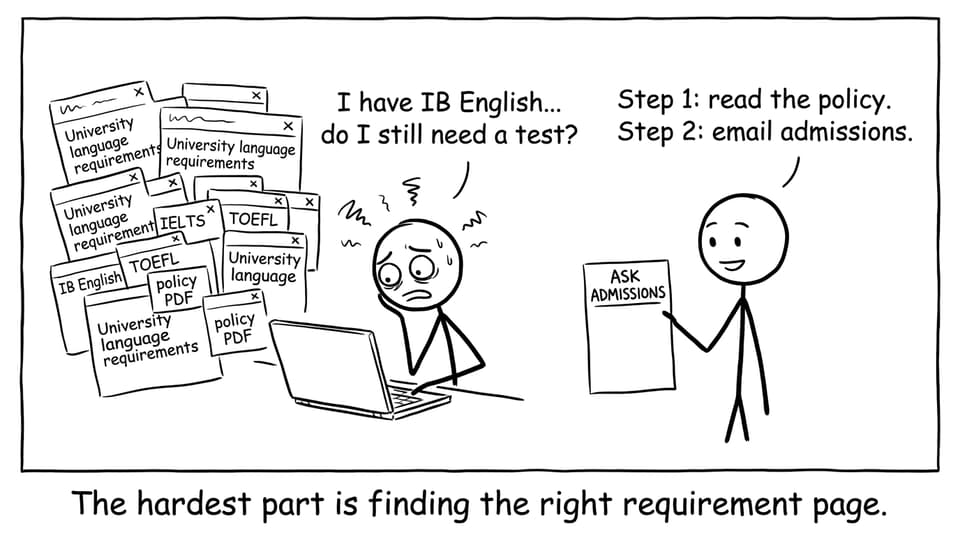
The quick checklist (save this before you apply)
Before you assume IB English replaces another test, run this checklist:
-
Which course is it? (English A: Language & Literature or English A: Literature)
-
What level? SL or HL
-
What minimum grade do they want? (often 5, sometimes 6 or 7)
-
Is the requirement “for admission” or also “for visa/registration”?
-
Does your programme have stricter rules? (law, medicine, teaching, nursing can be different)
If you’re building your study plan alongside applications, keep your revision organised in one place. Start with IB English A: Language & Literature resources and the IB English blog hub to stay aligned with what the course actually assesses.
Why universities often accept IB English as proof
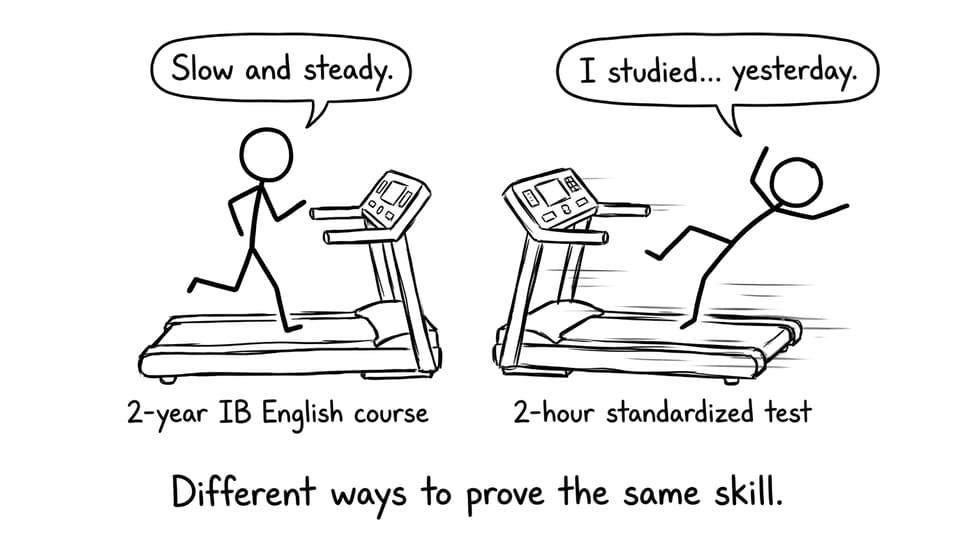
Universities tend to respect IB English because it isn’t a single performance on one day. It’s a two-year record of reading, writing, speaking, and thinking in academic English, assessed through a mix of internal and external components.
That depth matters. A language requirement is usually trying to answer one question: Can you handle university-level reading and writing without drowning? IB English was designed around exactly that.
For exam preparation, this is also good news: the skills that lift your grades (clear thesis, controlled analysis, accurate language) are the same skills universities interpret as proficiency. RevisionDojo’s Study Notes and Flashcards help you build those skills deliberately, instead of hoping they appear under pressure.
Typical minimum grades (what “enough” usually looks like)
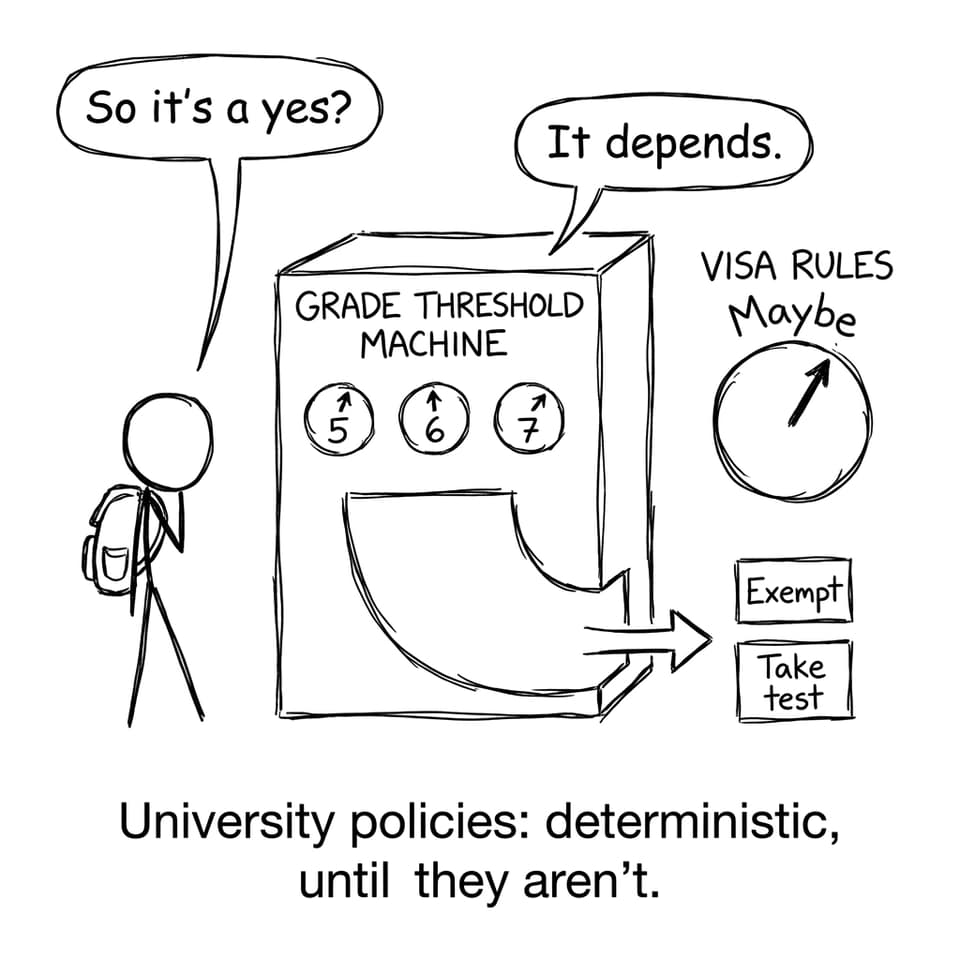
Policies vary, but many universities set a minimum grade threshold in IB English for an exemption.
Common patterns you’ll see:
-
Grade 5: frequently accepted for a wide range of programmes
-
Grade 6 or 7: often required by more selective universities or competitive courses
-
Grade 4: occasionally accepted, more commonly at SL and in less competitive settings
HL can be preferred, but SL is often accepted too, depending on the institution.
To push from “I write fine” to “I reliably hit the markband,” build exam realism into your routine: use Exam Mode to practise timing, and the Questionbank to drill exam-style responses.
How universities apply IB English in real applications
Universities generally use IB English in one of three ways:
-
Full exemption from standardised tests (you meet the language requirement through your IB grade)
-
Evidence of academic readiness (especially when combined with other English-medium schooling)
-
Conditional acceptance based on predicted performance, confirmed after final results
If you’re applying before final exams, predicted grades may be accepted at first, then verified later. That’s why consistent practice matters: you’re not only chasing a final score, you’re building credibility over time.
To sharpen performance under pressure, practise with IB English Predicted Papers or the broader Predicted Papers collection. Pair them with Jojo AI Chat when you need quick clarification on feedback, structure, or analysis.
When IB English may not be enough
Even if IB English satisfies academic entry requirements, you may still be asked for a different test in a few cases:
-
Visa or immigration rules mandate a specific exam for certain applicants
-
Professional accreditation requires a particular score type (common in healthcare and education)
-
The university applies a blanket testing policy for some applicant categories
-
Your schooling history is not primarily English-medium, and the institution wants extra confirmation
This isn’t a judgment on your ability. It’s bureaucracy trying to reduce uncertainty.
How to prepare for both outcomes (without doubling your stress)
The best approach is to study for your actual course well, and keep a simple contingency plan.
-
Focus revision on scoring strongly in IB English (because it helps both admissions and your final grade).
-
Save screenshots or PDFs of university policy pages for your records.
-
If a test might still be needed, decide early so you’re not cramming it during exam season.
On RevisionDojo, students often build a clean loop:
-
Study Notes for concept clarity
-
Flashcards for technique and terminology
-
Questionbank for exam-style practice
-
Grading tools (like essay feedback) to close the gap fast
-
Mock Exams and predicted papers for stamina and timing
If you prefer structure, use RevisionDojo for IB as your home base.
Conclusion: treat IB English as your main plan, not a gamble
For many students, IB English is enough to meet university language requirements, and it can simplify your application by removing an extra test. The key is to confirm the rule early, understand the grade threshold, and watch for non-academic requirements that may still apply.
If you want the calmest route to a stronger IB English grade, build a routine with RevisionDojo: practise with the Questionbank, tighten your writing using Grading tools, and simulate pressure using Mock Exams and Predicted Papers. Your application gets clearer, and your exam day gets quieter.