
When a university application asks for an English test, it can feel like a second exam season you never agreed to. You have deadlines, coursework, mocks, and that quiet pressure of proving you belong. Then someone says, “If you do well in IB English, you might not need IELTS.”
That sentence is a small kind of relief. But it’s also a trap if you treat it like a universal rule.
This guide explains what IB English grade typically exempts you from IELTS, why policies vary, and how to build the score margin that keeps your options open.
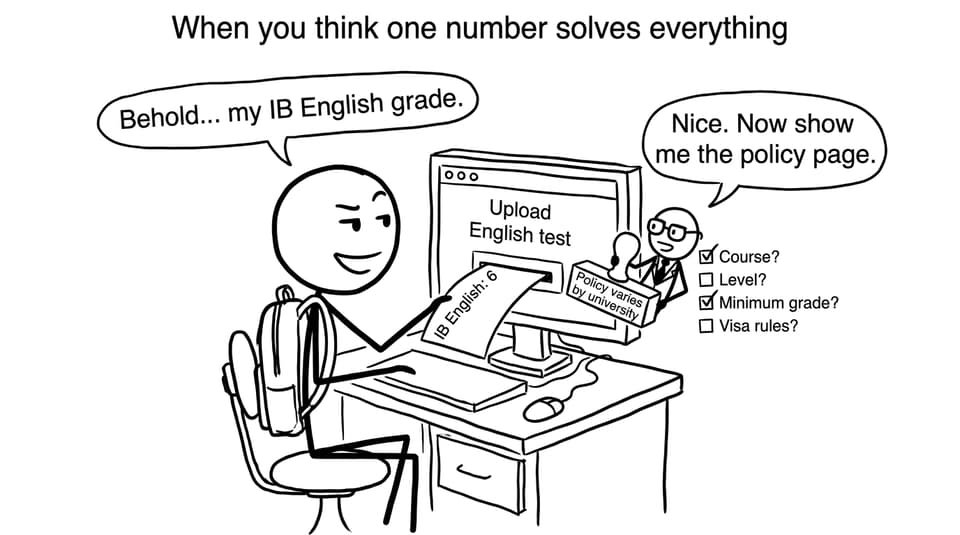
The quick checklist (save this before you apply)
Before assuming IB English replaces IELTS, run this checklist:
-
Which course are you taking: English A (Language and Literature / Literature) or something else?
-
What level: SL or HL?
-
What minimum grade does your target university list for IB English?
-
Is the requirement only for admission, or also for visa / registration?
-
Do you have a backup plan if the policy changes or your score lands one point short?
If you’re organising revision alongside applications, it helps to keep everything in one place. RevisionDojo’s IB English A Lang & Lit Resources make it easier to build a predictable routine (Questionbank, Study Notes, Flashcards, AI Chat, and grading tools) while you handle the admin side.
What IB English grade usually exempts you from IELTS?
Across many universities, a common threshold is:
-
A grade of 5 or higher in IB English A (often accepted)
-
Some universities or competitive programmes ask for 6 or 7
That “often” is doing a lot of work. IB English policies vary by country, university, and even by department. But the pattern is consistent: universities tend to trust strong performance in IB English because it reflects sustained academic reading and writing, not just one testing day.
A helpful way to think about it: IELTS is trying to answer, “Can you cope with university-level English?” IB English is designed to train and assess exactly that skill over two years.
For broader context on this topic, see Is IB English Enough for University Language Rules?.
Which IB English courses count most often?
Universities most commonly accept IB English A routes for language requirements:
-
IB English A: Literature
-
IB English A: Language and Literature
Both are Language A courses and are generally treated as evidence of academic English proficiency if your final grade meets the institution’s minimum.
If you want to stay aligned with what actually gets assessed (instead of revising “vaguely”), build your routine around real exam demands. Start with Effective Study Techniques for IB English A: Language and Literature.
IB English A: Literature (what it trains you to do)
IB English Literature is a long apprenticeship in reading closely, writing analytically, and making meaning from craft. The work is demanding because it’s meant to be transferable: you don’t just “know” a book, you learn how to argue about it.
If you’re revising the comparative side, RevisionDojo’s English Lit Paper 2 Essay notes help you structure themes, comparisons, and analysis in a way that matches examiner expectations.
IB English A: Language and Literature (what it trains you to do)
IB English Language and Literature builds the same analytical muscle, but across literary and non-literary texts. You learn how language works in the world: persuasion, identity, power, media, argument, tone.
For targeted practice (especially when time is tight), RevisionDojo’s Questionbank lets you drill what you’re weakest at and get feedback fast: IB English A Lang & Lit Paper 2 Questionbank.
Why “IELTS exemption” isn’t always automatic
Students hear “IB English exempts you” and assume a single number solves everything. In reality, there are three common reasons you might still be asked for extra proof:
-
The policy is programme-specific (some departments set higher standards).
-
The requirement differs for admission vs visa (these can be separate systems).
-
Your course isn’t the one they recognise (universities may specify English A, and not treat other routes the same way).
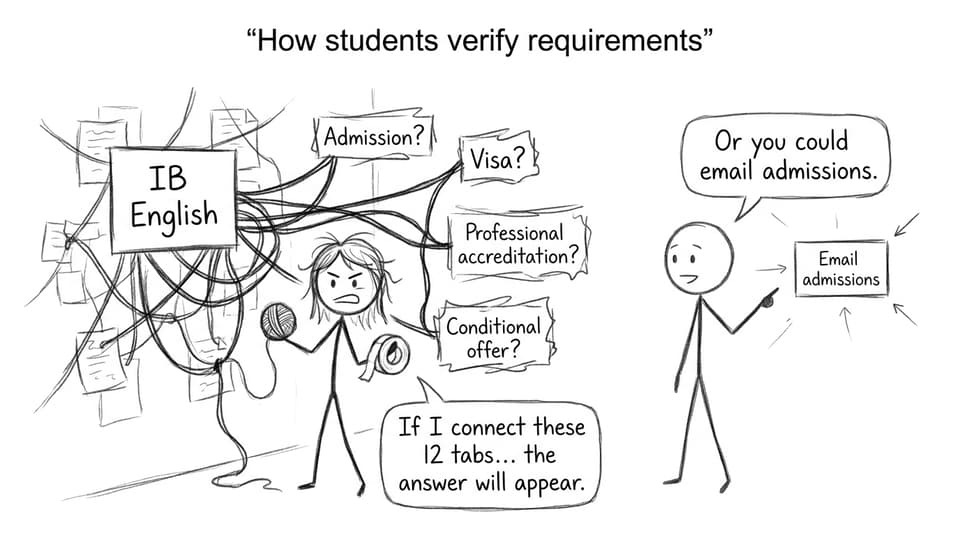
If you’re unsure how universities treat non-A routes, this is useful background reading: Will UK Universities Consider You If You Take English B? and Understanding UK Visa Exemptions for English B Students.
How to aim for the “safe” IB English grade (without burning out)
If your target is an IELTS exemption, treat IB English like a score-margin game. A 5 might be enough at many places, but a 6 buys breathing room.
Here’s a calm, high-return approach.
Learn the rubric language (so you stop guessing)
A lot of IB English improvement is simply understanding what top-band writing looks like, then copying the shape until it becomes yours.
Use How to Understand and Apply the IB English Assessment Rubrics as your reference point. Then use RevisionDojo’s Grading tools to get faster feedback loops on drafts and timed writing.
Build Paper 1 skill with repeatable drills
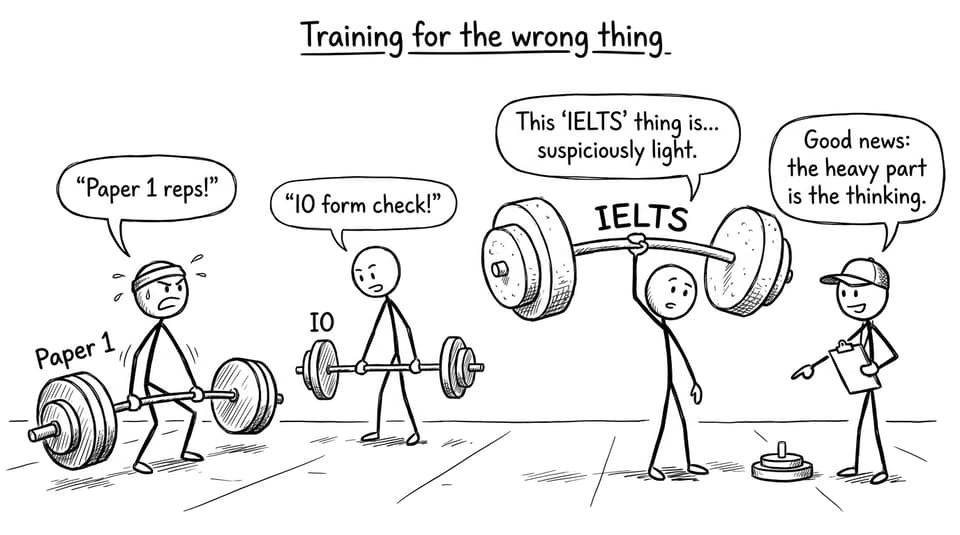
Paper 1 rewards pattern recognition under time pressure. You don’t need a magical annotation style. You need a method you can repeat when you’re tired.
Follow the practice loop in IB English Paper 1: Best Ways to Prepare. Then turn recurring mistakes into RevisionDojo Flashcards so the same problems don’t follow you into the exam.
Make your evidence do more work
The fastest way to lift a IB English grade is to stop “dropping quotes” and start using evidence as part of your sentence-level thinking.
A practical guide: How to Use Direct Quotes and Paraphrasing Effectively.
Closing: make IB English your quiet advantage
The best part about using IB English to exempt you from IELTS is that it’s not an extra hoop. It’s already your work. Your essays, your reading, your oral analysis, your ability to write clearly when time is short.
In many cases, a 5+ in IB English A is the key that unlocks the exemption. But the students who stay calm in application season are the ones who aim for a little more than the minimum, verify policies early, and build a routine that makes improvement predictable.
If you want that predictability, RevisionDojo gives you the full system: Questionbank for targeted practice, Study Notes for fast review, Flashcards for retention, AI Chat for clarification, Grading tools for feedback, plus Predicted Papers and Mock Exams to rehearse the real thing. Start with the IB English blog hub and build your score margin while everyone else is still guessing.