
The question that keeps you awake
You can feel it in the way you reread the entry requirements page at 1:13 a.m. The course list looks perfect. The grades feel possible. Then you spot the language line and wonder if one decision in your IB timetable (English B) quietly changes everything.
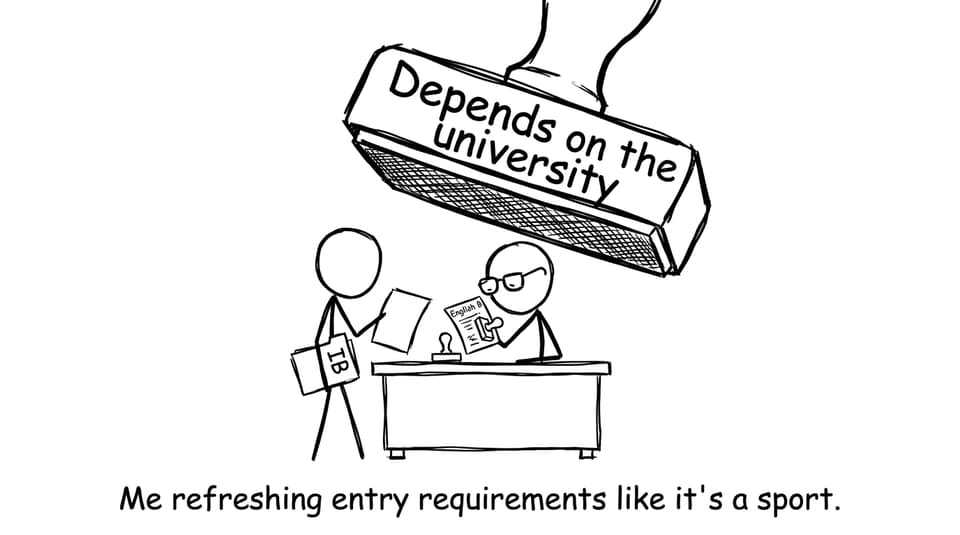
Here’s the calm truth: many UK universities will consider you with English B. But the details matter. Level (HL vs SL), your final score, the course you’re applying to, and each university’s policy can all change the answer.
Quick checklist before you panic
Use this mini-checklist to make the decision feel measurable:
-
Confirm whether your target course requires a specific English qualification (some are stricter than others).
-
Note whether the university mentions IB English B specifically or only “English A” / IELTS.
-
If they accept English B, check whether they require HL, and what minimum score.
-
Prepare a backup plan in case they still ask for an external test.
-
Build your score margin early (a 5 vs a 6 can change options).
If you want to anchor your research with guidance made for IB students, start with The Pathway to UK Universities.
What English B signals to UK universities
In the IB, English B is a Language Acquisition course designed for students who are not fully fluent yet, but can work confidently in English across real-world and academic contexts. That design is exactly why UK universities often treat it as evidence of proficiency, especially at Higher Level.
RevisionDojo breaks down how it fits into practical requirements here: Understanding UK Visa Exemptions for English B Students. It’s useful because it clarifies a common misconception: admission requirements and visa/immigration language proof can overlap, but they’re not always identical.
IB English B in the UK: where HL vs SL really matters
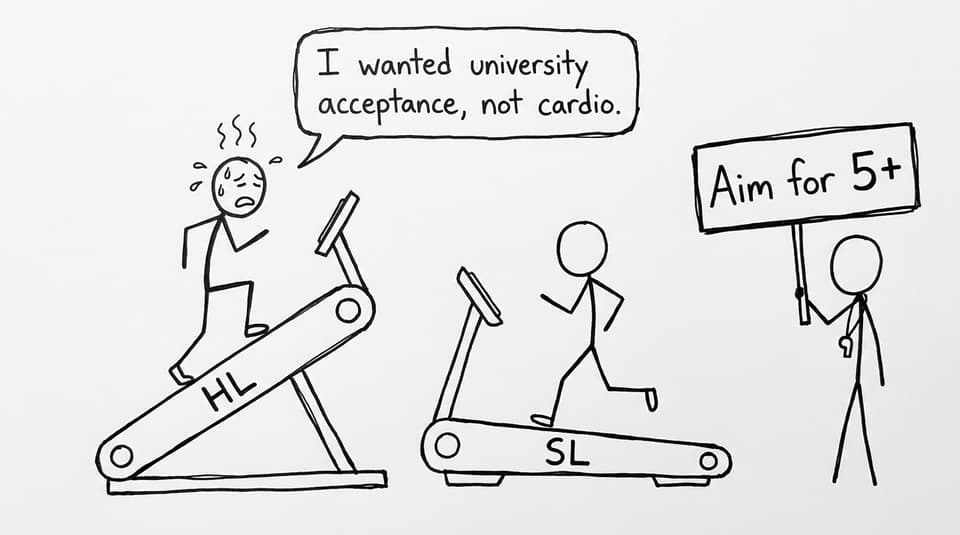
If you take one thing from this post, make it this: IB English B at HL is typically viewed more favorably than SL.
Competitive UK universities (often including Russell Group options) are more likely to:
-
prefer English B HL over SL, and
-
set a minimum score (commonly 5 or above in many policies).
Less competitive programmes may accept either level, especially if your overall IB profile is strong. Still, always check the course page, not just a general “international qualifications” list.
When you might still need IELTS (and how to plan for it)
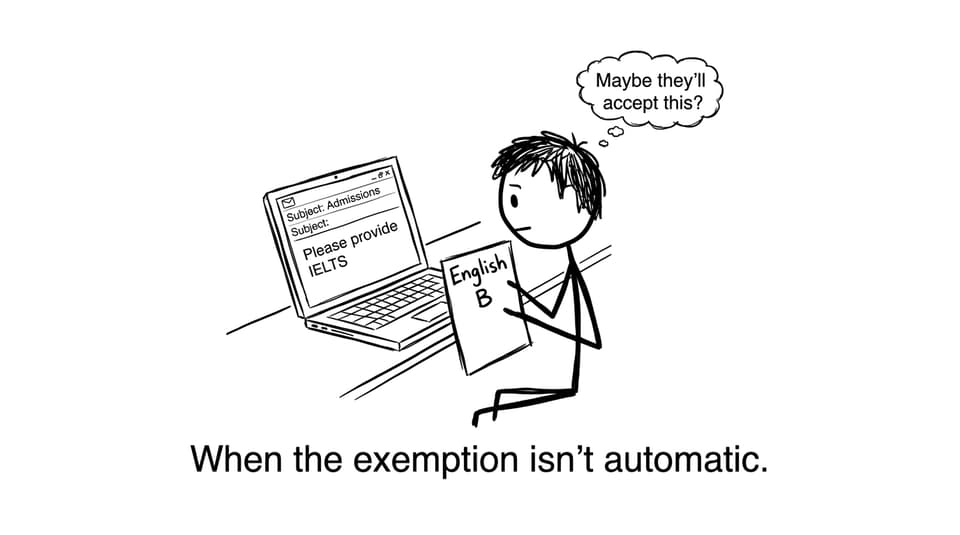
Even with English B, some universities may request another English test. This is not always a rejection of your IB course; sometimes it’s a policy choice for certain degrees, or a conservative approach to standardising applicants.
To understand how universities treat English qualifications more broadly, these guides help you compare:
Practical planning tip: if a university says “English B accepted at HL with 5+,” treat that as your minimum, not your comfort zone. In IB terms, building a buffer reduces the chance you end up scrambling late.
How to strengthen your application if you’re taking English B
English B doesn’t have to be a weakness. It can be a story: you’re proving academic readiness while learning in a second language. The key is to make the proof obvious.
Use your IB prep like a system, not a vibe
This is where RevisionDojo quietly saves hours. If your goal is a higher English B score (and fewer surprises), build a repeatable loop:
-
Drill weak skills using the English B Questionbank and course hub (targeted practice beats random practice).
-
Use English B Papers to rehearse timing and stamina.
-
Patch gaps fast with Study Notes like Blogs, diaries & personal letters notes.
-
If coursework confidence matters, study real models in the IB English B Coursework Exemplars.
Behind the scenes, that same loop is what makes RevisionDojo feel like the ultimate IB resource: Study Notes for clarity, Flashcards for recall, AI Chat when you’re stuck, Grading tools for honest feedback, plus Predicted Papers and Mock Exams to make exam day feel familiar. If you need human direction, Tutors can turn confusion into a plan.
Closing: make your IB choices work for you
UK universities can absolutely consider you if you take English B. The difference between stress and confidence is research plus a score buffer: know what each course requires, aim for HL when it fits your pathway, and prepare for the possibility of extra language proof.
If you want the simplest way to push your English B grade up while you juggle the rest of the IB, build your routine inside RevisionDojo: Questionbank practice, Study Notes, Flashcards, AI Chat support, Grading tools, and timed exam rehearsal with Predicted Papers and Mock Exams. Your application doesn’t need perfect certainty, it needs momentum you can prove.