



Time disappears differently in IB Visual Arts.
One minute you’re “just testing a texture,” and the next it’s midnight, your camera roll is full of blurry process shots, and your Comparative Study is still a tab you keep meaning to open.
If that sounds familiar, you’re not lazy. IB Visual Arts simply asks you to do three kinds of work at once: make, research, and reflect. The students who feel calm near deadlines aren’t magically more inspired. They’re usually just running a simple system.
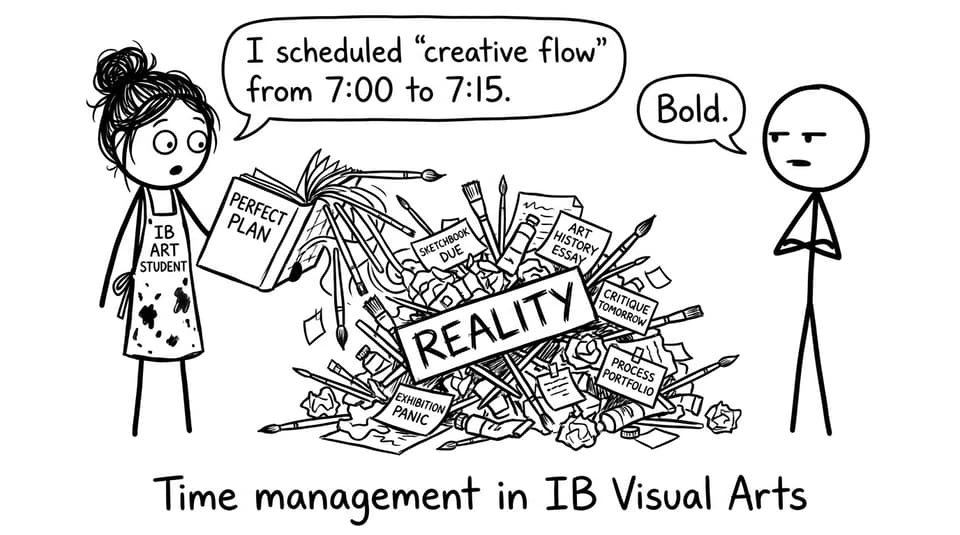
A quick IB Visual Arts time management checklist
Use this as your weekly anchor for IB Visual Arts:
-
Put every deadline in one master calendar (school + personal).
-
Touch all three components each week: experimentation, research, and refinement.
-
Document as you go (photos + 3-sentence reflections).
-
Time-box sessions (25-50 minutes) instead of “until I feel done.”
-
Do a 10-minute weekly review and reset.
When you want a clearer map of what examiners reward across the course, keep IB Visual Arts assessment criteria explained simply open while you plan.
Build a timeline that respects how IB Visual Arts is graded
The workload feels heavy because IB Visual Arts isn’t one project. It’s three streams that feed each other.
Start by listing milestones for:
-
Process Portfolio development (screens, experiments, annotations)
-
Comparative Study drafting (artworks, analysis, comparison, citations)
-
Exhibition production and selection (resolved works + curation)
Then work backward from school deadlines with “buffer weeks.” Art takes longer than you think because it includes setup, drying, reprints, failed attempts, and rewriting reflections.
If you need component-specific structure, use these guides as your references:
Use weekly goals that are small enough to finish on a tired day
A good IB Visual Arts goal is measurable and unromantic. Not “make a masterpiece.” More like:
-
“Two thumbnail compositions + one material test.”
-
“Write 120 words of formal analysis for Artwork A.”
-
“Curate 10 process photos into one clean screen draft.”
This is also where RevisionDojo becomes a quiet advantage: when your brain is overloaded, you can offload structure. Use Study Notes to clarify what a strong screen or analysis needs, then turn key points into Flashcards so the criteria stays familiar even during busy weeks.
For broader scheduling, borrow the planning logic from time management strategies for IB students and apply it to your studio routine.
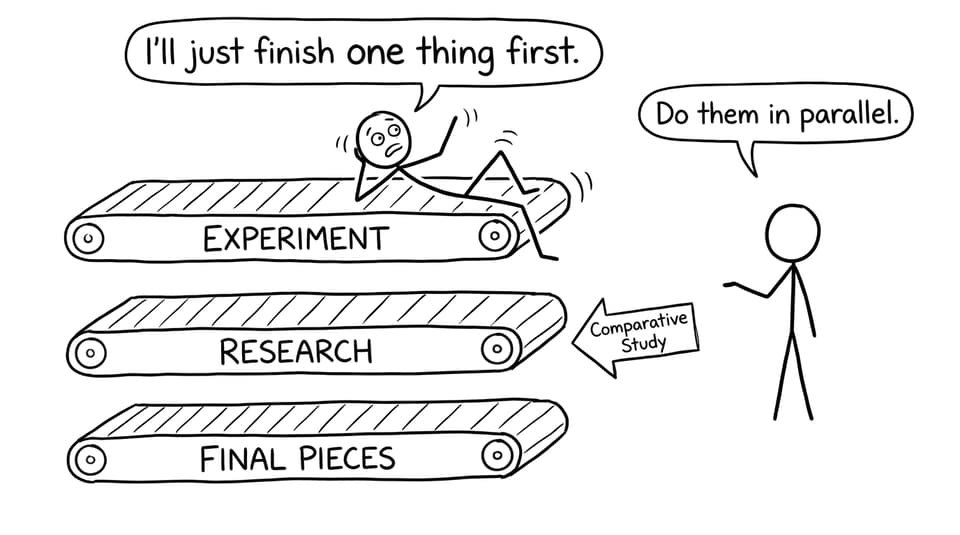
Work in parallel: experiment, research, then refine (repeat)
Many students treat IB Visual Arts like a single track: “I’ll finish the exhibition pieces first, then write everything.” That’s how you end up trying to remember your process after it’s gone.
Instead, run a loop:
-
Experiment (studio): quick trials, variations, mistakes you can learn from.
-
Research (Comparative Study): artist/context notes that actually change what you try next.
-
Refine (resolved work): select what’s worth pushing toward exhibition quality.
If you’re unsure how to choose artists efficiently, this saves hours: best artists to research for IB Visual Arts.
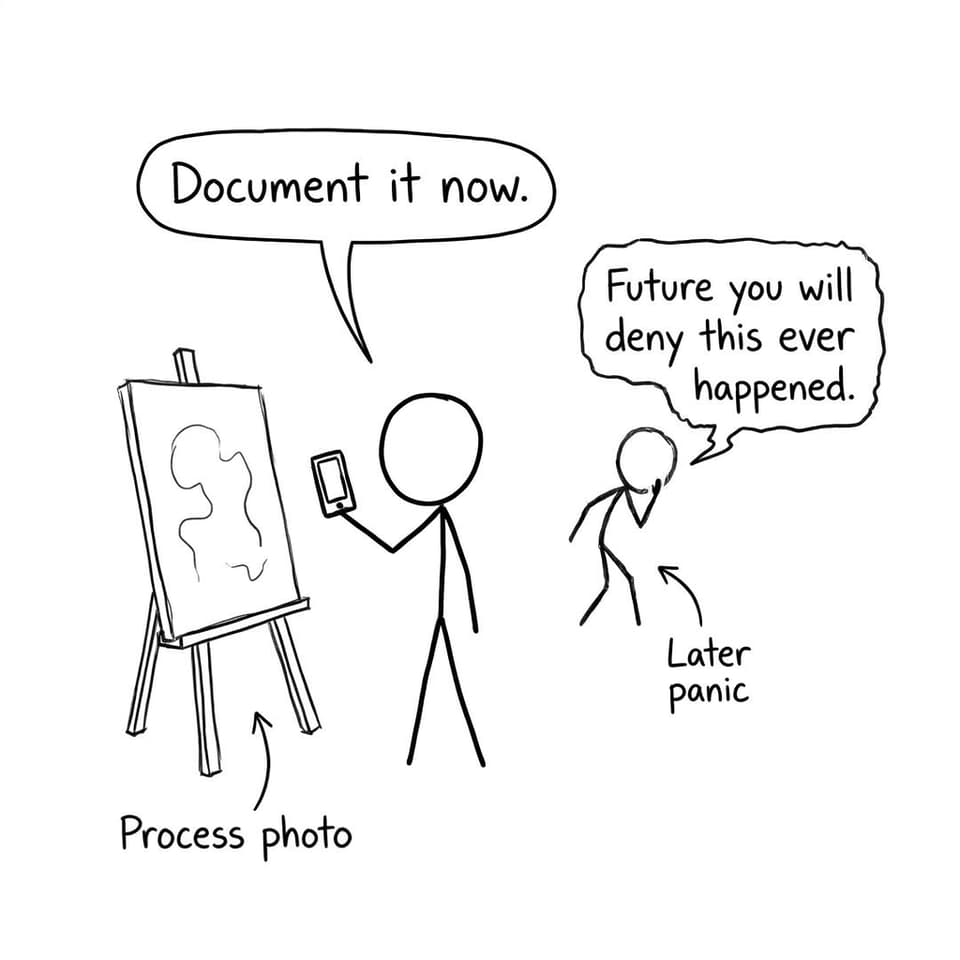
Document like it’s part of the artwork (because it is)
In IB Visual Arts, documentation isn’t admin. It’s evidence.
Make it easy:
-
Take photos at the end of every session (even the messy ones).
-
Write a 3-sentence reflection: What I tried. What changed. What I’ll do next.
-
Save sources immediately with citation details.
You can even use RevisionDojo’s AI Chat to turn rough notes into clearer reflection drafts, then check them against the rubric. When you need sharper feedback, RevisionDojo’s Grading tools help you spot what’s missing before your teacher has time to.
Common time traps (and the simple fixes)
The biggest IB Visual Arts time traps are predictable:
-
Over-polishing early pieces before your theme and methods are stable.
-
Saving writing for later, then rushing reflections and analysis.
-
Staying in one medium too long because it feels safe.
-
Ignoring selection and curation until the final month.
If you want the clearest list of what to avoid, read most common mistakes in IB Visual Arts.
Conclusion: make IB Visual Arts feel smaller
The secret to calmer IB Visual Arts weeks is not working nonstop. It’s working predictably.
Build a timeline, set weekly goals you can finish even when you’re tired, run your experiment to research to refine loop, and document as you go. When you want everything in one place, RevisionDojo is built for the full IB routine: Study Notes, Flashcards, AI Chat, Grading tools, plus Mock Exams and Predicted Papers for your other subjects so Visual Arts doesn’t swallow your whole schedule.
If you want more course-specific guidance, browse the IB Visual Arts resources hub and start tightening your system this week.