The night before a big IB deadline, the room gets unusually quiet.
Not because you suddenly feel ready, but because you can hear the cost of every small decision you made all year: the moments you revised properly, the times you postponed, the days you depended on “I’ll catch up later.” In a traditional classroom, those choices are cushioned by bells, timetables, and teachers physically present.
In an online world, they’re not.
That’s why the IB Online Diploma Programme (DP) matters. It’s not simply “the same school on a screen.” It is the IB admitting something honest: the future of education will be more flexible, more global, and more self-directed, and students will need systems, not motivation, to succeed.
Quick overview: what the IB Online DP changes
If you want the headline version before we go deeper, here’s what the IB Online DP makes possible:
-
Access to the Diploma Programme without living near an IB World School
-
Flexibility for students who can’t follow a standard school schedule
-
Daily global collaboration that mirrors modern university and work life
-
Future-ready skills like digital literacy, independence, and adaptability
-
Consistent standards: the same IB expectations and in-person final exams at approved centres
And for exam students, it creates one urgent question: How do I prepare for IB exams when learning is less structured?
IB Online DP and access: why inclusion becomes real
The IB has always been built on a promise: world-class education shouldn’t be limited by geography. But for years, access depended on one thing: being able to physically attend an authorized school.
The IB Online DP changes that constraint.
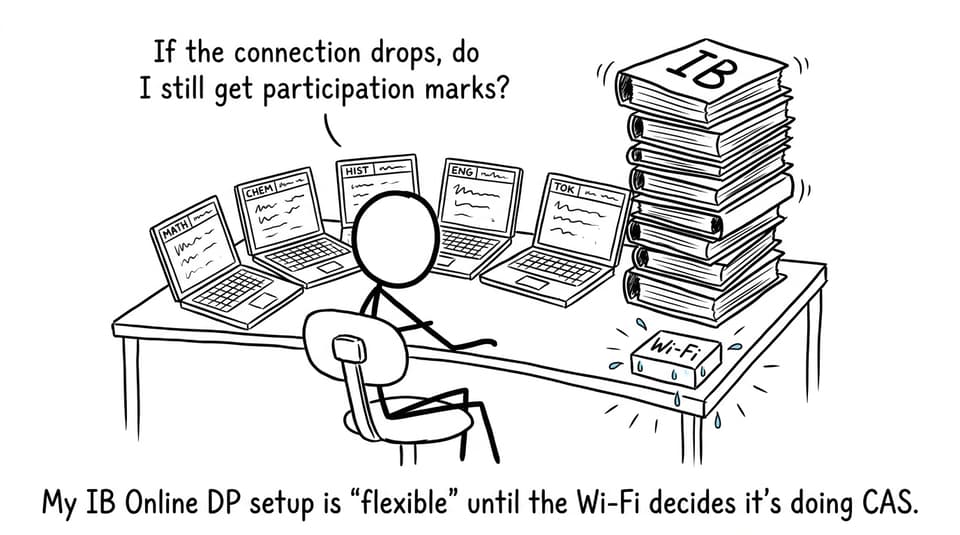
For students who relocate often, live far from an IB campus, manage health challenges, or balance high-level training in sport or the arts, “attendance” can be the barrier that blocks everything else. The online pathway reduces that barrier without lowering the standard.
In a practical sense, this means the IB becomes less like a building and more like a portable academic framework. That shift sounds small. It isn’t. It changes who gets to participate, who gets continuity, and who gets to keep long-term academic plans intact when life becomes messy.
Why the IB Online DP fits the direction of global education
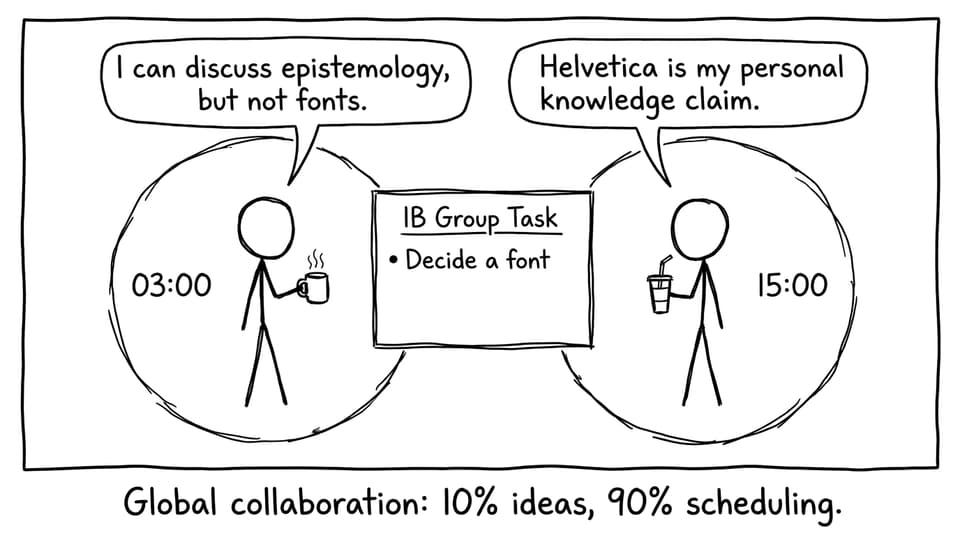
Online learning exploded during the pandemic, but the deeper trend started earlier: universities moved content online, workplaces went hybrid, and collaboration began happening across time zones as normal life.
The IB Online DP matters because it matches that reality. Students learn in a mix of:
-
Synchronous sessions (real-time classes)
-
Asynchronous study (self-paced work)
-
Digital collaboration (projects, discussions, shared documents)
This is basically first-year university training in disguise. If you can manage your IB workload when your teacher isn’t always “in the room,” you’re building the same self-management muscles you’ll need later.
For exam preparation, that’s a gift and a challenge: you gain flexibility, but you lose automatic structure. Which is why your revision system must become more intentional.
A solid starting hub for that structure is RevisionDojo for IB, because it’s designed for exactly this modern reality: learn, recall, apply, get feedback, repeat.
The future-ready skills the IB Online DP quietly forces you to learn
The most important thing an online IB programme teaches may not be a syllabus point. It may be how to operate when nobody is watching.
Digital literacy becomes a daily habit
In the online IB, you constantly practice:
-
finding reliable sources
-
managing digital files and platforms
-
communicating clearly in writing
-
collaborating through shared tools
This matters for exams too. Students who are comfortable navigating digital resources tend to revise more efficiently, because they can search, filter, and retrieve information faster.
To reduce friction, use searchable resources like Digital IB Study Notes You Can Access Anywhere, then immediately convert them into recall tasks.
Self-discipline stops being inspirational and becomes practical
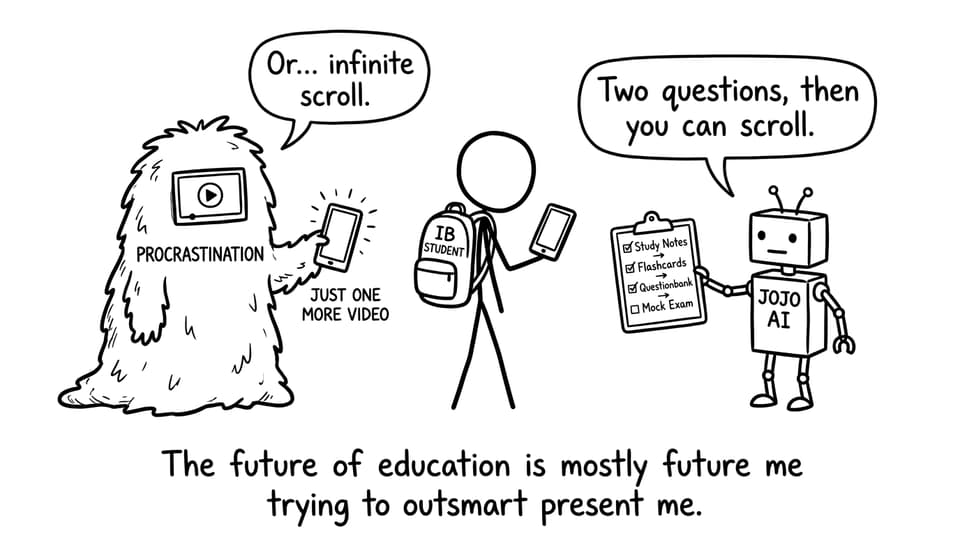
Online learning reveals a truth: motivation is unreliable.
So the real skill is building a loop you can execute even on tired days. A good IB loop is:
-
clarify one topic
-
test yourself
-
review mistakes
-
retest
That loop is the backbone of RevisionDojo’s ecosystem: Study Notes, Flashcards, Questionbank, AI Chat, Grading tools, Predicted Papers, Mock Exams, Coursework Library, and Tutors.
If you want a tighter guide for day-to-day preparation, The Ultimate Guide to Revision for IB Students is a reliable reference.
Global collaboration becomes a lived experience
In a physical school, “international-mindedness” can sometimes feel like a poster on the wall.
In the online IB, it becomes your Tuesday afternoon.
You’re discussing ideas with classmates who have different contexts, assumptions, and examples. That is hard at first. Then it becomes normal. Later, it becomes an advantage.
Assessment and integrity: what stays the same in IB Online DP
A common worry is that online equals “easier.” The IB Online DP matters precisely because it aims to keep the rigour while changing the delivery.
Key point for exam students: final exams are still sat in person at certified centres. That anchors the programme to consistent assessment standards.
What changes is the pathway to readiness. Because you may have more independent study time, you need faster feedback loops. That’s where RevisionDojo helps: you can practise exam-style questions in the Questionbank and use feedback to shorten the gap between effort and improvement.
For strategy, IB Question Bank | How to Use It Effectively breaks down how to turn practice into marks, not just “hours spent.”
A practical IB exam-prep checklist for online learners
If you’re in an online or hybrid setting (or even just studying like you are), use this weekly structure:
-
Daily (10-15 min): spaced repetition with IB Flashcards with Spaced Repetition (SRS)
-
3-5 times/week (30-60 min): topic-filtered practice using the Questionbank
-
2 times/week (20-30 min): patch confusion using IB Subject Note Collections
-
1 time/week (timed): exam rehearsal using IB Predicted Papers by IB Examiners (Free)
-
After every session (5 min): write a 3-line mistake log: what happened, why, smallest fix
If you’re rebuilding confidence after a rough set of results, Failed Mock Exams? You Can Still Pass IB is a grounded reset.
The challenge no one advertises: wellbeing in the IB Online DP
The online IB solves access problems, but it can create quiet new ones:
-
isolation
-
screen fatigue
-
blurred boundaries between study and rest
This is not a productivity issue. It’s a sustainability issue. If your brain never gets a real “off switch,” your revision quality drops even when your hours increase.
A helpful rule: protect two anchors per week: one social and one physical, and treat them as non-negotiable.
For a more realistic approach to balance, IB Exams Without Pausing Your Life puts boundaries back into the plan.
Conclusion: the IB Online DP is the future, but your system is the present
The IB Online DP matters because it reflects what education is becoming: more flexible, more global, more digital, and more dependent on the student’s ability to self-manage.
But flexibility only helps if you have a structure strong enough to hold it.
If you want that structure for IB exams, build it in one place: use RevisionDojo’s Questionbank for practice, Study Notes for fast clarity, Flashcards for daily recall, AI Chat and Grading tools for feedback, and Predicted Papers plus Mock Exams for realistic rehearsal. Then use the Coursework Library and Tutors when you need deeper support.
The future of education isn’t just online. It’s students who can guide themselves. And that’s a skill you can train, starting today, with your next IB study session.