



In the week before exams, it can feel like human rights protection is a neat flowchart: laws exist, therefore rights are protected. Then you read one case study and the tidy diagram breaks. Courts ignore evidence. Governments deny access. Headlines move on.
That’s where IB Global Politics gets interesting. In real life, human rights often survive because actors without formal authority keep pushing when the state fails, hesitates, or actively resists.
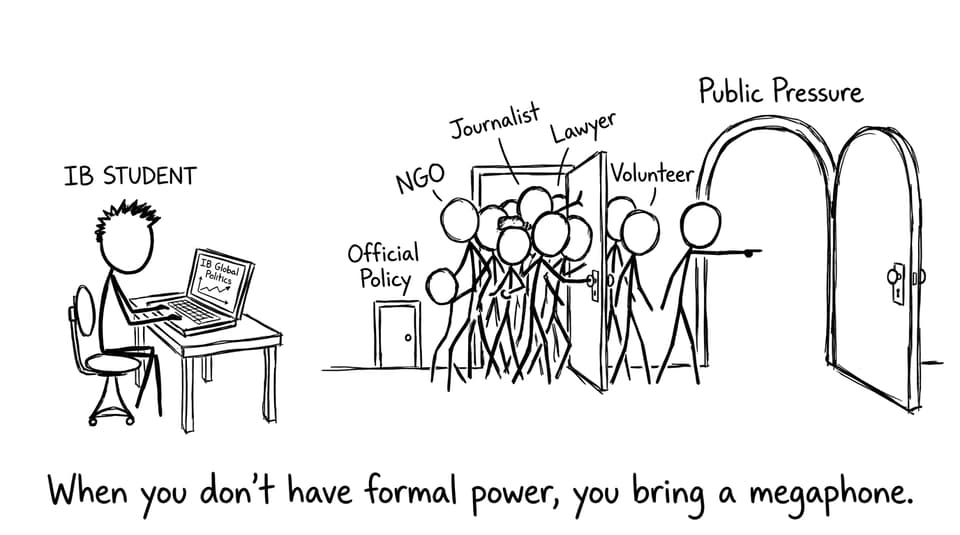
Quick exam checklist: what non-state actors actually do
Use this as a clean paragraph plan in IB Global Politics essays and Paper 1 responses:
-
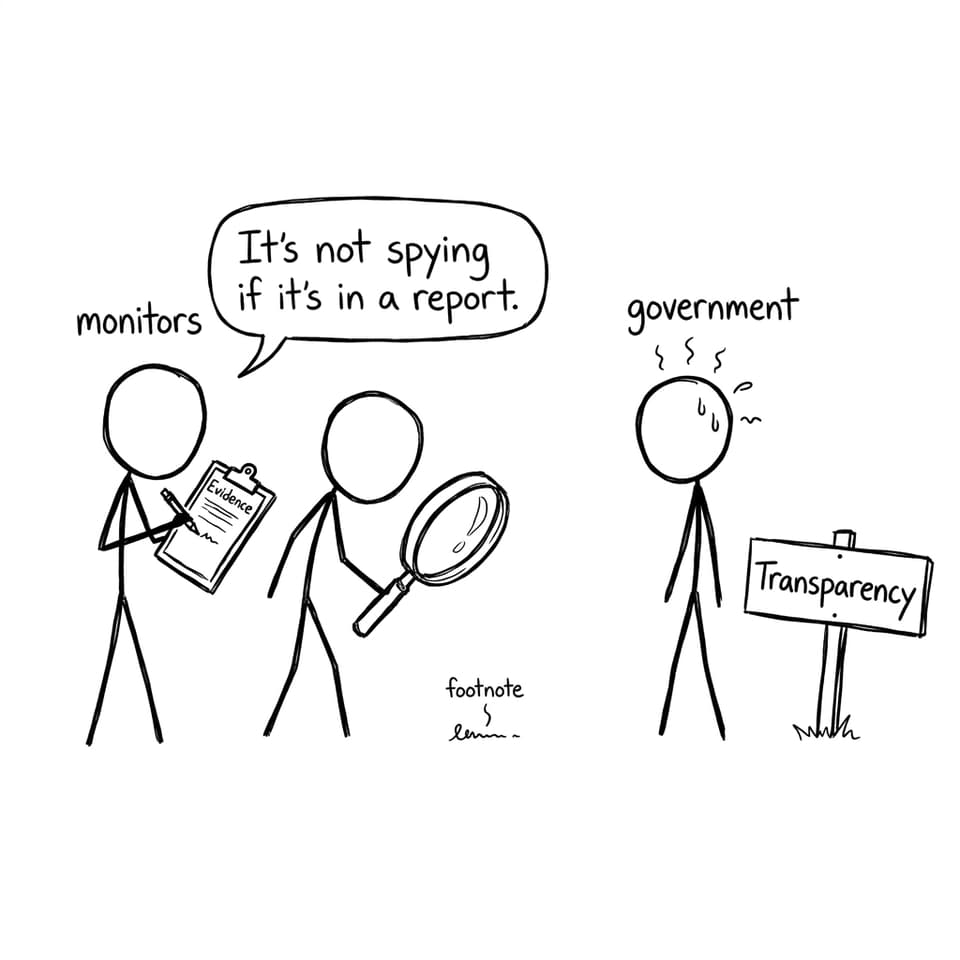
Monitor and report violations (documentation, data, testimony)
-
Advocate and set agendas (campaigns, lobbying, media pressure)
-
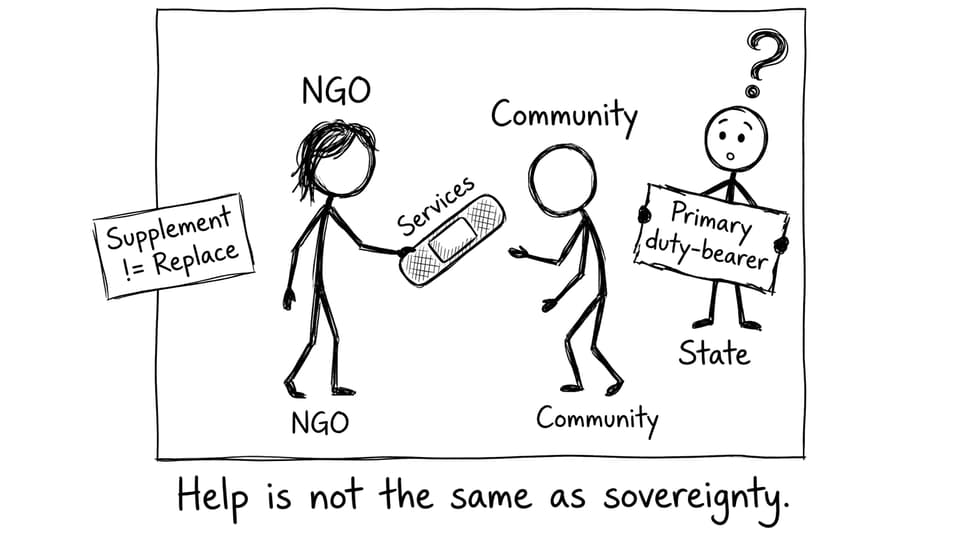
Provide services (legal aid, healthcare, education, protection)
-
Strengthen accountability (evidence to courts, reviews, norm-building)
-
Evaluate limits (funding, access, legitimacy, state repression)
For definitions and syllabus language, keep the IB Global Politics Glossary open while you revise.
Monitoring and reporting: making abuses harder to hide
A powerful non-state actor contribution is simple: they notice, and they leave a trail. NGOs, journalists, and civil society groups gather witness statements, satellite imagery, medical reports, and legal analysis. Then they publish it in ways that travel to the media, to international organizations, and sometimes to courts.
In IB Global Politics, this is a form of power that works through information and reputation. Even when a state has coercive power, it may still care about legitimacy, investment, alliances, or diplomatic standing.
If you want a fast content refresher for stakeholder interactions, use Interactions of Political Stakeholders and Actors and the matching Questionbank practice.
Advocacy and agenda-setting: turning “sad news” into a political issue
Some violations persist not because nobody knows, but because nobody feels forced to act. Non-state actors try to change that. They run campaigns, coordinate petitions, brief journalists, meet decision-makers, and shape the language people use “crackdown” vs “security,” “refugees” vs “illegal migrants.”
This is a core move in IB Global Politics: showing how agenda-setting can shift what governments consider “realistic” or “urgent.” For more exam-friendly mechanisms and examples, see How Do Non-State Actors Influence Global Politics? and browse related prompts in All IB Global Politics Posts.
Services and support: protecting rights on the ground
In many contexts, the most immediate human rights protection looks unglamorous: legal clinics, shelters, documentation for asylum claims, emergency healthcare, schooling during displacement.
In IB Global Politics, this matters because it highlights the difference between duty and capacity. States remain the primary duty-bearers, but non-state actors can reduce harm when state systems are overwhelmed, unwilling, or discriminatory.
To revise this through a clear rights lens, pair Understanding Human Rights Notes with Competing Global Perspectives on Human Rights Notes.
Accountability: evidence, institutions, and long games
Non-state actors also help human rights protection by feeding accountability systems: submitting evidence, supporting victims, training lawyers, and participating in review processes. Even when justice is slow, these actions build norms and expectations over time.
This links neatly to essay evaluation in IB Global Politics: ask whether accountability is symbolic, selective, or genuinely constraining. For structured revision, use Codification and Protection of Rights Notes and Responses to Violations Notes.
Limits you should evaluate (to reach top bands)
High-mark answers in IB Global Politics don’t just list roles; they weigh constraints:
-
No formal authority: they can expose and persuade, but not enforce.
-
Funding and bias claims: dependence can shape priorities or credibility.
-
Access and repression: states can restrict visas, data, or protest rights.
-
Uneven influence: some crises attract attention; others stay invisible.
For a useful comparison debate, revise IB Global Politics: Security vs Human Rights.
Conclusion: turn the topic into marks
Human rights protection is rarely a single heroic moment. It’s usually a long chain of people collecting evidence, telling stories that travel, and building pressure until the “impossible” becomes policy.
That chain is a core theme in IB Global Politics\ and a reliable way to build balanced paragraphs under exam time pressure. To practise turning these ideas into exam-ready responses, use RevisionDojo’s IB Global Politics Resources hub, then drill skills with the Questionbank, tighten recall with Flashcards, and test timing using Predicted Papers and Mock Exams. If you want fast feedback loops, RevisionDojo’s AI Chat, Grading tools, and Tutors help you turn “I understand it” into “I can write it.”