
Security feels like a locked door. Human rights feel like the air inside the room. In IB Global Politics, the hardest questions often ask what happens when you can’t have both at once. After an attack, during unrest, or in a fragile state, leaders reach for “security” like a fire extinguisher. But students know the uncomfortable twist: sometimes the extinguisher damages the room.
This debate matters in IB Global Politics because it tests how you evaluate power, legitimacy, sovereignty, and justice without falling into a simple “rights good, security bad” script.
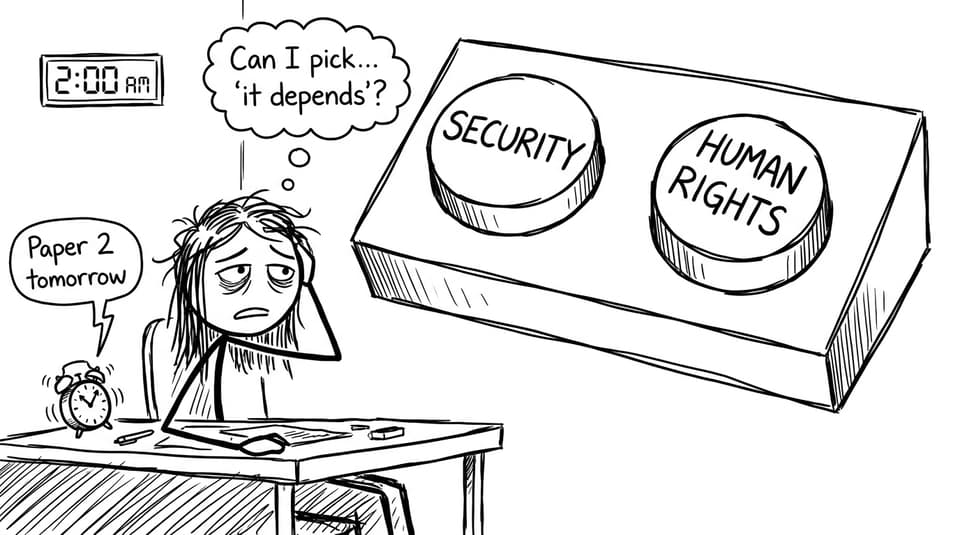
A fast IB Global Politics checklist (before you argue)
Use this mini-checklist to keep your essay analytical:
-
Define what “security” means (state security? human security? public order?).
-
Specify which rights are being limited (privacy, movement, expression, fair trial).
-
Test proportionality: is the response targeted and evidence-based?
-
Test temporariness: is there a clear end date and oversight?
-
Separate derogable vs non-derogable rights (some limits are never allowed, like torture).
For a concept refresher, anchor your definitions with What Are Human Rights in Global Politics?.
The security-first argument in IB Global Politics
In IB Global Politics, the strongest security-first argument is not “rights don’t matter.” It’s that rights can become meaningless if people are dead, displaced, or living in fear.
When a state faces terrorism, civil conflict, or severe instability, governments often claim they must act quickly: increased surveillance, expanded detention powers, restrictions on movement, or emergency policing. Supporters argue that these measures can prevent larger harm, and that restoring stability creates the conditions in which rights can later be protected.
This view links to legitimacy: many citizens accept reduced freedoms if they believe the state is preventing violence. That’s why your analysis should connect security policy to the government’s duty to protect and its need to maintain public trust. You can build that legitimacy angle with targeted practice in the Legitimacy Questionbank.
The human-rights-first argument in IB Global Politics
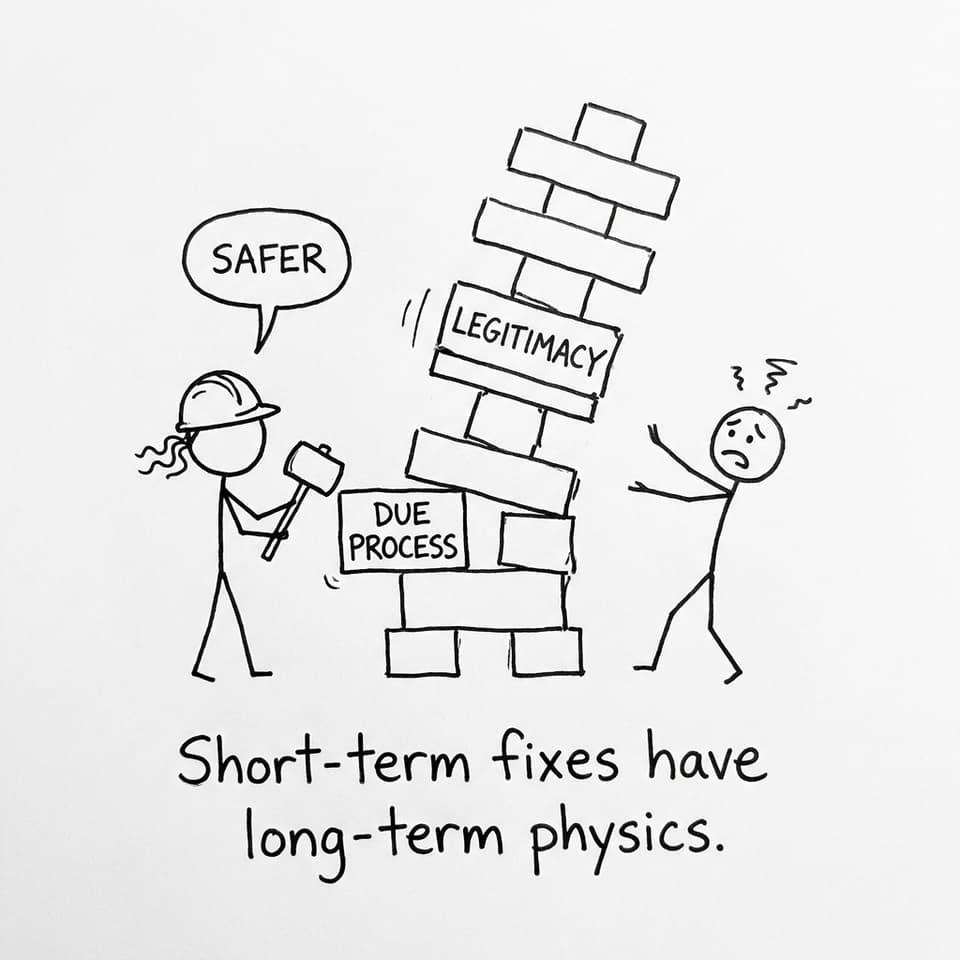
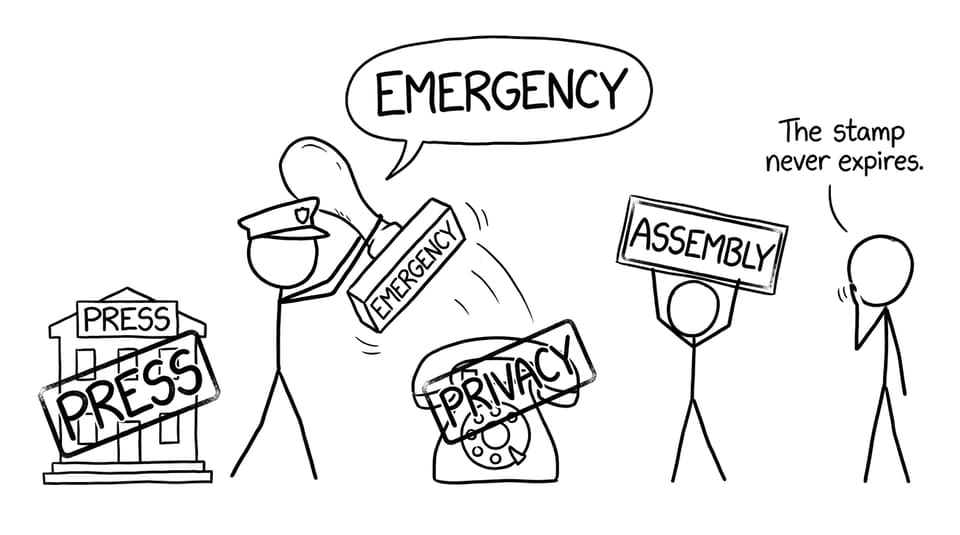
The human-rights-first critique is about the “after.” Emergency measures have a habit of sticking around.
In IB Global Politics, critics argue that security policies can become tools of repression: censorship framed as “anti-extremism,” discrimination framed as “public order,” or surveillance justified as “temporary.” Once institutions learn they can bypass safeguards, democratic habits weaken. Even worse, violations like arbitrary detention can increase grievances and contribute to radicalisation, making long-term security harder.
To strengthen this line, revise the core frameworks with Understanding Human Rights and the deeper Understanding Human Rights Notes.
The best IB Global Politics judgement: interdependence, not a winner
High-mark responses in IB Global Politics usually argue that security and human rights are interdependent.
International law reflects this balance: some rights may be restricted under tightly defined emergencies, but others are non-negotiable. That’s where evaluation lives: context, evidence, oversight, and long-term consequences.
If you’re writing Paper 2-style evaluation, build structure with IB Global Politics Paper 2 Guide Notes, then add depth with Debates on rights and justice and Competing Global Perspectives on Human Rights Notes.
How to turn this into exam marks (RevisionDojo workflow)
In IB Global Politics, ideas improve fastest when you loop practice and feedback:
-
Start with the IB Global Politics Resources hub to pull Study Notes, Flashcards, and case studies.
-
Drill arguments with the Questionbank and compare how different prompts shift your judgement.
-
Use AI Chat to test counterclaims (“What would a government reply?” “What evidence would an NGO use?”).
-
Run timed practice with IB Global Politics Predicted Papers and the wider Global Politics predicted papers, then use grading tools to tighten evaluation and balance.
Conclusion: the exam-winning angle in IB Global Politics
Security and human rights aren’t rival teams; they’re more like two supports holding up the same bridge. In IB Global Politics, you score higher when you evaluate trade-offs with proportionality, oversight, and long-term stability instead of picking a side instantly.
If you want to practise this debate the way examiners reward it, use RevisionDojo’s Questionbank, Study Notes, Flashcards, AI Chat, grading tools, Predicted Papers, Mock Exams, and Coursework Library to build arguments that stay balanced under time pressure. Then walk into the exam knowing your judgement isn’t just an opinion; it’s an evaluated conclusion.