
IB progress is difficult to see from the outside. A student may spend three hours at a desk and make little progress, then solve one stubborn misunderstanding in twenty minutes and change the direction of an entire subject.
So, can parents monitor that progress through a RevisionDojo parent dashboard? The careful answer is that RevisionDojo's publicly documented parent offering supports families with IB-specific resources, but it does not currently describe a universal, standalone parent dashboard that automatically exposes every student's activity and predicted grades. Students have their own learning tools and progress information, while schools can use broader analytics and share relevant insights with families.
Parents can still track progress productively. The best approach is a student-approved weekly review combining RevisionDojo activity, timed assessment evidence, coursework feedback, and school-issued predictions. That preserves the student's ownership while giving the family something more useful than repeated questions about whether revision happened.
The short answer for students and parents
Here is the practical picture:
- RevisionDojo provides a dedicated IB support page for parents and families, focused on giving students access to IB study materials, practice, feedback, and AI-powered grading.
- Students can use RevisionDojo's learning and analytics tools to identify completed work, weaknesses, and improvement priorities.
- Schools using RevisionDojo for Schools can access class and student analytics, then communicate suitable findings during conferences or progress reviews.
- The RevisionDojo IB Grade Calculator can estimate a diploma score from entered marks and relevant grade boundaries, but its output is not an official school prediction.
- A parent should not assume that purchasing access automatically creates a separate account containing the child's complete activity history.
- Available account features can change, so families should check the current parent page or contact RevisionDojo before relying on a particular monitoring function.
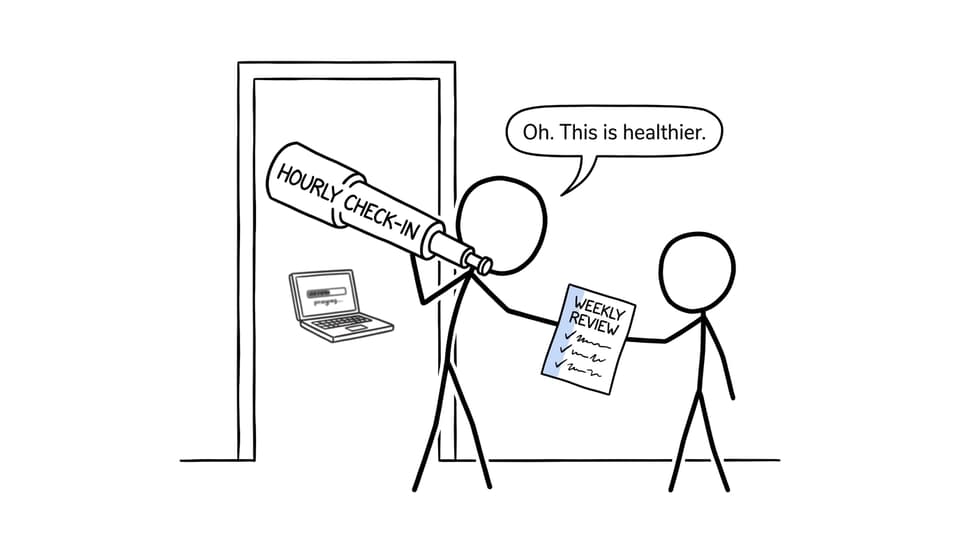
The distinction matters. A study estimate is useful for planning. An official predicted grade is a professional judgment made by the student's school.
What progress can families review on RevisionDojo?
The most useful progress indicators are rarely total hours or login streaks. They are evidence that the student is learning, applying, receiving feedback, and correcting mistakes.
Practice activity and weak areas
The RevisionDojo Questionbank lets students practise curriculum-aligned questions and receive feedback. A weekly review can therefore focus on questions attempted, topics covered, recurring errors, and whether previously weak material is becoming more secure.
This is more revealing than asking, "How long did you revise?" Time measures presence. Completed practice and corrected errors reveal what the time produced.
Parents do not need access to every response. A student can share a concise summary:
- the subjects practised that week;
- one topic that improved;
- one weakness still requiring attention;
- one timed task completed; and
- the next action already scheduled.
That creates accountability without turning study into surveillance.
Recall and consistency
RevisionDojo's AI-supported Flashcards help students use active recall and spaced review. For a parent, the meaningful question is not whether every daily session was completed perfectly. It is whether recall practice is happening consistently enough to support later question work.
A student who reads notes repeatedly may feel busy while remaining unable to retrieve the material under pressure. A healthier pattern moves from Study Notes to Flashcards, then into the Questionbank. The RevisionDojo app exam-preparation guide explains how these tools fit into one connected workflow.
Timed performance and exam readiness
Untimed accuracy can hide hesitation, inefficient methods, and weak exam pacing. Mock Exams and Predicted Papers add the constraint that makes progress more honest: time.
Families should look for trends across several attempts rather than reacting to one unusually strong or weak result. Useful questions include:
- Is accuracy becoming more stable?
- Are fewer questions being left unfinished?
- Does the student understand why marks were lost?
- Is targeted practice improving the next timed attempt?
RevisionDojo's guide to predicting an IB score without guessing offers a sensible way to interpret timed evidence as a range rather than a promise.
Coursework development
Coursework progress is different from exam practice. It develops through drafts, criterion-specific feedback, revision, and teacher guidance.
RevisionDojo's Grading tools and Coursework Library can help students understand rubric expectations and compare the development of successive drafts. The guide to tracking IB coursework development explains how feedback can reveal changing strengths and weaknesses.
Parents should review milestones rather than the student's full draft: research question approved, first draft completed, feedback received, revisions planned, and school deadline confirmed. Teachers remain the authoritative source for school requirements, authenticity expectations, and final submission decisions.
How predicted grades should be handled
Few numbers carry more emotional weight during the IB than a predicted grade. That is precisely why families should define it carefully.
According to the IB's published assessment explanation, an official predicted grade is a teacher's judgment of the grade a candidate is expected to achieve, based on evidence of the student's work and the teacher's knowledge of IB standards. It is not simply the output of a calculator, one mock result, or an AI grading session.
The RevisionDojo Grade Calculator serves a different purpose. Students can enter representative marks to explore an indicative subject and diploma outcome. This can help a family identify where improvement may have the greatest effect, but it should be labelled an estimate, not presented as the student's official predicted grade.
| Progress measure | What it can tell a family | What it cannot prove |
|---|---|---|
| Questionbank performance | Current topic strengths and recurring errors | The student's final IB result |
| Timed Mock Exam results | Pacing, application, and exam readiness trends | A guaranteed grade boundary or outcome |
| Coursework Grader feedback | Possible criterion-level improvement areas | The teacher's final judgment or moderated result |
| RevisionDojo Grade Calculator | An indicative score based on entered data | The school's official predicted grade |
| School report or teacher prediction | The school's current professional judgment | A guaranteed final result |
A better parent-student progress routine
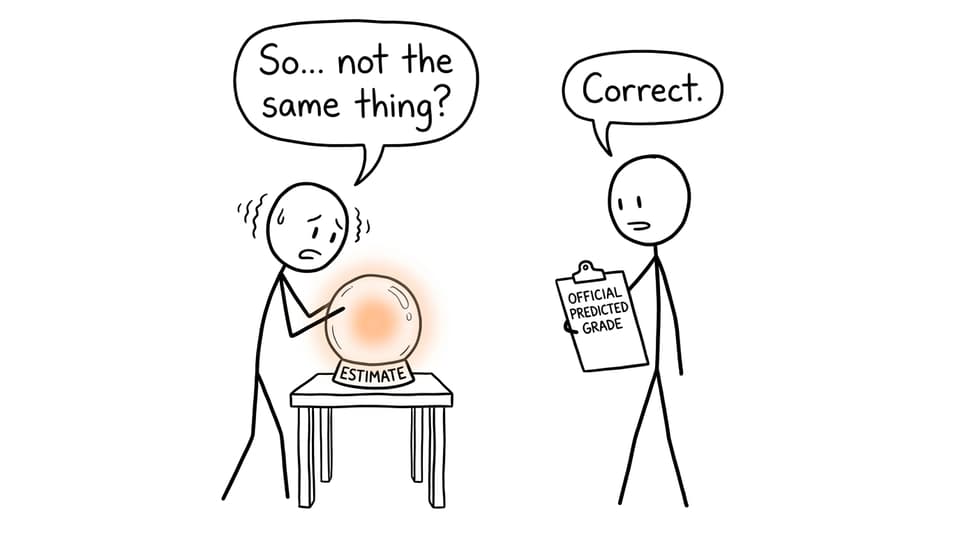
The strongest monitoring system is often a short conversation held at a predictable time. It gives parents visibility while allowing the student to remain responsible for the work.
Agree on access before reviewing data
Parents and students should decide what will be shared, how often it will be reviewed, and what kind of help is welcome. A student might share subject-level trends and deadlines while keeping individual answers private. If a school provides analytics or dashboard summaries, the family should follow its access and privacy procedures.
The principle is simple: consent first, interpretation second.
Hold one weekly review
A fifteen-minute weekly check-in is usually more constructive than daily interrogation. Use the same five prompts:
- What did you complete?
- What evidence shows improvement?
- Where are marks still being lost?
- What deadline or assessment comes next?
- What support would make the next week easier?
RevisionDojo's full toolkit makes the answers actionable. A content gap can lead to Study Notes and AI Chat. A recall gap can lead to Flashcards. An application problem can lead to the Questionbank. Timing weaknesses can be addressed through Mock Exams or Predicted Papers, while persistent confusion may justify focused help from Tutors.
Turn observations into one next action
Data becomes useful only when it changes behaviour. If Biology data shows weak command of a topic, the next step might be a small question set rather than another hour of general reading. If an essay loses marks for evaluation, the next step might be reviewing the Coursework Library, applying criterion-aligned Grading feedback, and confirming the revision with a teacher.
Do not create ten interventions from one disappointing result. Choose the smallest action capable of producing better evidence next week.
Escalate concerns through the right channel
RevisionDojo can show learning activity and generate useful estimates. It cannot replace the student's teachers or IB coordinator.
Families should contact the school when they need clarification about official predicted grades, assessment weightings, coursework deadlines, academic integrity, accommodations, or university reporting. Schools using RevisionDojo may also be able to share analytics during formal reviews. The guide to coordinator progress tracking across subjects shows how institutional analytics can support more informed conversations.
What students gain from healthy parental visibility
Good parental involvement reduces uncertainty without taking control. The student knows that weak results can be discussed as information rather than treated as a verdict. The parent gains a clear view of whether the revision process is functioning.
The balance is delicate. Too little visibility allows deadlines and avoidance to remain hidden. Too much monitoring can make every practice score feel final, encouraging students to protect the appearance of progress instead of exposing the mistakes they need to fix.
RevisionDojo works best as the ultimate IB resource when its tools form a learning loop: understand through Study Notes, retrieve through Flashcards, apply through the Questionbank, clarify through AI Chat, improve with Grading tools, rehearse through Predicted Papers and Mock Exams, calibrate coursework with the Coursework Library, and use Tutors when a human diagnosis is needed.
Make progress visible without making it performative
Parents can monitor IB progress with RevisionDojo, but the reliable route is currently collaborative rather than a promise of unrestricted parental access. Use student-shared learning evidence, school-provided analytics where available, and the Grade Calculator as an indicative planning tool. Keep official predicted grades in their proper place: with the school and the teachers who evaluate the full body of work.
For students, this approach protects something important. Revision remains their responsibility. For parents, it replaces anxious guesswork with a calm weekly picture.
Start with the RevisionDojo resources for parents and families, agree on a simple review routine, and let each week's evidence determine the next useful step.