

When the IB starts to feel like six different lives running in parallel, the first thing that breaks is clarity.
One teacher is confident you’re “on track.” Another thinks you’re drifting. Your own sense is simpler: you’re working hard, but you can’t tell if the work is actually moving the needle.
That confusion isn’t a student problem. It’s a systems problem.
The best IB schools solve it by making progress visible across subjects, not just within them. And that’s exactly where RevisionDojo earns its reputation: a single, school-friendly way to track learning, practice, and readiness across departments, while still giving students the tools to improve fast.
A simple overview: what “good IB progress tracking” looks like
If you’re an IB student, you may never see the coordinator’s dashboard. But you feel its impact when support is early, consistent, and fair.
Here’s the checklist that usually separates schools that “track progress” from schools that use progress to change outcomes:
-
One place where practice activity and performance are visible across subjects
-
Clear weak-area patterns (not just raw scores)
-
Quick reporting for department meetings, mentoring, and parent conversations
-
A weekly rhythm: check data, decide action, follow up
-
Tools for students that turn insight into the next task (questions, notes, flashcards, feedback)
RevisionDojo is built around that loop. It connects student practice in the Questionbank, learning in Study Notes, retention via Flashcards, support through AI Chat, and performance checks through Mock Exams and Predicted Papers. It also supports writing-heavy parts of the IB through Grading tools, the Coursework Library, and access to Tutors.
To see the school setup, start here: RevisionDojo for Schools.
Why coordinators struggle to track IB progress across subjects
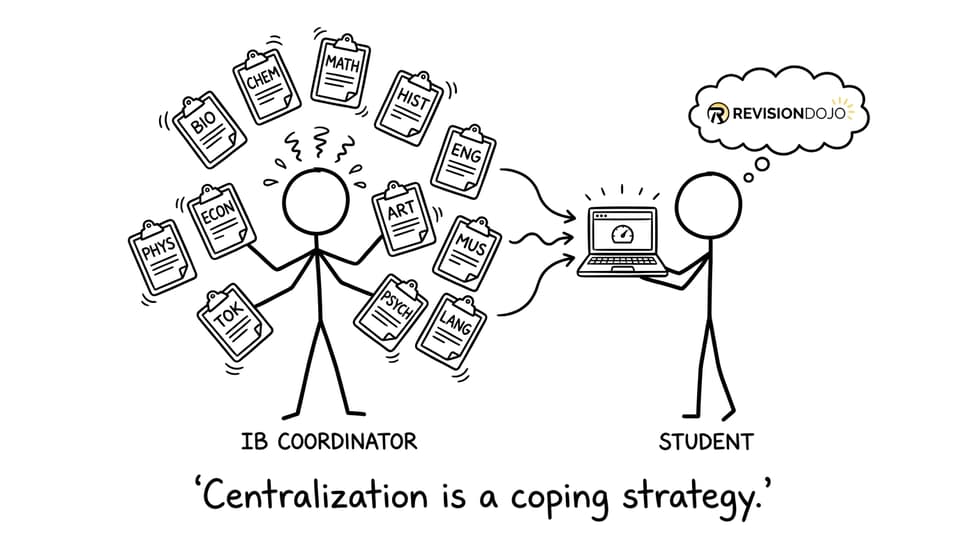
In many IB programmes, every subject becomes its own island.
Math might have excellent quiz data. English might have rich feedback but no clean numbers. Sciences might track practical skills separately from topic tests. Then TOK and coursework deadlines arrive and everything becomes calendar-driven instead of learning-driven.
The result is a familiar pattern:
-
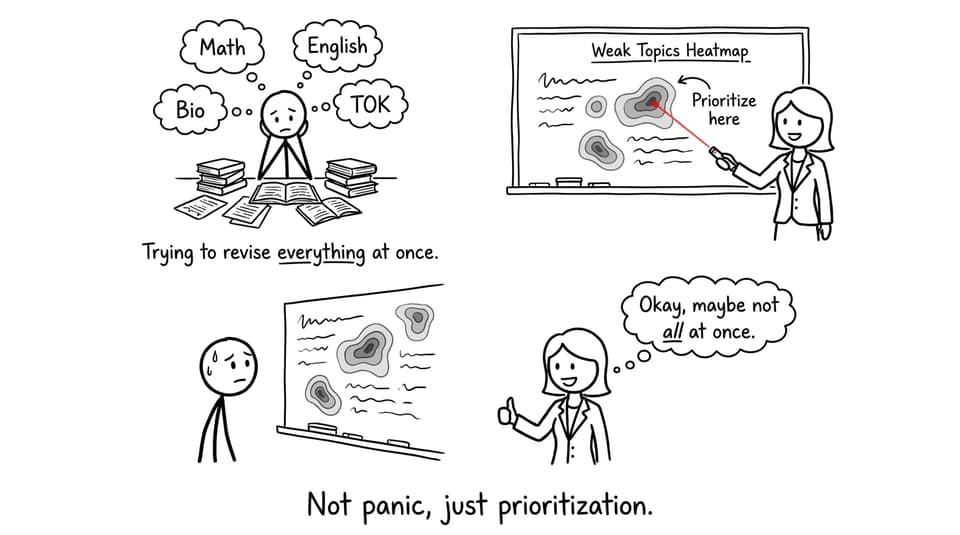
Students revise what feels urgent, not what is weak
-
Teachers spot gaps inside their subject, but not across the whole timetable
-
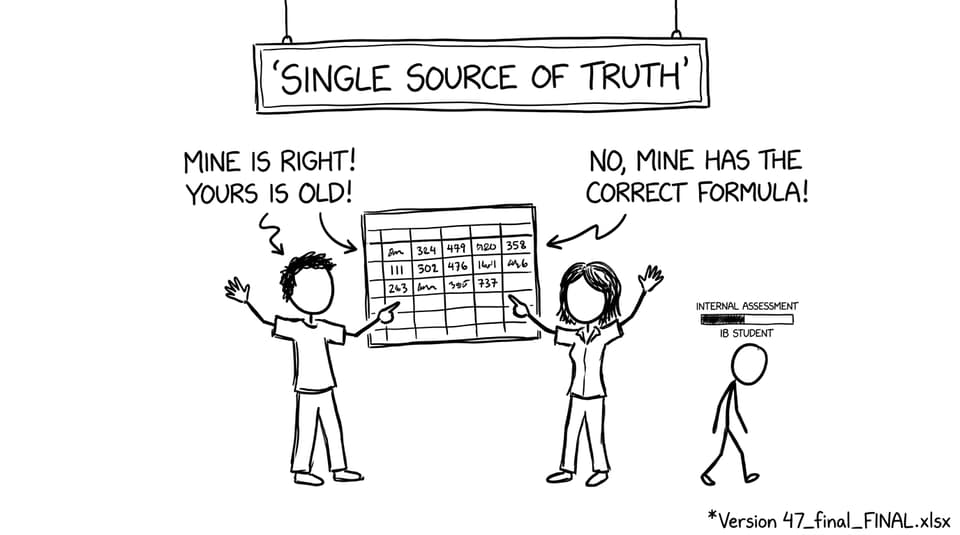
Coordinators spend time collecting spreadsheets instead of coordinating strategy
RevisionDojo’s value to a coordinator is straightforward: it reduces fragmentation. Instead of “progress” being a story told differently by six departments, it becomes a shared picture with shared language.
For a deeper look at reducing manual tracking, see: How IB Teachers Can Track Student Progress Without Spreadsheets.
How RevisionDojo helps coordinators track IB student progress
Centralized dashboards that actually mean something
A dashboard is only useful if it changes what happens next.
RevisionDojo dashboards bring practice and performance into one place, which is especially powerful in the IB because different subjects test different skills: structured problem-solving, long-form writing, data interpretation, and command-term precision.
When a coordinator can see patterns at cohort, class, and student level, two things happen faster:
-
support starts earlier (before stress becomes identity)
-
interventions become specific (not generic “revise more” advice)
This also aligns with student-facing analytics. If you want to understand how the student experience feels, this is a good reference point: IB Question Analytics: Track Your Question Performance.
Cross-subject comparison that spots the real bottleneck
A common IB mystery is the “inconsistent student” who looks brilliant in one class and lost in another.
Cross-subject progress tracking helps coordinators test hypotheses:
-
Is the issue time management and pacing?
-
Is it command terms and response structure?
-
Is it foundational knowledge gaps?
-
Is it stress, avoidance, or low practice volume?
RevisionDojo helps make those hypotheses visible through how students perform in exam-style practice and how that performance changes over time. Then teachers can coordinate: English and Economics might collaborate on analytical writing; Biology and Geography might coordinate on data response routines.
Collaboration is the quiet superpower here: How RevisionDojo Strengthens IB Department Collaboration and Consistency.
Reporting that improves conversations, not just compliance
Reporting often becomes a chore: generate charts, attach notes, move on.
But in the IB, the best reports do one thing: they create a calm, shared reality. Students stop arguing with feedback. Parents stop guessing. Teachers stop relying on gut feeling.
RevisionDojo’s reporting is most useful in three moments:
-
department meetings (what to reteach and why)
-
mentoring (who needs what type of help)
-
parent conferences (clear patterns, clear next steps)
And because the data is connected to tools students can immediately use (Questionbank sets, Study Notes review, Flashcards scheduling, AI Chat clarification), the report doesn’t end as a document. It becomes a plan.
What this means for you as an IB student
Even though this post is “for coordinators,” you benefit when your school tracks IB progress well.
Here’s what tends to change for students when a coordinator uses RevisionDojo consistently:
-
You get earlier signals about what’s weak (before mocks, before panic)
-
You get targeted practice recommendations, not vague motivation
-
Departments align expectations (less whiplash between subjects)
-
Coursework support becomes more structured via Grading tools and the Coursework Library
-
You can build a routine that compounds: Notes -> Flashcards -> Questionbank -> Analytics -> Repeat
If you want to see the full student workflow, this guide connects the dots: RevisionDojo App: The Smarter Way to Prep for IB Exams.
And if your revision has started to feel heavy, this helps you keep it sustainable: How to Study for IB Exams Without Burning Out.
A practical rhythm coordinators can run (that students will feel)
Here’s a realistic monthly cycle many IB programmes can sustain without turning school into a data factory:
Weekly: quick scan, quick actions
-
Check cohort and class-level trends
-
Identify top 2 weak topics per subject
-
Assign targeted practice through RevisionDojo (Questionbank + quick Flashcards)
-
Encourage students to use AI Chat to resolve “stuck points” immediately
Students who need a simple entry point can start with the core tools:
Monthly: department alignment meeting
-
Compare subject trends side-by-side
-
Agree one shared skill focus (often writing clarity, command terms, or pacing)
-
Decide interventions: small-group support, targeted homework sets, or tutor referral
-
Use Mock Exams and Predicted Papers to check whether interventions worked
Termly: readiness and reflection
-
Review longitudinal trends: what improved, what stayed stuck
-
Update mentoring priorities
-
Pull evidence for evaluation and internal review processes
For schools thinking about evaluation readiness, this is useful context: How RevisionDojo Helps IB Schools Prepare for Evaluation and Authorization.
Closing: the IB gets lighter when progress is shared
Most students don’t need more pressure. They need a clearer signal.
When coordinators use RevisionDojo to track IB progress across subjects, the programme becomes less mysterious. Support arrives earlier. Departments align faster. And students get the best gift possible in exam season: the feeling that their effort is being converted into direction.
If your school wants a single, calm system to track learning across the full IB, explore RevisionDojo for Schools. And if you’re a student, start building your own loop today with the RevisionDojo IB hub and the tools that compound: Questionbank, Study Notes, Flashcards, AI Chat, Grading tools, Predicted Papers, Mock Exams, Coursework Library, and Tutors.