
Extreme environments don’t feel “extreme” on a diagram. They feel extreme when you try to live inside the data: air that steals moisture from your skin, soil that barely exists, and seasons that arrive late (or not at all). In IB Geography, those sensations matter because exam questions often ask you to connect physical characteristics to human activity, vulnerability, and long-term fragility.
This post breaks down the physical characteristics of extreme environments in a way you can lift straight into IB Geography short answers or a Paper 2 essay, with a quick checklist you can memorise and a few calm exam prompts.
The IB Geography checklist: what to look for
When you see “extreme environments,” scan for five physical characteristics:
-
Climate (temperature range, season length, evaporation)
-
Precipitation (amount, reliability, snow vs rain)
-
Soils (depth, nutrients, salinity, permafrost)
-
Water availability (liquid water vs locked in ice; surface flows)
-
Ecosystem complexity (biodiversity, productivity, recovery time)
For syllabus-aligned coverage, anchor your revision to IB Geography Option C: Extreme Environments and build retrieval practice from the Option C Questionbank.
Climate: the loudest physical characteristic
Climate is the headline act in IB Geography Option C because it controls energy and water, the two inputs every ecosystem and livelihood depends on.
Hot deserts typically combine very low rainfall (often less than 250 mm annually), high temperatures, and intense evaporation, creating chronic water stress. Cold environments (polar and high-altitude) bring sub-zero temperatures, ice cover, and short growing seasons, which limit photosynthesis and slow decomposition.
If you need a clean definition to start an answer, revise with What Defines an Extreme Environment? and then add one line explaining how climate limits productivity.
Precipitation and water availability: scarcity in different disguises
In IB Geography, it’s easy to write “low rainfall” and move on. Stronger answers separate precipitation from usable water.
-
In deserts, rain is rare and often arrives in short bursts, so infiltration can be limited and flash floods can occur despite overall aridity.
-
In polar regions, precipitation is low because cold air holds less moisture, so you get “cold deserts” where water is present but frequently locked up as ice.
-
In mountains, water may fall as snow, creating seasonal meltwater flows that can be unpredictable and hazard-prone.
To extend your evaluation, connect water patterns to future change using IB Geography: Climate Change and Extreme Weather.
Soils and biodiversity: thin foundations, simple food webs
Soils in extreme environments are often thin, nutrient-poor, and slow to form. In cold regions, permafrost blocks drainage and root penetration, limiting vegetation and reducing the organic input that would normally build soil depth. In hot deserts, soils may be sandy and low in organic matter, or saline where evaporation concentrates salts.
The ecological result is typically low biodiversity and low net primary productivity. Species that do survive are specialised, and ecosystems recover slowly after disturbance. That fragility is a recurring theme in IB Geography because it explains why even small-scale impacts can last decades.
For distribution and key features you can quote, see C.1.1 Global Distribution of Extreme Environments Notes.
Physical processes and isolation: landscapes that don’t hold still
Extreme environments are also shaped by active processes:
-
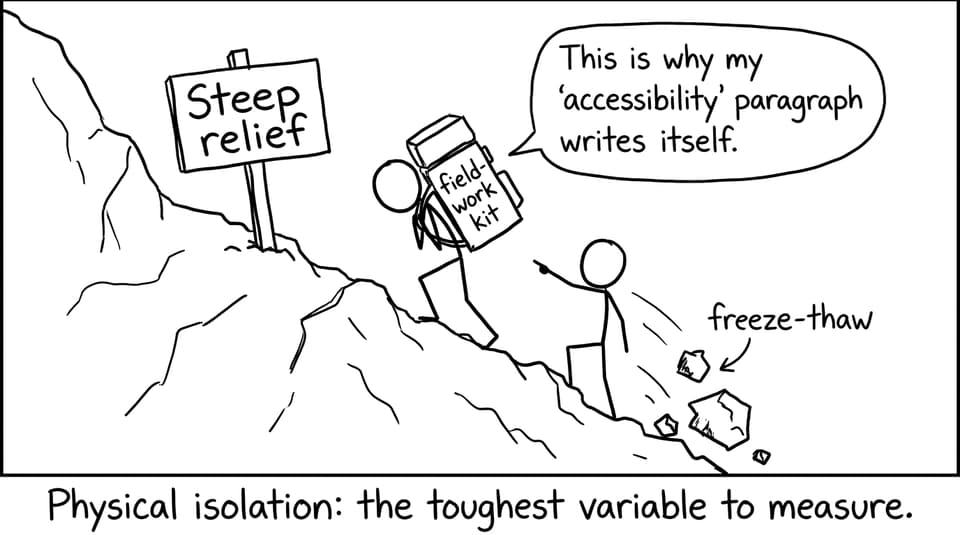
In cold environments, freeze-thaw weathering breaks rock apart and increases the likelihood of mass movement.
-
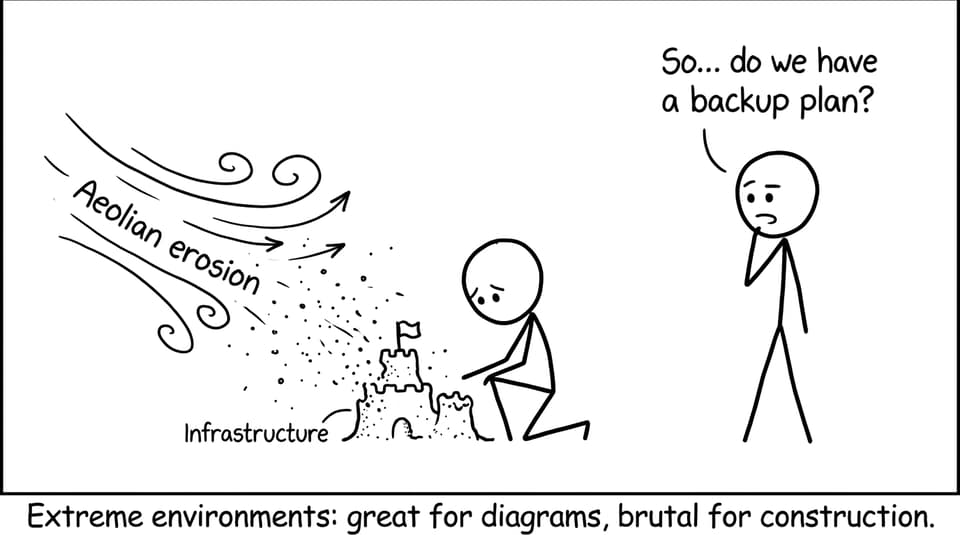
In deserts, aeolian (wind) erosion and occasional runoff events can reshape surfaces quickly.
And then there’s physical isolation: distance, rugged relief, ice cover, and limited infrastructure. In IB Geography, isolation is not just a description; it’s an explanation for higher costs, weaker emergency response, and patchier management.
To practise turning characteristics into a structured argument, borrow a simple evidence framework from IB Geography Case Studies: A Comprehensive Exam Guide and Easiest IB Geography Case Studies for Exams.
Quick exam move: the 2-sentence “link line”
Use this under time pressure in IB Geography:
-
“The key physical characteristic is ____ (climate/water/soil/process), which limits ____ (productivity/accessibility/agriculture).”
-
“As a result, the environment is fragile because ____ (slow recovery/low biodiversity/thin soils), so disturbance has long-lasting impacts.”
If you want extra practice on environmental pressure, pair this topic with Human Impacts in Extreme Environments | IB Geography.
Conclusion: make the environment do the explaining
Extreme environments look dramatic, but in IB Geography you’re rewarded for something quieter: showing how climate, precipitation, soils, water availability, biodiversity, and physical processes fit together. When you can explain those links, you can also explain settlement patterns, economic limits, and why these places are fragile.
If you want to turn today’s notes into exam-ready answers, build your revision around RevisionDojo’s Study Notes, Flashcards, AI Chat, Questionbank, and Mock Exams inside the IB Geography hub.