
When the forecast stops feeling normal (IB Geography)
A strange thing happens when you revise climate hazards long enough: you start noticing how often the word unusual appears in headlines. A “once-in-a-century” flood, then another. A heatwave that breaks records, then breaks them again. In IB Geography, this isn’t just drama for case studies. It’s the syllabus point hiding in plain sight: climate change doesn’t invent weather, but it changes the odds and the energy of weather systems.
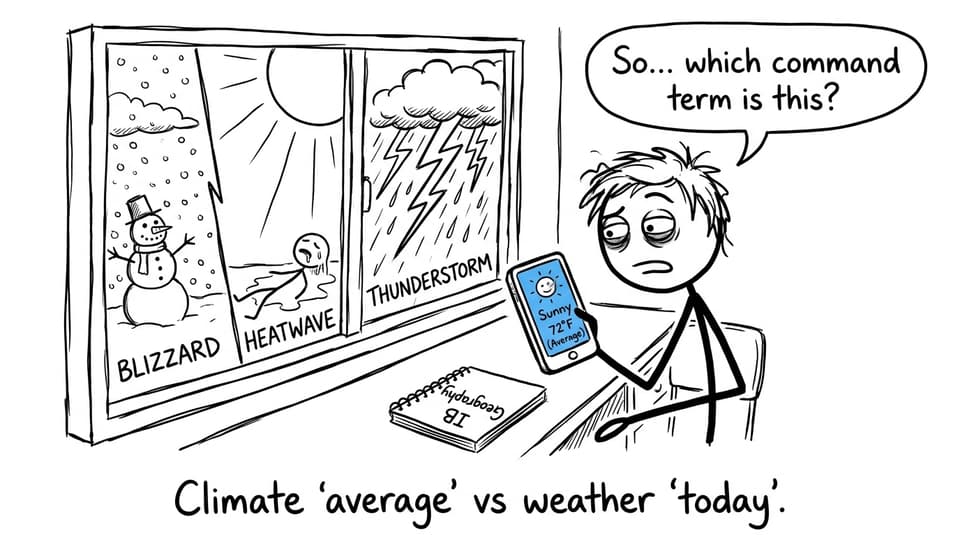
In exam terms, your job is to explain mechanisms: how a warmer atmosphere and ocean can increase the frequency, intensity, and unpredictability of extreme events.
The 30-second checklist for exam explanations
Use this quick structure in IB Geography responses:
-
Warming atmosphere == more heat extremes and higher evaporation
-
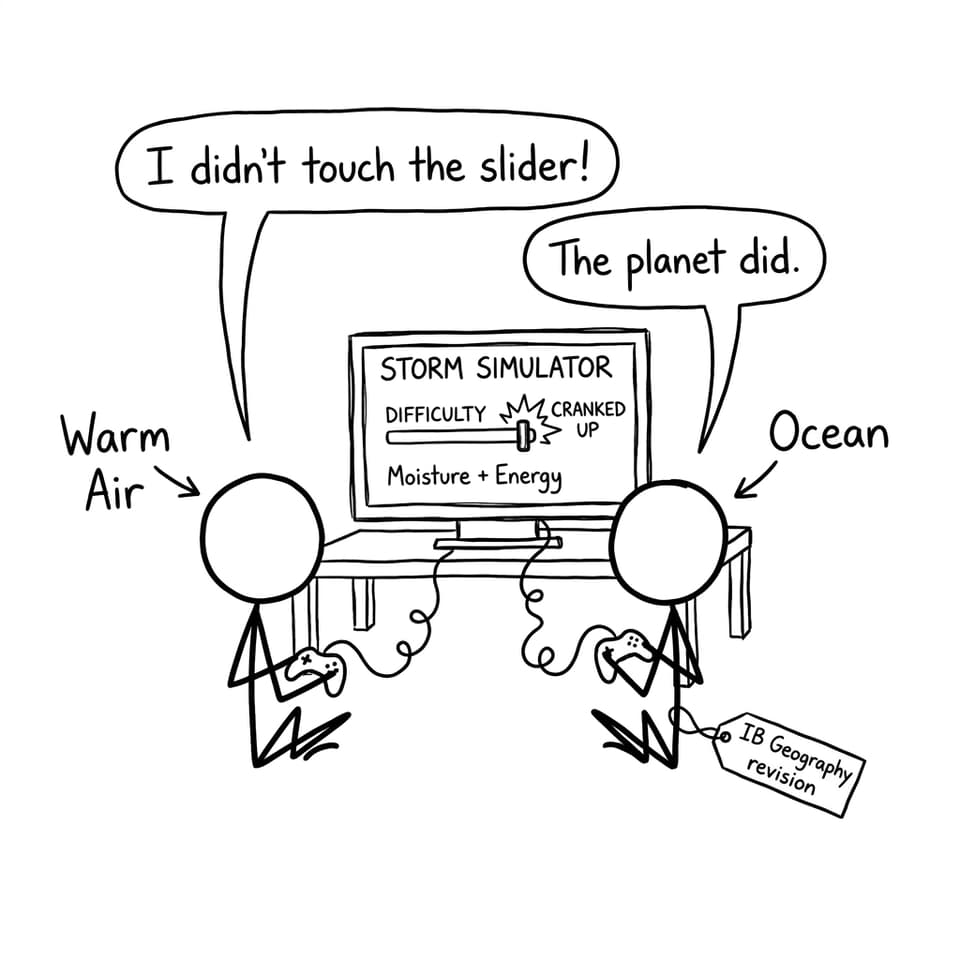
Warmer air holds more water vapour == heavier rainfall when storms form
-
Warmer oceans == more energy for tropical cyclones and stronger storm surges
-
Shifted circulation patterns == drought in some regions, intense rain in others
-
Uneven vulnerability == same hazard, different impacts (HIC vs LIC)
To revise this topic efficiently, anchor it to syllabus pages like 2.2 Consequences of global climate change and C.4.4 Climate Change Impacts and Adaptation.
Why warming makes heatwaves more common
Heatwaves are the clearest “loaded dice” example for IB Geography. If average temperatures rise, the whole distribution shifts. That means yesterday’s rare extreme becomes tomorrow’s regular headline. In cities, the urban heat island effect often amplifies the risk, pushing night-time temperatures higher and reducing recovery time for people and infrastructure.
Exam-ready impacts to link:
-
human health (heat stress, mortality)
-
wildfire conditions
-
crop yield loss and food insecurity
-
rising energy demand (cooling)
Why rainfall gets heavier (even if total rain doesn’t)
A warmer atmosphere can hold more moisture. When conditions trigger condensation and uplift, that stored moisture can fall fast. In IB Geography, this helps you explain why some places experience more intense precipitation events and flash flooding.
Flood risk rises sharply in:
-
urban areas (impermeable surfaces, overwhelmed drainage)
-
river basins with saturated soils
-
low-lying coastal zones (compound flooding + surge)
If you want clean phrases and examples for hydrosphere impacts, revise 2.2.1 Impacts on the Hydrosphere and Atmosphere notes.
Why drought risk can increase at the same time
Students sometimes think “more moisture” means “less drought.” But IB Geography loves the nuance: climate change can intensify the hydrological cycle, producing heavier downpours and longer dry spells.
Higher temperatures increase evaporation and can dry soils faster. Meanwhile, changes in atmospheric circulation can shift where rain falls and when. The result is a stronger drought signal in some subtropical regions and continental interiors, with knock-on effects for agriculture, water security, and migration.
Tropical cyclones: fewer, same, or more? Focus on intensity
For cyclones (hurricanes/typhoons), the most defensible exam framing in IB Geography is: warmer sea surface temperatures supply more energy, increasing the likelihood of high-intensity storms and rapid intensification, even if the total number of storms doesn’t rise clearly everywhere.
Remember the hazard isn’t just wind. It’s also:
-
extreme rainfall
-
storm surge
-
coastal flooding and erosion
The human layer: vulnerability decides the disaster
A hazard becomes a disaster through exposure and vulnerability. That’s central to IB Geography evaluation. LICs often face higher risk because of weaker infrastructure, limited early warning capacity, and greater reliance on climate-sensitive livelihoods. In essays, this is where you earn evaluation marks: similar magnitude events can lead to radically different outcomes.
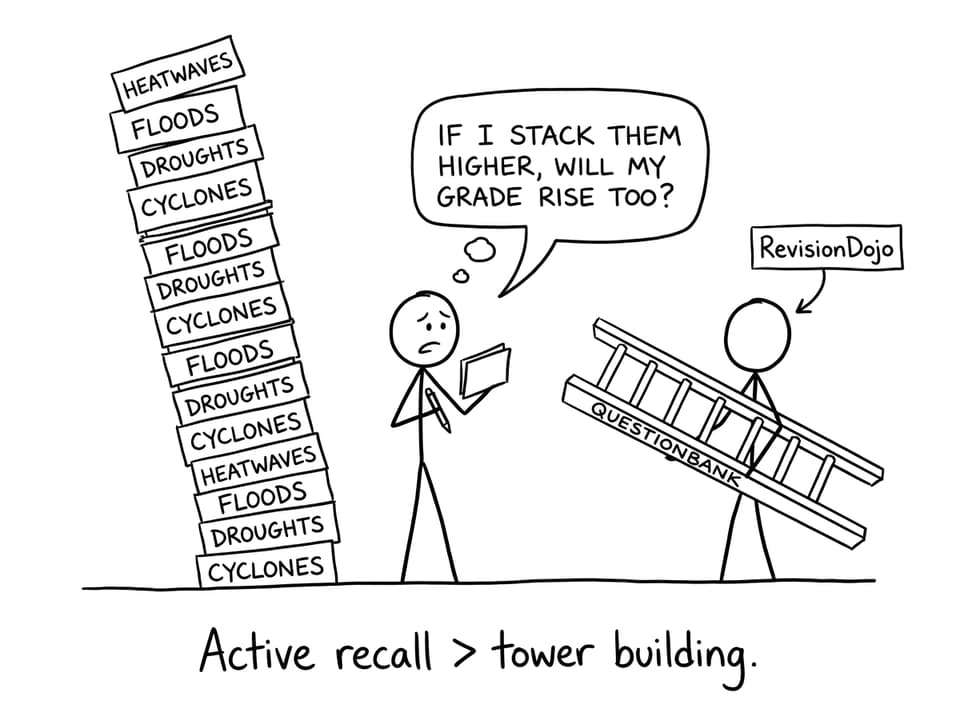
To sharpen your exam technique, practise with IB Geography resources and build timed sets using RevisionDojo’s Questionbank, Mock Exams, and Predicted Papers features.
How to turn this into marks with RevisionDojo
Knowing the content is only half the battle. RevisionDojo helps you turn IB Geography understanding into exam performance:
-
Use the Questionbank feature to practise short-answer explanations of mechanisms (evaporation, moisture capacity, storm energy).
-
Build a clean narrative using C.4.4 notes.
-
Strengthen evaluation with structured case studies from Comprehensive Guide to Geography Case Studies for IB Exams.
-
Simulate exam pressure with Best Geography Mock Exams for IB and topic practice like 2.2 Consequences of global climate change Questionbank.
Conclusion: make the mechanism your anchor (IB Geography)
Extreme weather can feel random when you’re living through it. But in IB Geography, you’re learning to see the pattern beneath the noise: warming adds energy and moisture to Earth systems, shifting the likelihood and intensity of hazards like heatwaves, floods, droughts, and cyclones.
If you want this topic to feel calm in the exam room, revise it the calm way: mechanisms, then impacts, then vulnerability. Use RevisionDojo’s Study Notes, Flashcards, AI Chat, Grading tools, Questionbank, Predicted Papers, and Mock Exams to turn understanding into marks, and make your next climate-change essay feel inevitable.