
If you have ever tried to study with a dead laptop, a half-charged brain, and a deadline that refuses to move, you already understand the feeling of “extreme.” In IB Geography, that same idea becomes a precise concept: an extreme environment is not just “far away” or “dramatic,” but a place where physical conditions make human survival and economic activity difficult.
In IB Geography, this definition matters because Option C questions rarely reward vague description. They reward clear criteria: what is extreme, why it is extreme, and how people adapt and manage the risks.
The IB Geography definition in one sentence
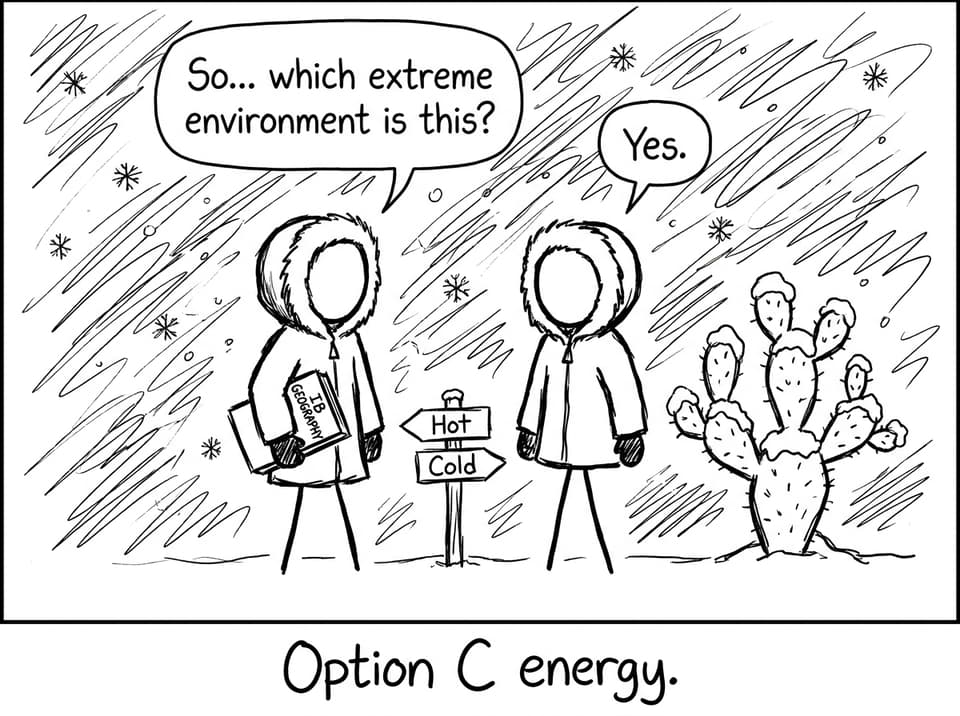
An extreme environment is a location where climate stress, environmental risk, limited accessibility, and ecosystem fragility combine to restrict settlement and development.
To revise it quickly, anchor your answer to the four-part checklist below (then add one line on technology and perception).
Quick checklist: four features you can always write about
Climate stress (temperature + water)
Extreme environments usually sit at the edge of what humans and ecosystems can tolerate. Hot deserts are defined by high temperatures, very low rainfall, and intense evaporation. Cold environments (polar, periglacial, high-altitude) bring sub-zero temperatures, ice cover, and short growing seasons. In IB Geography, climate is the easiest “first paragraph” because it links directly to water availability, vegetation, and soil development.
For syllabus-aligned examples and distribution patterns, use C.1.1 Global Distribution of Extreme Environments Notes.
Environmental risk (hazard + vulnerability + exposure)
An extreme environment is often extreme because it is dangerous. Hazards such as blizzards, avalanches, droughts, heatwaves, or permafrost instability raise the likelihood of disruption and loss. A strong IB Geography answer does not stop at listing hazards; it connects them to vulnerability (who is at risk) and exposure (what is in harm’s way).
If you want practice phrasing this like an examiner expects, build it into timed responses with the Option C Extreme Environments Questionbank.
Limited accessibility (distance, terrain, and cost)
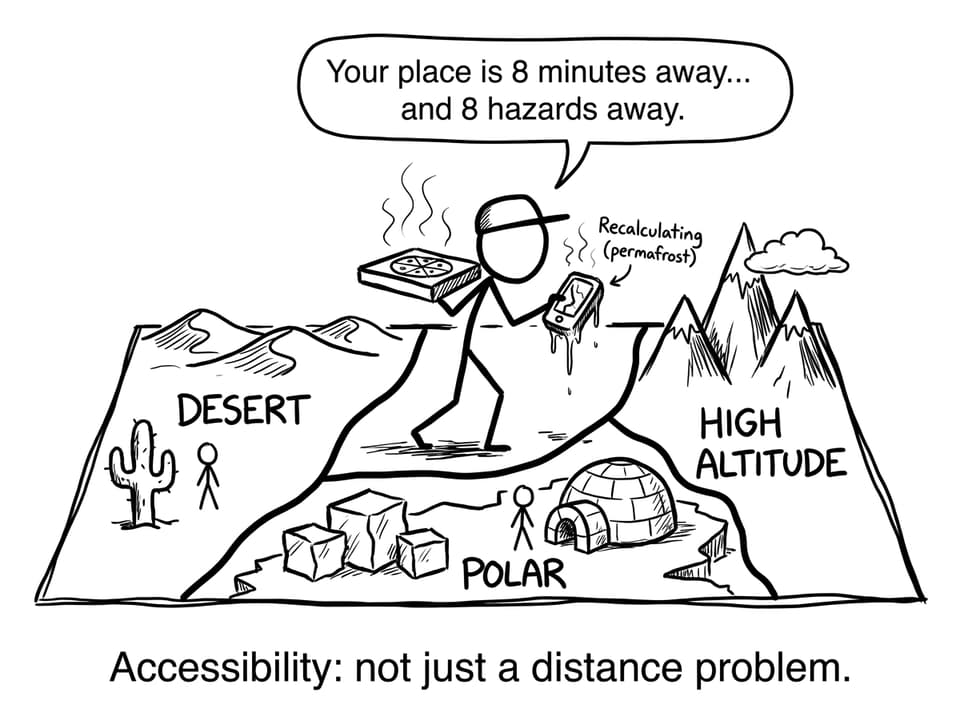
Remoteness is not only about kilometers on a map. It is also about terrain (ice, dunes, steep slopes), weather windows, and the cost of building and maintaining infrastructure. When accessibility is limited, everything becomes more expensive: food, fuel, medical care, emergency response, and transport. In IB Geography, this is a clean link to low population density and specialised economic activity.
Environmental fragility (slow recovery)
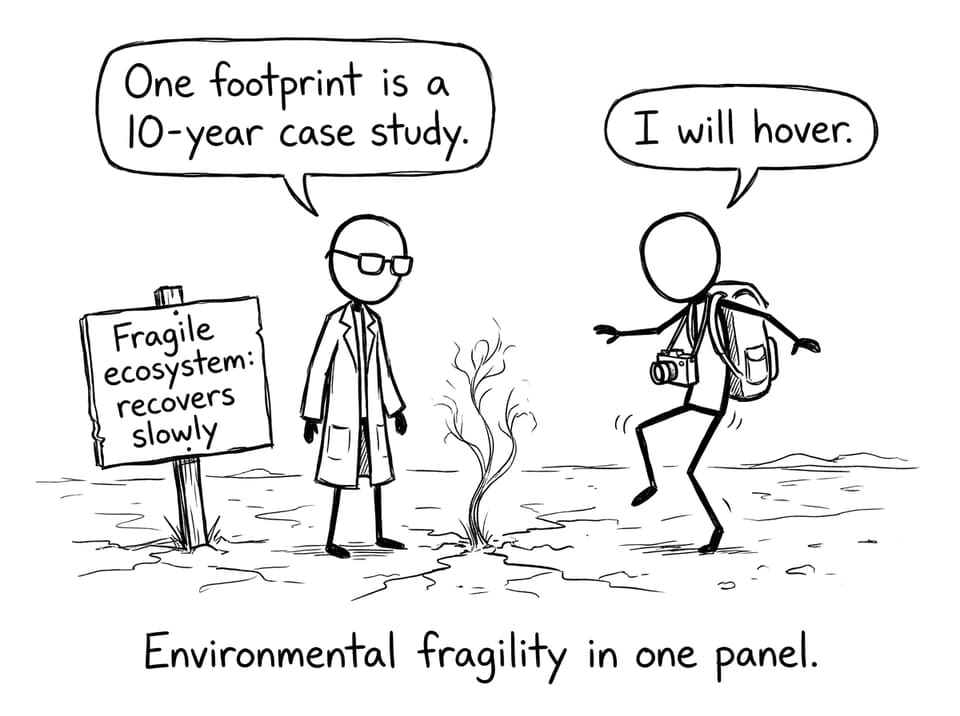
Extreme ecosystems often recover slowly after disturbance because of thin soils, low biodiversity, and short growing seasons. That makes small impacts feel large over time: a track across tundra, poorly managed tourism, or extraction infrastructure can leave long-lasting scars. This is why management and sustainability sit at the heart of Option C.
For a focused explainer, see Human Impacts in Extreme Environments | IB Geography.
The extra mark: perception and technology
A subtle point in IB Geography is that “extreme” is partly human. Technology can shrink the definition: insulated housing, improved clothing, satellite communications, and advanced transport reduce exposure and vulnerability. As a result, research stations, mining, energy extraction, and adventure tourism have expanded into environments once considered effectively inaccessible.
To revise Option C as a whole (C.1 to C.4) from one hub, use IB Geography Option C Extreme Environments.
How to turn this into an exam-ready paragraph (fast)
When a prompt asks “what defines” or “why is it extreme,” structure your IB Geography response like this:
-
Define extreme environment in one sentence
-
Climate (temperature + precipitation) and consequences
-
Risk (hazards + vulnerability/exposure)
-
Accessibility and impacts on settlement/economy
-
Fragility and management implication
-
One line on technology changing what counts as extreme
If you are building broader exam confidence, start at IB Geography Resources, then reinforce with Geography Flashcards: Study Key Concepts and timed practice.
Closing: make “extreme” easy to score
Extreme environments can look like pure content at first: deserts, ice, hazards, remoteness. But in IB Geography, they are really a thinking skill: define the conditions, show the risks, explain the limits on development, and evaluate the consequences for fragile ecosystems.
If you want this topic to feel calm in the exam room, build a short loop: learn with IB Geography Option C Extreme Environments, drill with the Questionbank, and lock it in using Flashcards. RevisionDojo brings it together with Study Notes, Mock Exams, Grading tools, Predicted Papers, a Coursework Library, and Tutors so your revision stays structured and exam-ready.