

Extreme environments look empty on a map. On the ground, they feel crowded the moment humans arrive.
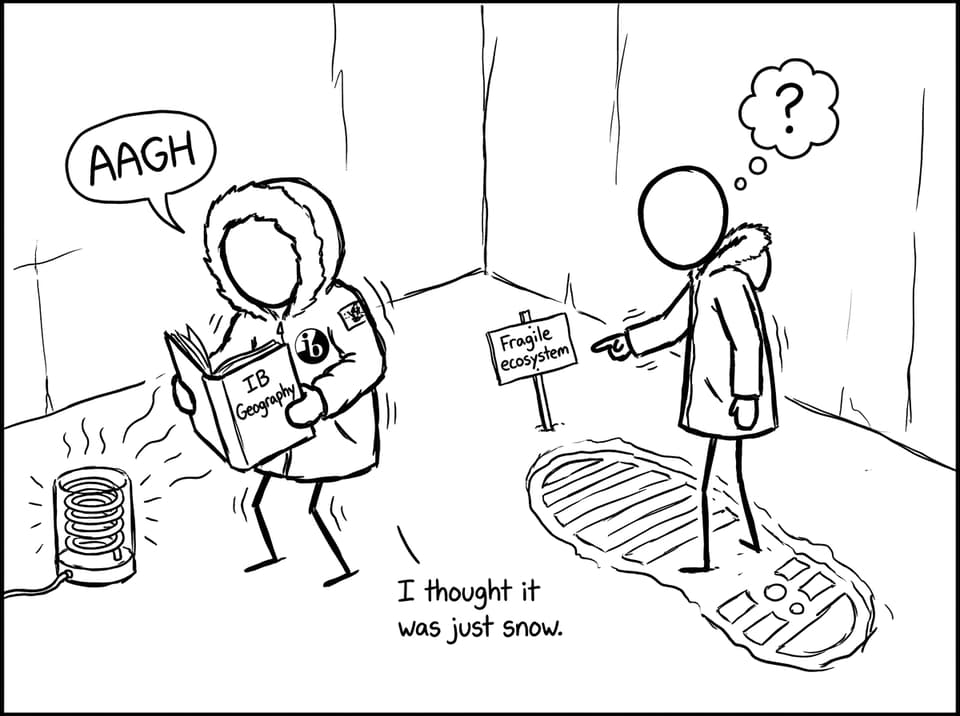
A single road across tundra can outlast the people who built it. A few careless footsteps can widen into a permanent scar where plants grow back slowly. That fragility is exactly why IB Geography treats human impacts in extreme environments as more than a list of problems; it’s a story about access, pressure, and consequences.
If you’re revising IB Geography Option C, your job in an exam isn’t to sound dramatic. It’s to be precise: name the activity, explain the process of impact, and evaluate how management can reduce damage.
Quick exam checklist for IB Geography
Use this mini-checklist to structure 6-10 mark responses in IB Geography:
-
Identify the activity (resource extraction, tourism, research, infrastructure)
-
Explain the impact pathway (disturbance, pollution, erosion, water stress)
-
Show why impacts are long-lasting (slow recovery, thin soils, short growing seasons)
-
Add one feedback loop (e.g., permafrost thaw + infrastructure)
-
Finish with management (regulation, protected areas, limits, monitoring)
For a full syllabus map, keep IB Geography Resources open as your hub.
Why extreme environments are so vulnerable in IB Geography
In IB Geography, “extreme” isn’t just about temperature. It’s also about low resilience. Soils are thin, biodiversity can be low, and recovery is slow. That means disturbance lasts longer, and the same level of human pressure has a bigger footprint than it would in a temperate ecosystem.
If you need a clean definition and how examiners frame it, review What Defines an Extreme Environment?.
IB Geography human impacts: habitat disturbance and fragmentation
Habitat disturbance is often the first domino. Roads, pipelines, drilling pads, and settlements break up ecosystems that are already operating close to their limits. In cold and high-altitude environments, vegetation regrowth is slow, so trampling and track formation can persist for decades.
A strong IB Geography explanation links disturbance to food webs: when breeding sites, feeding areas, or migration routes are disrupted, populations become more vulnerable even if the disturbed area looks “small” on a map.
To connect this to the wider Option C framework, use IB Geography Option C Extreme Environments.
IB Geography human impacts: resource extraction and pollution
Resource extraction is a high-impact activity because it requires infrastructure and produces waste. Oil, gas, and mineral extraction can cause:
-
Soil contamination from leaks and waste storage
-
Water pollution where meltwater or sparse surface water carries pollutants
-
Landscape scarring from quarries, roads, and off-road vehicles
In colder environments, spills can be especially persistent because low temperatures slow breakdown processes. In an IB Geography essay, that “slower recovery” point is often the difference between description and analysis.
To practise writing this under timed conditions, use the Questionbank feature and build a mini set on Option C.
IB Geography human impacts: tourism pressure in fragile landscapes
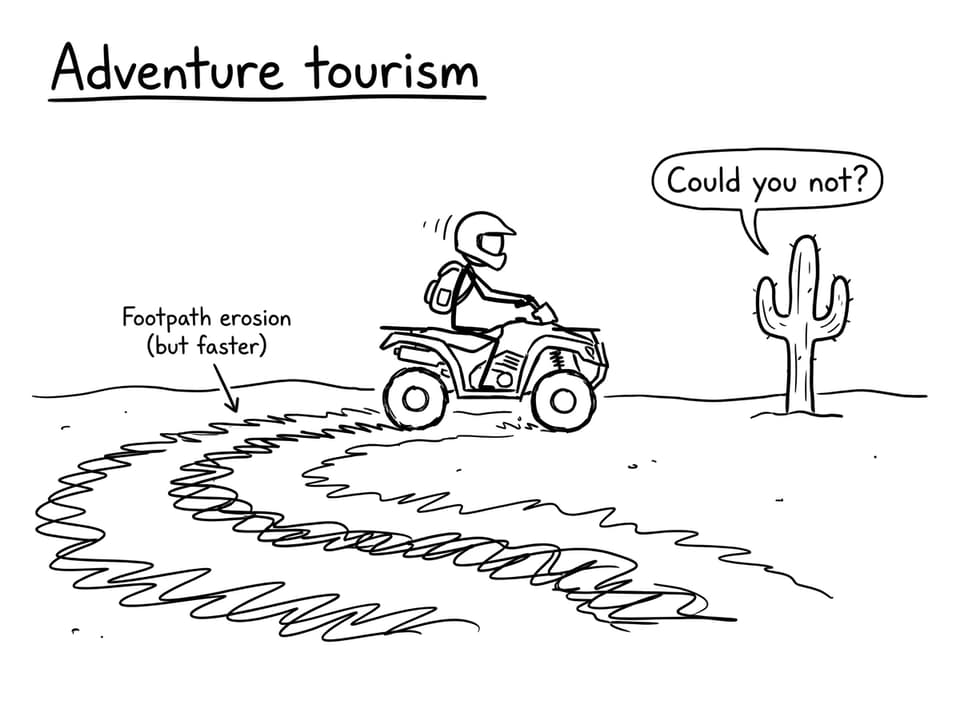
Adventure tourism sells the idea of “untouched” places, but visits concentrate impact in the same hotspots: trails, viewpoints, camps, and access routes. Common impacts include footpath erosion, litter, wildlife disturbance, and pressure on limited waste systems.
In IB Geography, tourism is a great evaluation topic because it has clear trade-offs: it can bring income and incentives for conservation, but it can also raise demand for new infrastructure that expands long-term damage.
Permafrost thaw: the feedback loop examiners love
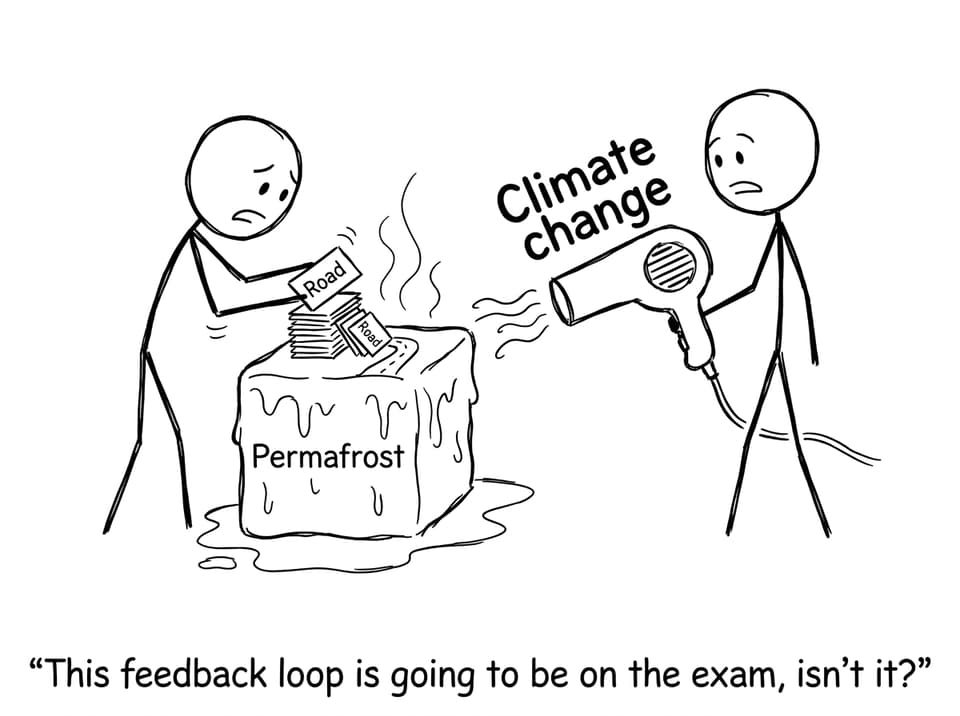
Permafrost thaw is where human activity and climate change start amplifying each other. Rising temperatures destabilise frozen ground. Then infrastructure such as roads, buildings, and pipelines can absorb heat, disrupt insulation from vegetation, and accelerate thaw. That increases erosion and landslide risk, which can force more engineering, more maintenance, and more disturbance.
That is a classic IB Geography feedback loop: human development increases vulnerability, then vulnerability increases the impact of development.
For a quick refresh on core extreme-environment characteristics (including permafrost), use C.1.1 Global Distribution of Extreme Environments Notes.
Management strategies you can evaluate in IB Geography
Management is where many IB Geography answers become generic. Keep it specific:
-
Protected areas with zoning (where access is allowed vs restricted)
-
Strict environmental controls for extraction (spill prevention, clean-up plans, monitoring)
-
Visitor limits and permits in tourism hotspots
-
Infrastructure rules (seasonal roads, elevated pipelines, designated routes)
-
Enforcement challenges (remoteness, high costs, political pressure)
To strengthen evaluation, use one sentence on stakeholders: governments, companies, indigenous communities, tourists, and conservation groups.
If you’re building case study paragraphs, model your structure on IB Geography Case Studies: A Comprehensive Exam Guide.
Conclusion: turn impacts into marks with IB Geography clarity
Extreme environments aren’t empty. They’re just slow to heal.
When you revise IB Geography, treat every human activity as a chain: access leads to pressure, pressure leads to disturbance, and disturbance lasts because recovery is limited. Practise that chain with RevisionDojo’s Study Notes, Questionbank, Flashcards, AI Chat, and Mock Exams, and you’ll walk into exams able to explain human impacts in extreme environments with control and confidence, not just concern.
Explore more targeted support through All IB Geography Posts and keep your Option C revision tight, connected, and exam-ready.