
Physical and Health Education can feel like the "easy" class until the first rubric lands on your desk.
In the MYP, Physical and Health Education (PHE) is not a free period with a ball. It is a course where your movement becomes evidence, your choices become arguments, and your reflection becomes marks. If you are an IB student preparing for exams, that framing matters because it turns PHE into something you can actually revise: objectives, criteria, skills, and a repeatable performance loop.
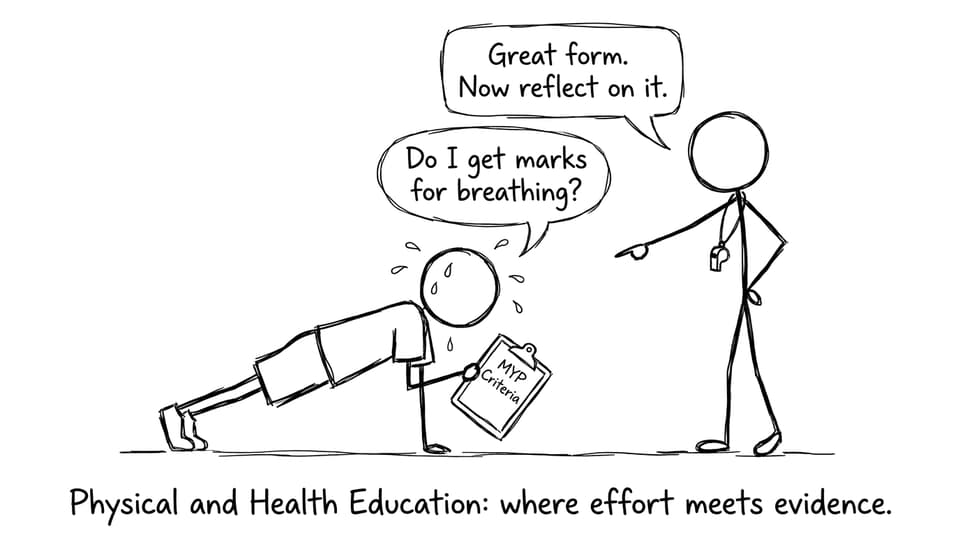
MYP Physical and Health Education, in one clear definition
MYP Physical and Health Education is built to develop lifelong well-being through two threads that constantly interact:
-
Physical performance: movement skills, fitness, games, routines, and strategy
-
Health understanding: nutrition, body systems, mental well-being, stress, relationships, and decision-making
The subject is designed to help you connect what you do (performance) with why it matters (concepts and health knowledge). This is why good MYP PHE work often looks like a mini-science-meets-psychology explanation attached to a real plan and a real performance.
If you want a wider view of how MYP subjects fit together, start with the RevisionDojo MYP hub and keep it as your home base.
Quick checklist: what to revise for MYP PHE
Use this before any PHE assessment or exam-style task in the MYP:
-
Can I explain the health concept behind the activity (fitness principle, nutrition idea, mental well-being strategy)?
-
Can I create a plan (warm-up, progression, SMART goal, practice schedule)?
-
Can I apply and perform consistently, not just once?
-
Can I reflect using data, feedback, and clear next steps?
-
Can I name the key concept (change, relationships, communication, balance) and link it to my evidence?
This checklist becomes much easier when your study tools are in one place. RevisionDojo supports that loop with Study Notes, Flashcards, a Questionbank, AI Chat, Grading tools, Predicted Papers, Mock Exams, a Coursework Library, and Tutors.
The objectives of MYP PHE (what the course is really training)
Most students think PHE is training fitness. The MYP is training something slightly more valuable: agency.
MYP PHE aims to help you:
-
Understand why physical activity and health choices matter over time
-
Build movement competence in different contexts (individual, partner, team)
-
Set realistic goals and track progress
-
Collaborate with leadership and sportsmanship
-
Reflect on performance with honesty, not vibes
That last point is where grades are won. Reflection is not "I tried hard." Reflection is: what happened, why it happened, and what you will change next.
Key concepts and global contexts in MYP PHE
In the MYP, concepts are the bridge between one unit and the next. In PHE, you will often see big ideas like:
-
Change: adaptation, training effect, habit formation
-
Relationships: teamwork, roles, empathy, conflict resolution
-
Communication: verbal and non-verbal signals, feedback, group strategy
-
Balance: physical, mental, emotional well-being
Global contexts make those concepts real. For example:
-
Identities and relationships: How does sport shape self-image and belonging?
-
Globalization and sustainability: How do communities support active lifestyles and health access?
When you revise, do not memorize a definition and stop. In MYP PHE, you score higher by using the concept to explain your choices. If you want help building that habit across subjects, the post on Linking ATL Skills to Conceptual Understanding in the MYP is a strong companion read.
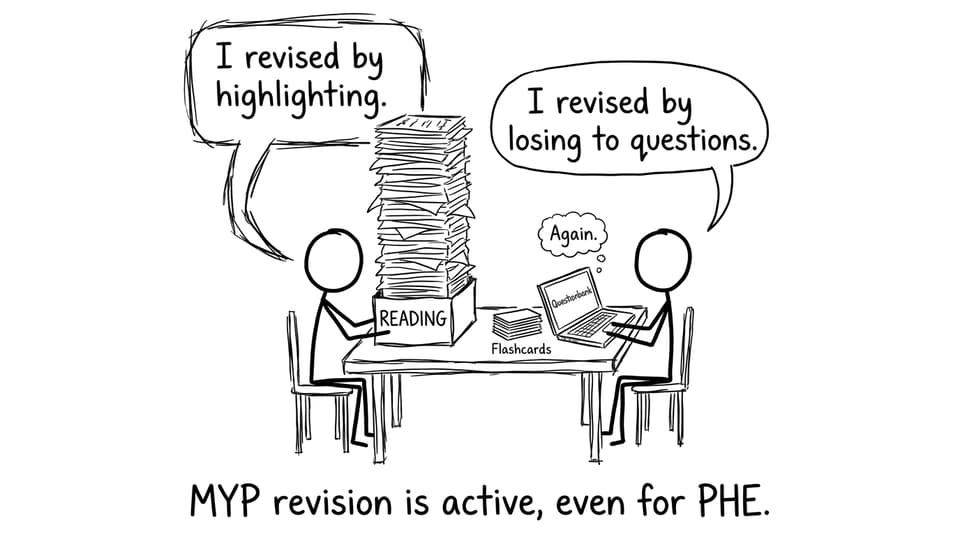
How assessment works in MYP PHE (the A-D map)
Most MYP PHE assessments are marked using four criteria on a 0-8 achievement scale. Think of these criteria as four separate skills you can train.
Criterion A: Knowing and understanding
This is where you show health knowledge and conceptual understanding. Strong responses use correct terminology and apply ideas to a real context. Weak responses list facts with no connection to the task.
Criterion B: Planning for performance
Here you design a plan, routine, or strategy. High-level work is specific, logical, and linked to goals and evidence. It reads like something a real person could follow on a real week.
Criterion C: Applying and performing
This is performance in context: executing movement skills, using tactics, adapting under constraints. Teachers are looking for consistency, control, and decision-making, not just natural athleticism.
Criterion D: Reflecting and improving performance
This is where many students lose easy marks. Reflection needs evidence (data, feedback, observations) and clear next steps. It is the difference between "I need to try harder" and "My endurance dropped after 6 minutes because I started too fast, so next session I will pace the first 3 minutes at a steady rate and track heart rate recovery."
To make criteria feel less mysterious across your whole MYP, keep these guides nearby: How Are MYP Students Graded? Criteria Explained and IB MYP Grade Boundaries: Understanding the 1-7 Scale.
Skills you build in MYP PHE (and why they help in exams)
MYP PHE quietly trains ATL skills you will use everywhere in IB.
-
Self-management: goal-setting, routines, sleep, stress control
-
Social skills: teamwork, leadership, resolving conflict
-
Communication: feedback, signaling, explaining decisions
-
Thinking skills: analyzing performance, choosing strategies, transfer
-
Reflection: evaluating what worked and adjusting intelligently
If you are building an exam routine, these skills become practical. The same self-management you use to train a fitness goal is the skill you use to run a 30-day revision plan. A useful guide is MYP eAssessments: 30-Day Study Plan That Works, especially for turning good intentions into repeatable practice.
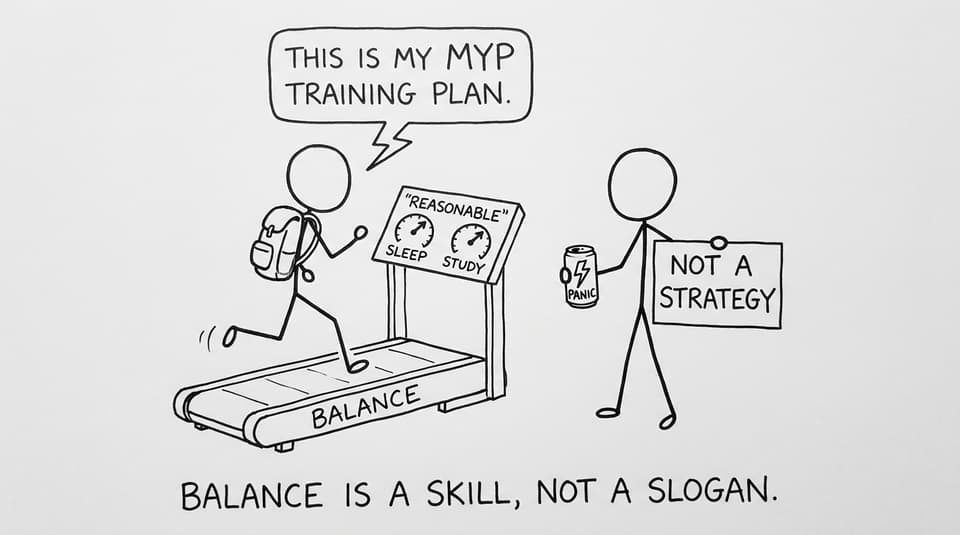
A simple MYP PHE study routine (yes, you can revise it)
To revise MYP PHE, treat it like any other assessed subject: understand, apply, reflect, repeat.
-
10 minutes: review one concept (training principles, nutrition, mental well-being) using RevisionDojo Study Notes
-
15 minutes: active recall using Flashcards (terms, definitions, examples)
-
20 minutes: practice explaining a scenario or responding to a criterion prompt (RevisionDojo AI Chat can quiz you and challenge vague answers)
-
10 minutes: write a short reflection using the criteria language and one piece of evidence
For broader MYP organization, pair this with MYP Revision Guide: Study Tips for Success and Best Practices for Balancing Eight Subject Groups in IB MYP.
Closing: turn MYP PHE into an advantage
The quiet promise of MYP Physical and Health Education is that you learn how to run a system: set goals, act, measure, reflect, improve. That is the same system that produces calm exam performance.
If you want that system to feel simple, not scattered, use RevisionDojo as your one-tab home base: drill understanding with Study Notes, lock recall with Flashcards, practice application with the Questionbank, get unstuck with AI Chat, sharpen responses with Grading tools, rehearse pressure with Mock Exams and Predicted Papers, strengthen written work with the Coursework Library, and get guided strategy from Tutors. Start at the MYP hub, and build your next week of MYP progress on purpose.



