


MYP Grade Boundaries: Understanding the 1–7 Scale
The first time you see it, MYP grading can feel like a magic trick.
You walk out of a task feeling decent, then you get a “6/8” on Criterion B. Later, your report shows a final “5” out of 7. Your brain does the natural student thing: Wait… where did my numbers go?
Here’s the calm truth: the MYP is not trying to confuse you. It’s trying to describe your learning more accurately than a single percentage ever could. Once you understand how the 0–8 criterion levels roll up into a 1–7 final grade, MYP grade boundaries stop feeling like a mystery and start feeling like a map.
If you want a broader orientation to the programme, keep the Middle Years Programme (MYP) hub open as your home base.
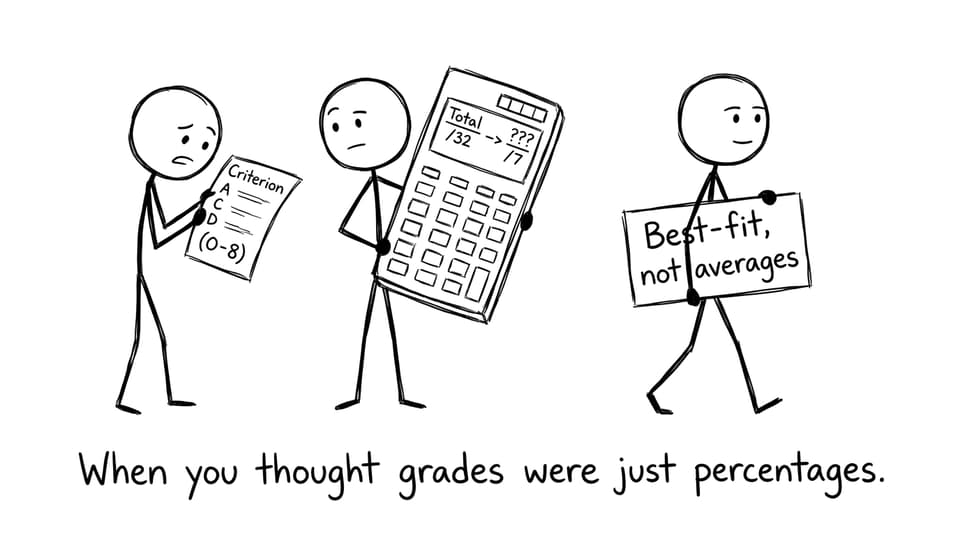
MYP grade boundaries at a glance (quick checklist)
Use this checklist whenever you get a report or a rubric back in the MYP:
-
Your subject is assessed using four criteria (A, B, C, D)
-
Each criterion is scored 0–8 on individual tasks
-
Over a term/semester, your teacher decides a best-fit level (0–8) for each criterion
-
The four best-fit levels add up to a total out of 32
-
That total is converted into a final 1–7 grade using MYP grade boundaries
For a deeper walkthrough of criteria and what they mean, see How are MYP students graded? Criteria explained.
Why MYP uses criteria instead of percentages
Most grading systems answer the question: “How many points did you get?”
The MYP asks a more useful question: “What can you do with what you know?”
That’s why MYP assessment is criterion-related. You’re not ranked against classmates, and there is no curve. Instead, your work is judged against descriptors that explain what different achievement levels look like.
This matters for exam prep because it changes what “studying” should mean. In MYP, more content only helps if it improves the specific skill a criterion is measuring: explaining, applying, investigating, communicating, reflecting.
If you want the bigger picture of how reporting is meant to work, Evaluation and Reporting in the MYP: Best Practices is worth a read.
The two numbers that confuse everyone: 0–8 vs 1–7 in MYP
The 0–8 scores are for criteria
In the MYP, you’ll see scores out of 8 because each subject uses four criteria, and each criterion has achievement levels from 0 to 8. A single task might assess one criterion, two criteria, or all four.
A key point students miss: a 0–8 score is not your final subject grade. It’s evidence for a specific skill at a specific moment.
The 1–7 grade is the final subject result
At the end of a reporting period, teachers look across multiple pieces of evidence and decide the best-fit achievement level for each criterion. Those four numbers create a total out of 32, which then becomes your final 1–7 grade using MYP grade boundaries.
Think of it like four skill snapshots that combine into one overall picture.
If you’re trying to calibrate what “good” looks like, What is a good MYP score? helps you interpret results without panic.
Typical MYP grade boundaries (out of 32 to a 1–7)
Exact boundaries can vary slightly by school, but the most common MYP grade boundaries for a total out of 32 look like this:
-
1: 0–5
-
2: 6–9
-
3: 10–14
-
4: 15–18
-
5: 19–23
-
6: 24–27
-
7: 28–32
This is why a single criterion jump can matter so much. Moving from a 5 to a 6 on just one criterion can shift your total enough to change your final grade.
What each MYP 1–7 grade really means (without the drama)
Grades 1–2: you’re still building the foundations
In MYP, a 1–2 usually means you’re not yet showing consistent understanding of the objectives. That can happen for normal reasons: missing key terminology, unclear structure, weak application, or rushed work.
The fix is rarely “study longer.” It’s usually “study narrower”: pick one criterion and train that skill directly.
Grades 3–4: developing to meeting expectations
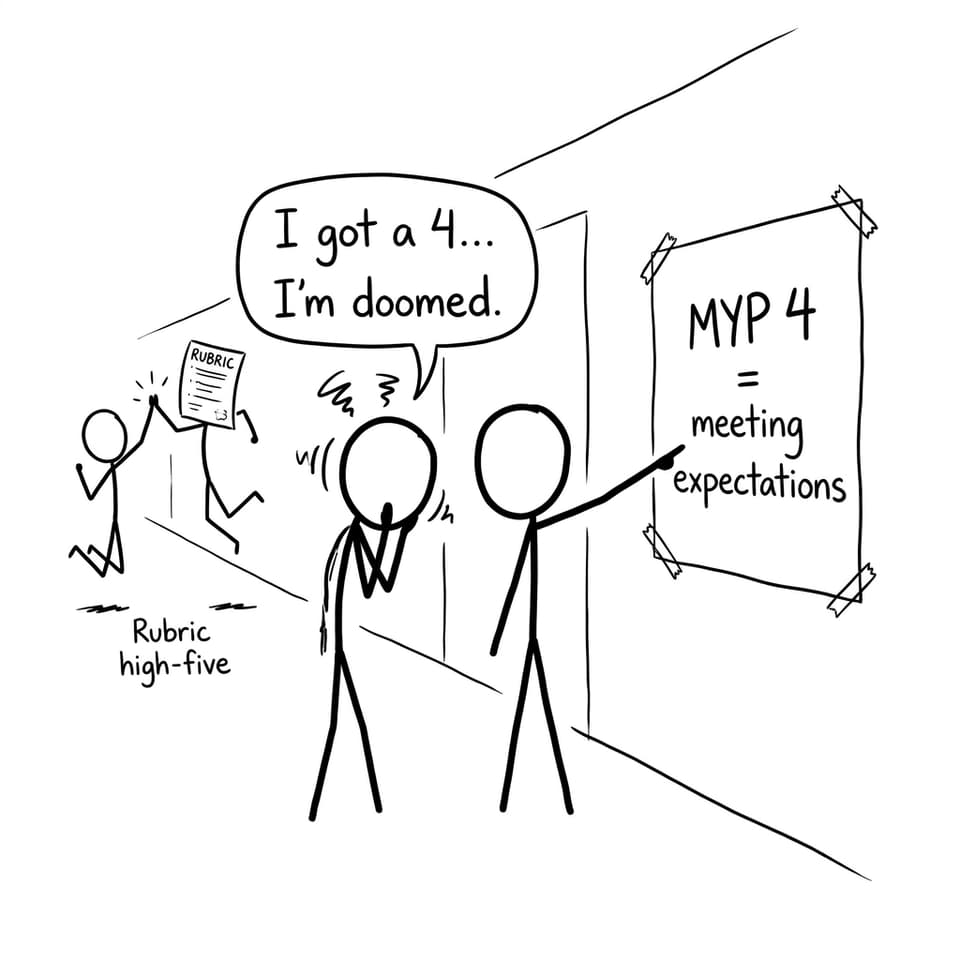
A lot of students hear “4” and translate it emotionally as failure. In MYP, a 4 is meeting expectations. It’s proof you can hit the standard in most cases.
If you’re aiming higher, your next step is precision: clearer explanations, more relevant evidence, tighter conclusions, better reflection.
Grades 5–7: consistent skill and control
A 5–7 in MYP usually signals you can apply knowledge in unfamiliar situations, not just repeat what you revised. The top band is less about “more writing” and more about “better thinking”: insight, justification, and deliberate choices that match the criteria.
If you want examples of criteria in action, these subject-specific guides make the descriptors feel real:
How teachers actually decide your final MYP grade
Students sometimes assume teachers average every score and let the calculator decide. The MYP is more human than that (in a good way).
Teachers:
-
collect evidence across tasks and contexts
-
look for consistency and most recent performance
-
decide a best-fit achievement level for each criterion (0–8)
-
convert the total out of 32 using MYP grade boundaries
That “best-fit” phrase is your clue for exam prep. Your job is to repeatedly show the same high-level behaviors, not to chase perfection on one task.
If you’re doing something big like the Personal Project, the MYP Personal Project Grader can help you see how your writing aligns to criteria language.
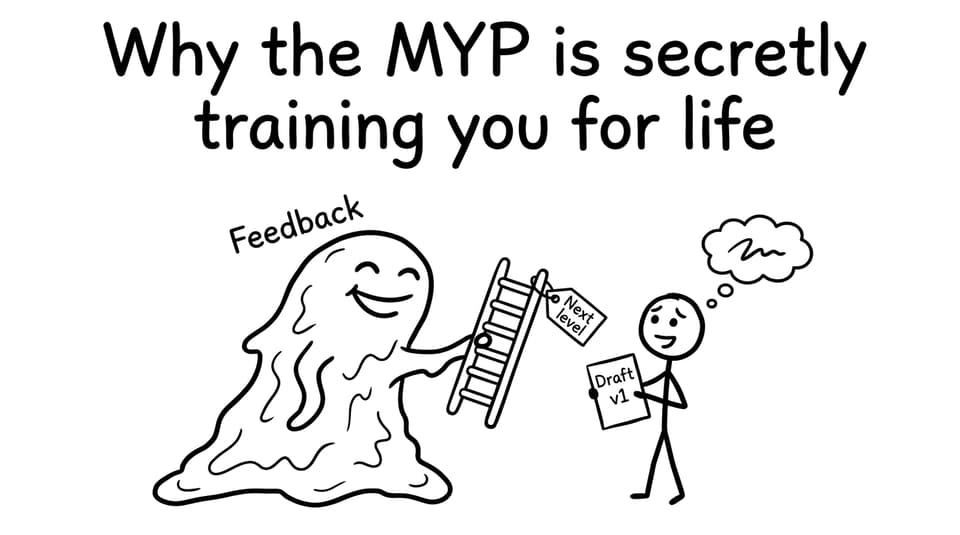
A practical MYP exam-prep approach (use the grading system to your advantage)
Here’s the fastest way to improve inside the MYP without burning out:
Revise by criterion, not by topic list
Pick the criterion you lose most marks on, then practice that skill deliberately. For many students, the weak point is not knowledge but communication: unclear steps, weak structure, missing justification.
Use feedback like a target, not a post-mortem
After each task, write one sentence per criterion:
- “To move up one level, next time I must… (specific action).”
Build your weekly loop in one place
RevisionDojo is built to support exactly this MYP rhythm:
-
Use Study Notes to patch confusion quickly
-
Use Flashcards for daily retrieval (definitions, command terms, key processes)
-
Use the Questionbank to practice applying ideas under time pressure
-
Use AI Chat when you’re stuck and need a fast explanation
-
Use Grading tools for rubric-aligned feedback
-
Use Mock Exams to make exam conditions familiar
-
Use Predicted Papers for targeted timed practice
-
Use the Coursework Library to see what strong work looks like
-
Use Tutors when you need a human to diagnose patterns
If you want the platform overview, start with the RevisionDojo homepage and then explore the Questionbank and Flashcards.
To build an overall study routine that actually sticks, IB: I study all day but remember nothing is surprisingly relevant even if you’re still in MYP.
FAQ: MYP grade boundaries and the 1–7 scale
Why do I keep getting scores out of 8 in MYP if my final grade is out of 7?
Because the MYP measures four different skill areas (Criteria A–D), and each of those skills has achievement levels from 0–8. Those 0–8 levels are designed to describe performance against a descriptor, not to act as a final grade. Over time, your teacher looks across evidence and decides a best-fit level per criterion. Those four criterion levels create a total out of 32. Only then do MYP grade boundaries convert the total into the final 1–7 subject grade. Seeing 0–8 scores during the course is normal, and it’s actually helpful because it tells you which skill needs work.
Are MYP grade boundaries the same in every school?
The general structure is the same everywhere: four criteria out of 8, total out of 32, then conversion to 1–7. However, MYP grade boundaries can vary slightly by school because schools set their own boundaries within the IB framework. That’s why you should ask your teacher or check your school’s assessment policy for the exact cutoffs they use. Even when the boundary numbers shift, the strategy stays the same: raise your criterion levels, not just your raw task scores. The most reliable way to do that is to learn the language of the descriptors and practice the exact skill they reward. If you want a clear refresher on how criteria drive grading, revisit How are MYP students graded? Criteria explained.
Is a 4 a bad grade in MYP?
In MYP, a 4 is not a “bad” grade. It means you are meeting expectations and demonstrating satisfactory achievement across the assessed objectives. Many students feel disappointed because they translate the number into a percentage mindset, but the MYP scale is descriptor-based, not emotional. The more useful question is: Which criterion is holding the total back? If you’re consistently getting 3–4 in one criterion, improving that single skill can lift your total out of 32 and shift your final grade via MYP grade boundaries. A 4 is also a stable platform for exam prep because it usually means your foundations are working. From there, your job is refinement: clarity, justification, and more consistent application.
Conclusion: treat MYP grade boundaries like a map
Once you see the logic, the MYP grading system stops feeling like secret math.
Scores out of 8 tell you how you performed on specific criteria. The total out of 32 shows your overall skill profile. And MYP grade boundaries translate that profile into the final 1–7 grade that appears on your report.
If you want to improve quickly, don’t chase numbers. Chase criteria. Use RevisionDojo to make that practical: study with Study Notes, drill weaknesses in the Questionbank, lock learning with Flashcards, get unstuck with AI Chat, and use Grading tools, Mock Exams, Predicted Papers, the Coursework Library, and Tutors to turn feedback into results.
When you’re ready, start with the MYP revision guide and build a simple weekly loop you can actually repeat.