



The night before an IB exam is not the time to discover that your calculator is flat, your only pen is leaking, or the examination is at a different campus. The best approach is simple: pack authorized materials, confirm the paper and starting time, prepare your route and breakfast, complete a short confidence-building review, then stop.
A written checklist is useful precisely because anxious minds become unreliable. It does not need to feel confident. It only needs to be followed.
For students sitting the IB NovExam or fall-term session, school routines, daylight, weather, transport, and room arrangements may have changed since September. The November session can include papers in late October, so check the actual timetable rather than relying on the session's name. RevisionDojo's November exam schedule and study plan can help you map the wider period, but your coordinator's confirmed timetable and instructions should be your final reference.
Your night-before checklist
Before relaxing for the evening, confirm these six things:
- Your subject, level, paper, date, starting time, and examination location
- Any identification or candidate information required by your school
- At least two working dark blue or black pens
- A soft pencil, eraser, ruler, sharpener, and geometry instruments where relevant
- An approved calculator and permitted subject-specific materials, if required
- Your alarm, breakfast, clothing, route, and planned arrival buffer
Keep the list visible until every item is physically ready. Do not merely think, "I know where my calculator is." Put it in the bag.
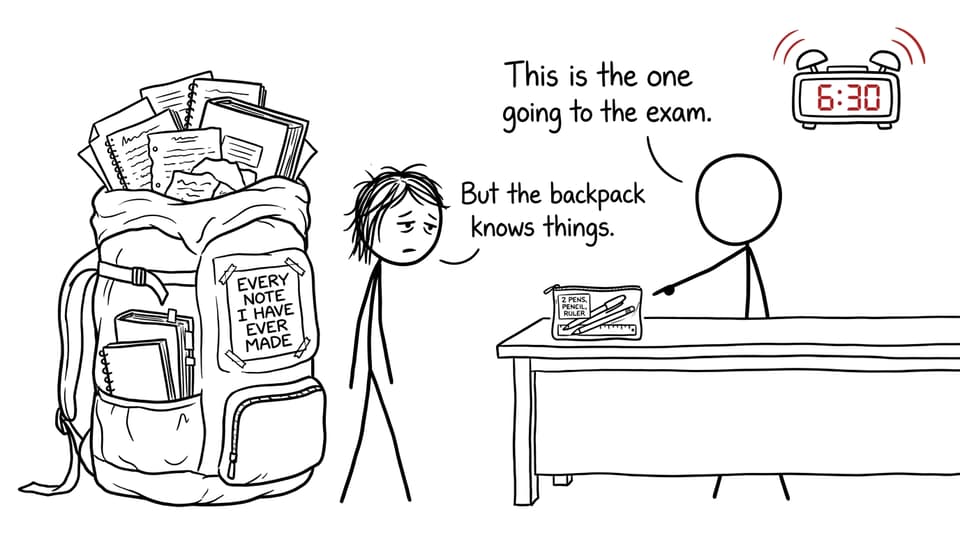
Pack a small, rules-safe exam kit
Current IB examination guidance allows candidates to take only authorized materials to their desk. Depending on the subject, that generally includes dark blue or black pens, a soft pencil that produces dark lines, an eraser, a ruler, and basic geometry instruments such as a protractor. Candidates should write answers in dark blue or black ink, while soft pencil is used for graphs and diagrams.
Pack duplicates because candidates cannot share stationery during an examination. Test each pen, sharpen the pencils, and check that your ruler's markings are readable.
Do not pack correction fluid, correction pens, or your own rough paper. A clear pouch is useful if your school permits or requires one, but local procedures differ, so follow your coordinator's instructions.
Your practical kit may include:
- Two or three dark blue or black pens
- Two soft pencils
- An eraser and sharpener
- A ruler
- A protractor or other required geometry instruments
- An approved calculator for applicable papers
- Spare calculator batteries, if permitted
- Glasses or other necessary approved personal items
Use the broader IB exam day checklist to check anything specific to your circumstances.
Check your calculator before the IB exam
A calculator is not automatically allowed in every paper. Confirm whether your exact subject, level, and paper permit one, then check that the model and setup satisfy your school's instructions.
The night before, make sure the calculator switches on, has sufficient charge or reliable batteries, and contains no prohibited stored information, applications, or programs. Coordinators may inspect calculators and follow required memory-clearing procedures. Do not assume that because a calculator was acceptable in class, it is ready for the examination room.
If your protective case contains formula notes or instructions, ask whether it must be removed. If your school permits a backup calculator or spare batteries, prepare them now.
During September and October, use the same equipment and timing habits in online IB Mock Exams. Familiarity removes small decisions when attention is most valuable.
Prepare the morning before going to bed
Packing solves only half the problem. The other half is reducing the decisions waiting after the alarm.
Lay out comfortable clothing that follows your school's rules. November mornings can be cooler than examination halls, so prepare a quiet layer that you can remove easily. Check the weather and transport route. If someone is driving you, confirm the departure time.
Set your alarm and prepare a familiar breakfast. Whether water can enter the room, and in what type of bottle, may depend on coordinator discretion and school procedure. Confirm this in advance.
Write a small morning card:
- Wake up: ___
- Eat: ___
- Leave: ___
- Arrive: ___
- Examination room: ___
Aim to arrive at the time specified by your school. Do not treat the formal late-arrival limit as spare time. Late candidates do not receive extra working time, and arriving rushed spends concentration before the paper begins.
Stop revising before tiredness chooses for you
The night before is for stabilization, not expansion. If a topic is still unfamiliar, a midnight sprint is unlikely to turn it into dependable examination knowledge. It may instead weaken tomorrow's attention.
Choose one final review lane for 30-45 minutes:
- Use Flashcards for formulas, definitions, quotations, studies, or case evidence.
- Skim Study Notes for one narrow weakness.
- Complete a small Questionbank set containing familiar questions.
- Ask AI Chat one precise question, then close the session.
RevisionDojo keeps those tools connected. You can clarify a concept in Study Notes, retrieve it with Flashcards, apply it in the Questionbank, and use AI Chat or Grading tools to understand missed marks. Earlier in the fall term, Predicted Papers and Mock Exams help rehearse timing. The Coursework Library and Tutors can prevent unresolved coursework or persistent subject gaps from consuming the final revision weeks.
The RevisionDojo IB exam preparation app guide explains this workflow. On the final evening, use only the smallest part that answers a real need. More tabs do not create more readiness.
For a controlled final session, follow the last 24 hours IB study plan. If you are several weeks away, the month-by-month IB revision plan is a better place for heavier work.
Protect sleep instead of chasing one more chapter
Many IB candidates are teenagers, for whom health guidance generally recommends 8-10 hours of sleep per 24 hours. An imperfect night does not decide an examination, so do not become anxious about achieving a perfect number. Create a reasonable opportunity to sleep.
Set a hard stop for revision. Dim the lights, move your phone away from the bed, and avoid dramatic group-chat discussions about tomorrow's paper. If anxiety is loud, write each worry on paper and place one action beside anything controllable. "I might forget everything" is not actionable. "Put my calculator beside my bag" is.
RevisionDojo's night-before sleep and anxiety plan offers a short wind-down sequence. For recurring stress, the IB exam stress guide provides a broader approach built around planning, practice, and recovery.
Make the final check, then trust the preparation
Before bed, touch each essential item once. Confirm the timetable screenshot or printed schedule. Check the alarm. Put the bag beside the door. Then stop.
The night before an IB exam often feels as if something important must still be done. Usually, the most important thing is smaller: remove tomorrow's avoidable problems and preserve the mind that will solve the unavoidable ones.
RevisionDojo is the ultimate IB resource because it supports both sides of that equation. Its Questionbank, Study Notes, Flashcards, AI Chat, Grading tools, Predicted Papers, Mock Exams, Coursework Library, and Tutors build knowledge across the term. A calm checklist protects access to that knowledge when the examination arrives.