


In a good IB school, you can feel it.
Not in the posters about the Learner Profile, or the polished mission statement on the website. You feel it in the small moments: when your History teacher explains “evaluate” the same way your Biology teacher does. When a rubric comment from English makes sense in Economics. When feedback stops sounding like opinions and starts sounding like a system.
In a less aligned IB school, you feel that too. It shows up as whiplash. One teacher says, “More analysis.” Another says, “More structure.” A third says, “More detail.” You work harder, but your improvement is random.
This is what department alignment is really about: making your effort reliably turn into marks. And that is exactly where shared tools matter. With RevisionDojo, departments can align what they teach, how they assess, and how they coach students for exams, using one shared platform built for IB.
The simple idea behind IB department alignment
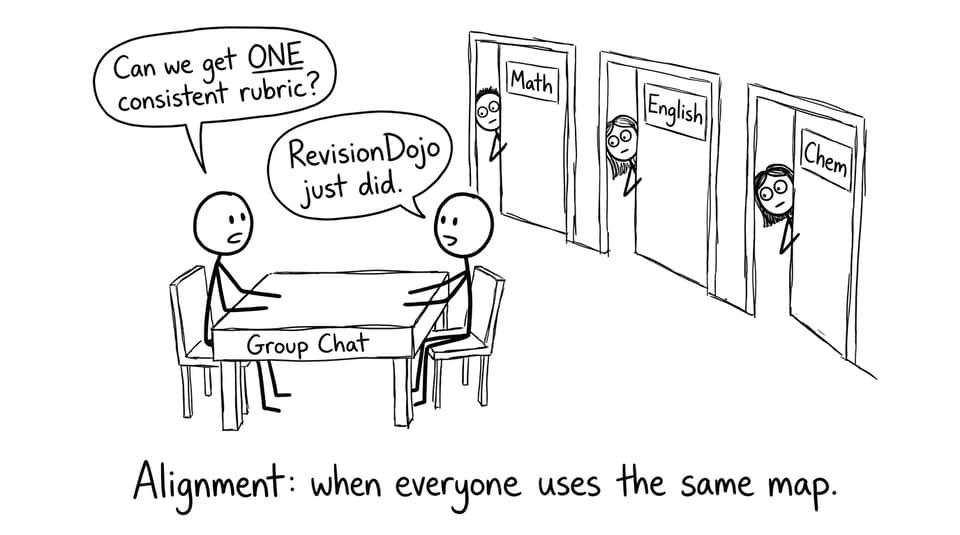
Alignment sounds like a leadership word, but for IB students it becomes personal fast.
When departments align, three things happen:
-
Expectations match across subjects (command terms, structure, depth).
-
Assessment feels fairer because criteria and standards are shared.
-
Feedback becomes reusable, you learn a skill once and apply it everywhere.
The best part is that you don’t have to wait for a perfect school reform to benefit. You can use the same shared tools your teachers use to create consistency in your own revision.
If you want a quick tour of how RevisionDojo fits into exam preparation, this guide is a good starting point: RevisionDojo App: The Smarter Way to Prep for IB Exams.
Quick checklist: how students benefit from aligned tools
Use this as a “spot the system” checklist in your own IB prep:
-
You practice with one consistent bank of exam-style questions.
-
You review with one set of notes that match the syllabus.
-
You train recall daily with flashcards instead of rereading.
-
You get feedback that resembles markscheme language.
-
You do timed practice with realistic exam structure.
-
You keep coursework stress contained with rubric-based feedback.
RevisionDojo’s ecosystem makes that loop easier to run: Questionbank, Study Notes, Flashcards, AI Chat, Grading tools, Predicted Papers, Mock Exams, Coursework Library, and Tutors.
Shared dashboards: why IB consistency starts with visibility
Most misalignment in IB schools isn’t caused by bad teaching. It’s caused by isolation.
A teacher marks a batch of essays, thinks they are being consistent, and moves on. Another teacher does the same. But without shared visibility, nobody sees how standards drift.
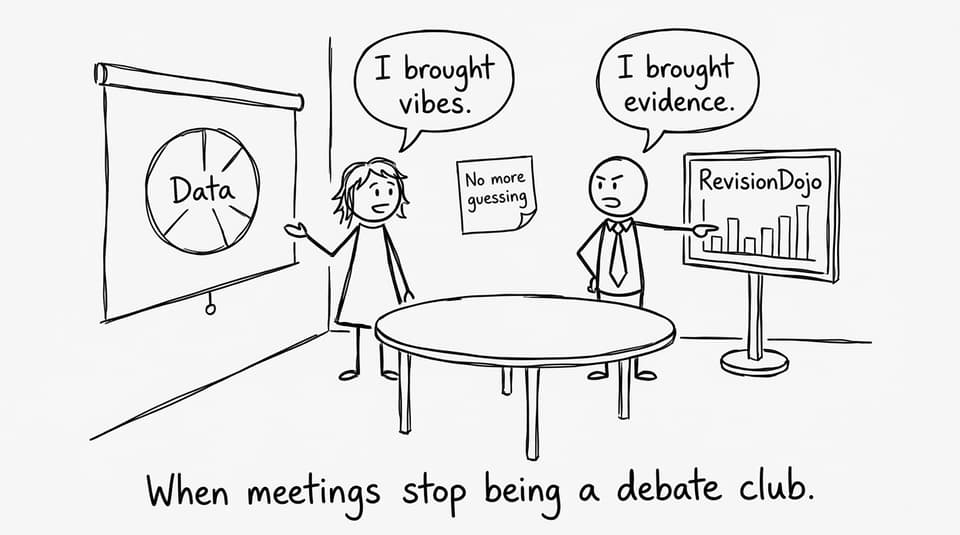
RevisionDojo’s school tools solve that by making performance patterns visible across classes and departments. When your teachers use shared analytics, alignment stops being a debate and becomes a picture: where students are strong, where they struggle, and which skills are leaking marks.
For students, the practical benefit is straightforward: your revision becomes targeted, not generic.
To see the bigger “school-wide” version of this, read: Coordinating Whole-School IB Improvement Through RevisionDojo Analytics.
What you can do as an IB student
Even if you’re not running the dashboards, you can still act like someone who has them.
-
After each practice set, write down your top two error types (content gap, command term, timing).
-
Use one resource hub to patch gaps quickly, then return to practice.
-
Track patterns weekly, not just scores.
This is why the RevisionDojo Questionbank matters: it’s designed for repeated practice with fast feedback loops that show you what to fix next.
Common rubrics: the hidden reason some IB feedback actually helps
A rubric is supposed to be a shared language. But in many IB classrooms, rubrics become “teacher translation.” You learn what your teacher means, not what the criteria mean.
RevisionDojo pushes departments toward alignment by encouraging shared rubric language and consistent criteria-driven feedback. That consistency helps students in three quiet ways:
-
You stop guessing what “good” looks like.
-
You can transfer skills between subjects.
-
You improve faster because feedback repeats the same priorities.
This also supports internal moderation and standardization. If you’ve ever wondered why two students can produce similar work and receive different outcomes, misaligned rubric interpretation is often part of the answer.
For another alignment-adjacent read, see: IB Teacher Collaboration: What Students Gain.
One shared study spine: Notes, Flashcards, and the Questionbank
Here’s an uncomfortable truth about IB revision: most students don’t fail because they didn’t work. They fail because they worked on the wrong layer.
-
They rewrite notes instead of testing memory.
-
They highlight textbooks instead of training exam responses.
-
They “revise” without proving it under time pressure.
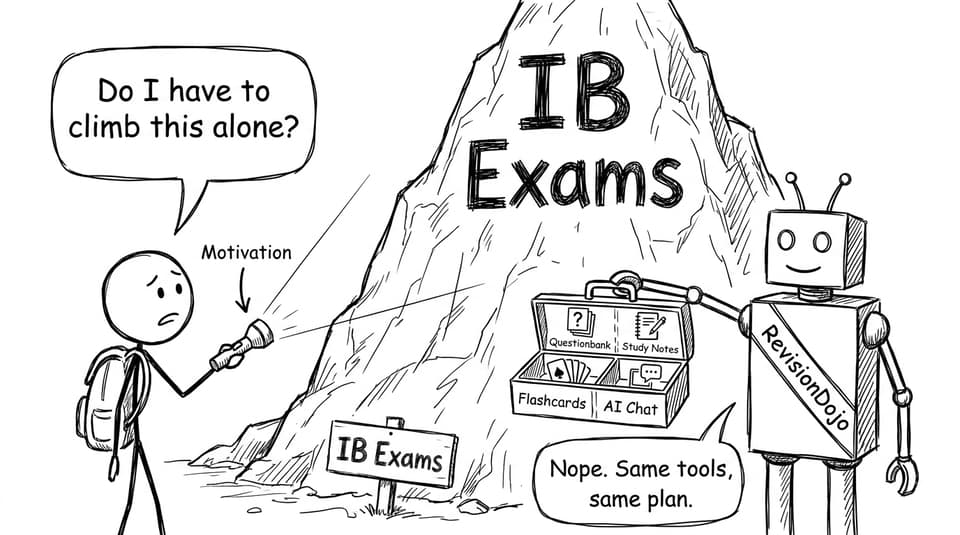
RevisionDojo is designed to reduce that drift. You build a single study spine:
-
Study Notes to understand the syllabus points cleanly
-
Flashcards to keep daily recall alive
-
Questionbank to turn knowledge into marks
Start here if you want the Notes overview: Study Notes. For a deeper strategy guide: IB Subject Note Collections: Comprehensive Study Materials.
The IB alignment advantage of using one system
When your resources live in one place, your improvement becomes cumulative.
A mistake you make in one practice set becomes a flashcard. That flashcard strengthens recall. Stronger recall improves your next timed attempt. Over time, you develop consistency, the trait the IB rewards most.
If you want a practical “how to revise with question banks” guide, read: IB Question Bank | How to Use It Effectively.
AI Chat and Grading tools: alignment when you’re studying alone
The hardest part of IB prep is not doing work. It’s doing work that is corrected quickly enough to matter.
RevisionDojo’s AI Chat can act like a fast clarification layer when you get stuck mid-session: command terms, method, structure, missed steps. The goal isn’t to replace thinking. It’s to keep your momentum.
Then the Grading tools add a different kind of alignment: they push feedback toward criteria and markscheme language rather than vague encouragement. That’s what makes feedback usable.
When coursework anxiety starts bleeding into exam season, RevisionDojo’s Coursework Library and grading workflows help you see what strong work looks like and what to fix first, so perfectionism doesn’t eat your evenings.
And if you need a human reset, Tutors add the missing layer: someone who can diagnose patterns, not just individual mistakes.
Predicted Papers and Mock Exams: alignment under pressure
Alignment matters most when the clock is running.
You can understand a topic and still lose marks because:
-
you misread the command term,
-
your pacing collapses,
-
you don’t know what “enough detail” looks like.
That’s why RevisionDojo includes Mock Exams and Predicted Papers: they help you rehearse the real constraint of IB exams, time.
If you want to plan your final stretch, these two reads help:
Closing: one IB system beats seven separate strategies
The IB rewards consistency. Not motivation. Not panic. Not heroic all-nighters. Consistency.
Department alignment is just the grown-up version of that idea: shared expectations, shared language, shared tools. When schools use RevisionDojo well, your learning experience becomes more coherent across subjects. When you use RevisionDojo well, your revision becomes coherent inside your own life.
If you want one place to run that aligned loop, Questionbank, Study Notes, Flashcards, AI Chat, Grading tools, Predicted Papers, Mock Exams, Coursework Library, and Tutors, start at RevisionDojo for Schools if you’re advocating as a student, or explore the platform from the main hub: RevisionDojo | IB & MYP Resources.
Because the real upgrade isn’t just “more revision.” It’s revision that finally points in one direction: the direction your IB exams actually measure.