


In the middle of an IB term, most students can feel it before anyone says it out loud: something is slightly misaligned.
One class is flying through timed practice, another is stuck rereading notes. One department gives feedback that feels like a roadmap, another gives feedback that feels like fog. You might even be doing well and still feel uncertain, because your improvement seems to depend on which teacher, which subject, which week.
That’s the hidden tension in IB schools: the program is designed to be coherent, but day-to-day learning can become fragmented.
This is where RevisionDojo changes the story. With shared dashboards and clear analytics, RevisionDojo for Schools helps coordinators and teachers coordinate whole-school improvement, and it helps IB students preparing for exams get something priceless: consistency.
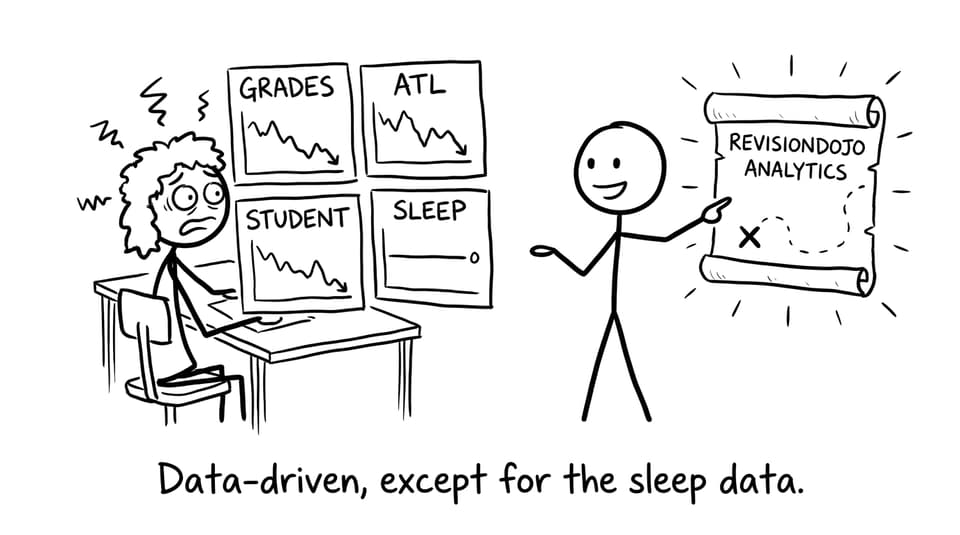
A quick checklist: how whole-school IB improvement actually starts
If your school is using RevisionDojo well, you can usually spot these moves early:
-
A shared analytics dashboard exists for coordinators, department heads, and teachers.
-
Goals are defined in student language (not just leadership language): “Improve Paper 2 planning,” “Raise command term accuracy,” “Build stronger reflection habits.”
-
Departments meet regularly to review trends, not just anecdotes.
-
Students are pointed toward targeted practice loops (not generic “revise more”).
-
Progress is tracked in weeks, not semesters.
For students, this matters because IB prep is not only about effort. It’s about feedback cycles. And analytics are what make those cycles visible.
Why analytics matter for IB students preparing for exams
Most IB students don’t struggle because they never study. They struggle because they study without knowing what to change.
Analytics fix that.
When a school uses analytics across subjects, three things become easier for you:
Clarity replaces guesswork
Instead of “I think I’m weak at Topic 4,” you see patterns: which question types, which command terms, which topics, which skills.
Consistency shows up in daily work
When departments align on what “strong” looks like, your essays, explanations, and structured responses stop feeling like separate sports.
Collaboration becomes real, not theoretical
Teachers can compare what’s working across groups and adapt faster, which means you get better support sooner.
RevisionDojo supports this by combining student practice data with teacher-facing views, so IB improvement becomes a shared map, not a private hunch.
How RevisionDojo analytics coordinate whole-school IB improvement
Whole-school coordination sounds like a leadership problem. But the outcome is a student experience: less confusion, more precision.
Unified data across subjects (one view of the whole IB cohort)
RevisionDojo centralizes performance and engagement signals so coordinators can see patterns across the school, not just within one classroom.
In practice, that can include:
-
Trends by subject and cohort
-
Topic and skill gaps that repeat across classes
-
Engagement patterns (who is practicing consistently, who is drifting)
-
Growth over time, not just single scores
For students, unified data usually shows up as earlier interventions: a teacher notices a pattern before it becomes your “this subject is hopeless” moment.
To see how RevisionDojo structures student practice, explore the Questionbank and the broader RevisionDojo for IB hub.
Department-level dashboards (ownership without silos)
School improvement fails when departments become islands. RevisionDojo helps departments own their targets while staying aligned with whole-school IB priorities.
A few examples of what departments can track and coordinate:
-
English: evidence selection, evaluation depth, response structure
-
Sciences: data handling, explanation quality, common misconceptions
-
Individuals and Societies: case study selection, argument clarity, synthesis
That alignment is also supported by cross-department routines described in IB department collaboration and consistency.
More consistent feedback and grading (so your improvement isn’t random)
Students notice inconsistency instantly. It’s exhausting when feedback changes shape from class to class.
RevisionDojo helps schools tighten the loop by making performance evidence and practice outcomes easier to discuss across teachers. Over time, this improves:
-
Shared interpretation of criteria
-
Common language around command terms
-
Agreement on what “exam-ready” work looks like
For students, consistent feedback means less time translating teacher preferences, and more time improving actual IB skills.
From insight to action: targeted practice loops that students can feel
Analytics only matter if they change what you do next.
RevisionDojo connects insights to tools students actually use:
-
Study Notes to quickly rebuild understanding (see Digital IB Study Notes and IB Subject Note Collections)
-
Flashcards to keep daily recall alive
-
AI Chat for quick clarification when you’re stuck
-
Grading tools to learn what marks reward in written responses
-
Predicted Papers and Mock Exams to rehearse timing and stamina (see IB Predicted vs Specimen Papers and IB Predicted Papers)
-
Coursework Library to reduce uncertainty while deadlines pile up
-
Tutors for high-impact help when a gap won’t move
If you want the student-side strategy for building these loops, use How to Study for IB Exams: Step-by-Step Guide as your reference point.
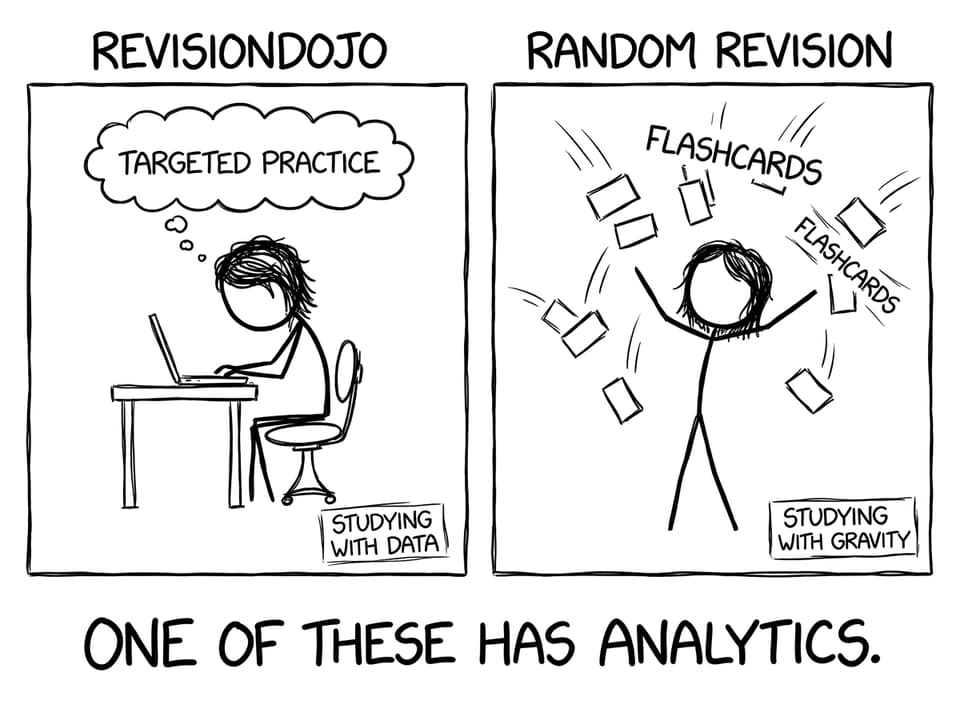
A student-centered example: when whole-school IB analytics helps you directly
Imagine your year group is strong in humanities, but sciences feel chaotic.
Without analytics, the school might label it “motivation” or “cohort ability.” With RevisionDojo analytics, the story gets more precise.
-
Coordinators notice science classes show lower practice consistency and weaker performance on certain question types.
-
Science teachers compare approaches with another department that has higher engagement.
-
A shared routine is introduced: weekly targeted sets, quick feedback cycles, and a short reflection habit.
-
After a few weeks, data shows improved engagement and fewer repeated mistakes.
The best part is what you feel: less panic, more direction. That’s what whole-school IB improvement looks like from a student desk.
How to use whole-school analytics (as a student) without waiting for adults
Even if the dashboards are built for coordinators, you can still think like someone who uses analytics well.
Ask for the pattern, not the grade
When you get results back, ask: “Which skills are repeating as weak points?” That question fits every IB subject.
Build a two-part weekly loop
-
One timed session (to train pacing)
-
Two targeted sessions (to fix specific mistakes)
Pair this with the routines from IB mock exam tips.
Use the simplest possible metric: repeated mistakes
The fastest way to improve in IB is to stop repeating the same error pattern. RevisionDojo makes it easier to spot and attack those patterns with Questionbank practice, Study Notes, and feedback.
Closing: IB improvement is a systems game, not a motivation speech
The IB often gets framed as a test of willpower.
But the students who improve fastest usually aren’t the ones who “want it more.” They’re the ones with the tightest feedback loops. They know what to fix, they practice it on purpose, and they review their mistakes like it’s part of the curriculum.
RevisionDojo analytics make those loops easier for everyone: coordinators coordinating, teachers teaching, and IB students preparing for exams with less noise and more direction.
If you want to see how whole-school analytics can translate into smarter daily revision for students, explore RevisionDojo for Schools and bring the conversation to your coordinator or department lead.