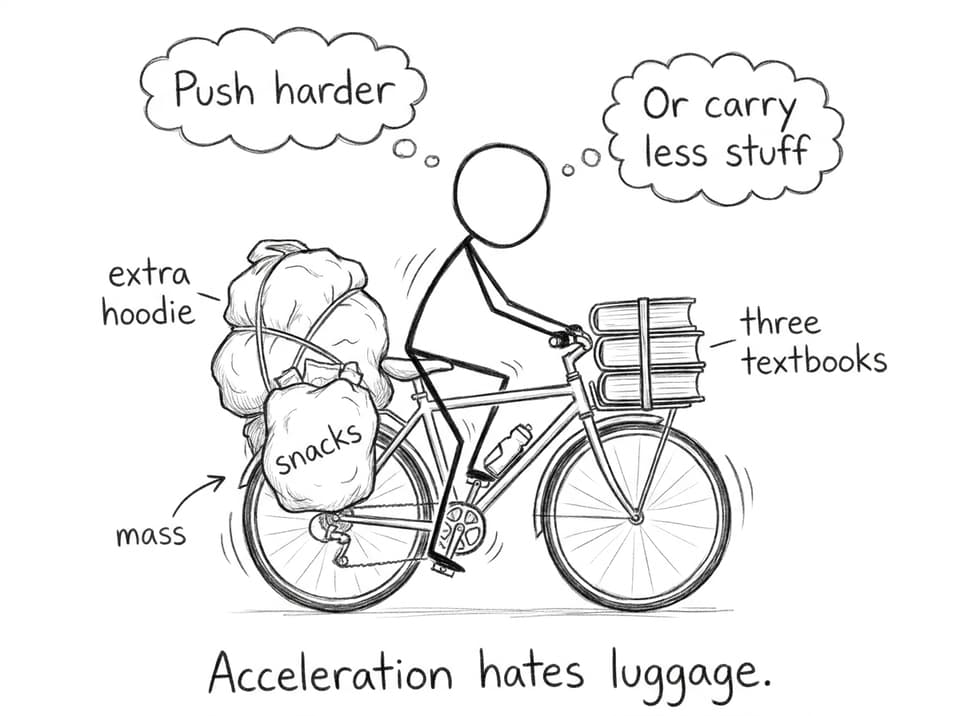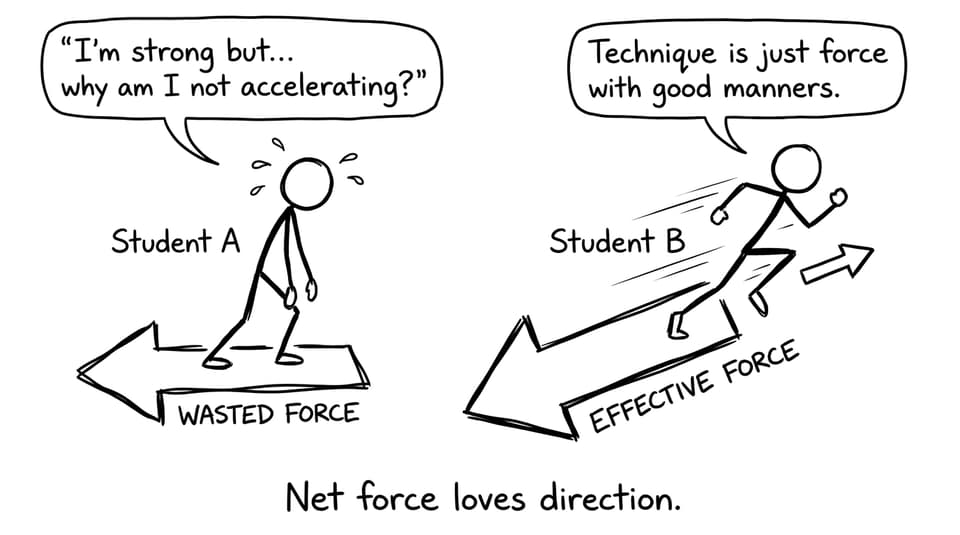


Newton’s Second Law shows up in sport when you least expect it: not as a neat equation on paper, but as that split second when a sprinter explodes out of the blocks or a shot put feels stubbornly heavy. In IB SEHS, this is one of those topics that feels simple until the exam asks you to apply it. The good news is that Newton’s Second Law is basically a story about cause and effect: what you do (force), what you’re moving (mass), and what changes (acceleration).
The IB SEHS definition you must be able to say
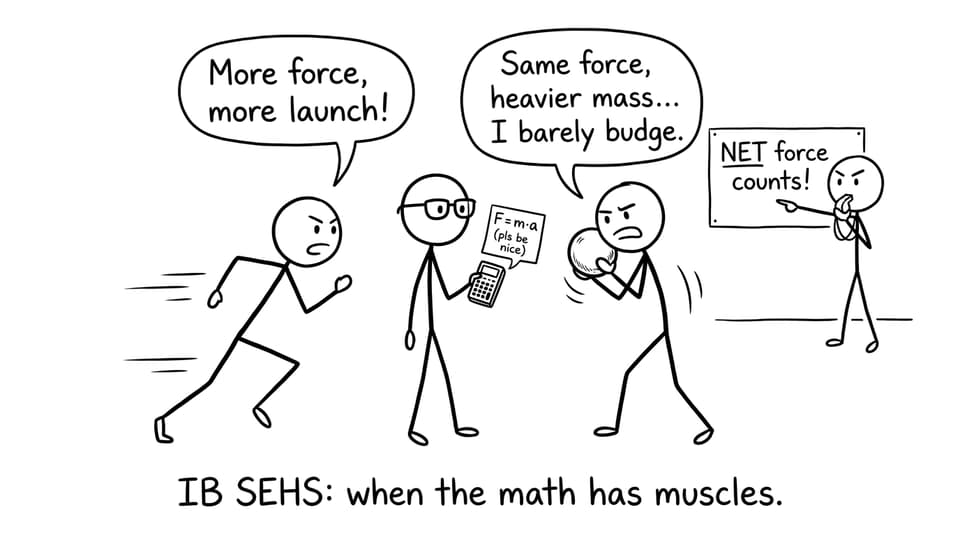
In IB SEHS, Newton’s Second Law explains that acceleration depends on the net force acting on an object and the mass of that object. If net force increases, acceleration increases. If mass increases (with the same force), acceleration decreases.
If you need the clean syllabus explanation first, pair this article with B.2.1.1 Newton’s laws of motion notes and then test yourself using the B.2.1 Newton’s laws Questionbank.
Quick checklist for full-mark Newton’s Second Law answers (IB SEHS)
-
Use the phrase net force (not just “force”).
-
Name the mass being moved (athlete + equipment if relevant).
-
State the outcome as acceleration (change in velocity per time).