


Your best artwork can still feel… smaller than it is.
That usually happens in the last stretch, when you’re exhausted, your hands smell like paint, and the exhibition space suddenly looks like a blank stage you didn’t rehearse on.
In IB Visual Arts, the exhibition layout is part of the story your work tells. If the story is hard to follow, examiners feel it. If it’s clear, intentional, and calm, even quiet pieces get louder.
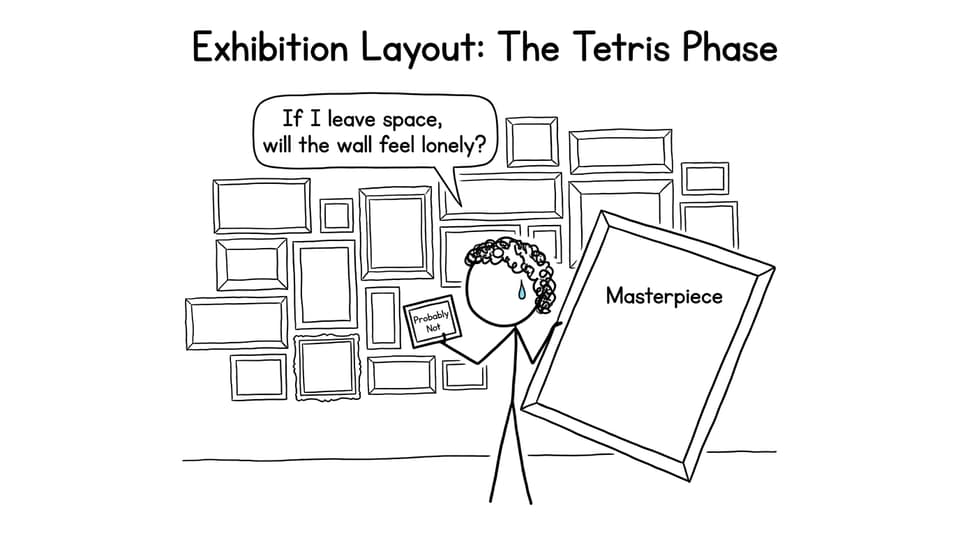
A quick IB Visual Arts layout checklist (before you install)
-
Can each piece “breathe” from at least one step back?
-
Is the viewing path obvious without signage?
-
Are lighting and glare tested in the real room?
-
Are labels consistent in size, style, and placement?
-
Do 3D works have safe, walkable space around them?
If you need to re-check what examiners value overall, anchor yourself with IB Visual Arts Assessment Criteria Explained Simply.
Mistake: Treating the wall like extra storage
The most common layout error in IB Visual Arts is panic-curation: trying to show everything you’ve made. The result is visual noise. Viewers can’t rest, compare, or notice intention.
Avoid it: curate like you’re building an argument, not an archive. For artwork counts and what’s expected at each level, use How Many Artworks Do You Need for the IB Visual Arts Exhibition? and IB Visual Arts Exhibition: How to Succeed at SL vs HL.
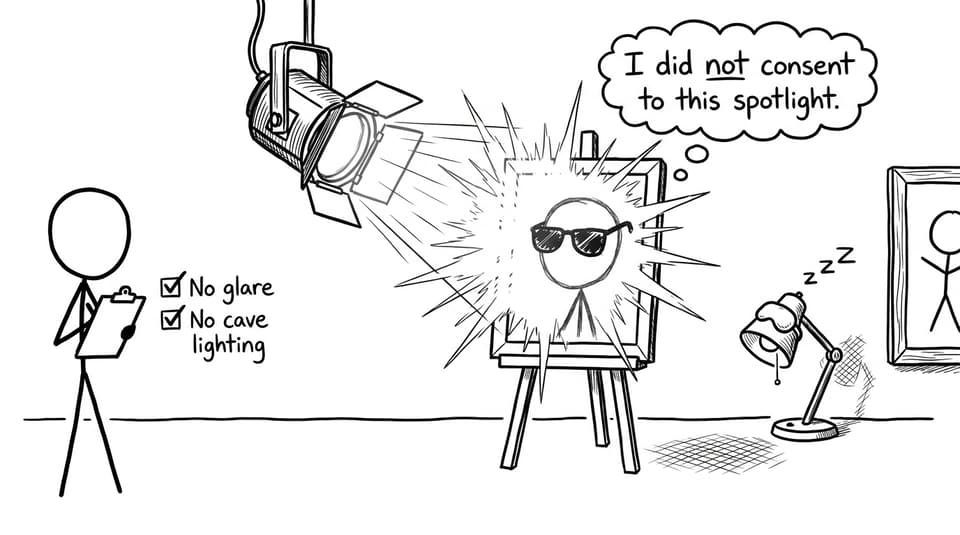
Mistake: Bad lighting (glare, shadows, or “cave mode”)
Lighting doesn’t just affect visibility. It changes colour, contrast, and texture. In IB Visual Arts, that can accidentally rewrite the decisions you worked months to control.
Avoid it: test lighting at the same time of day as the final display. Photograph your setup from examiner height. If it looks washed out or dim, adjust before install day.
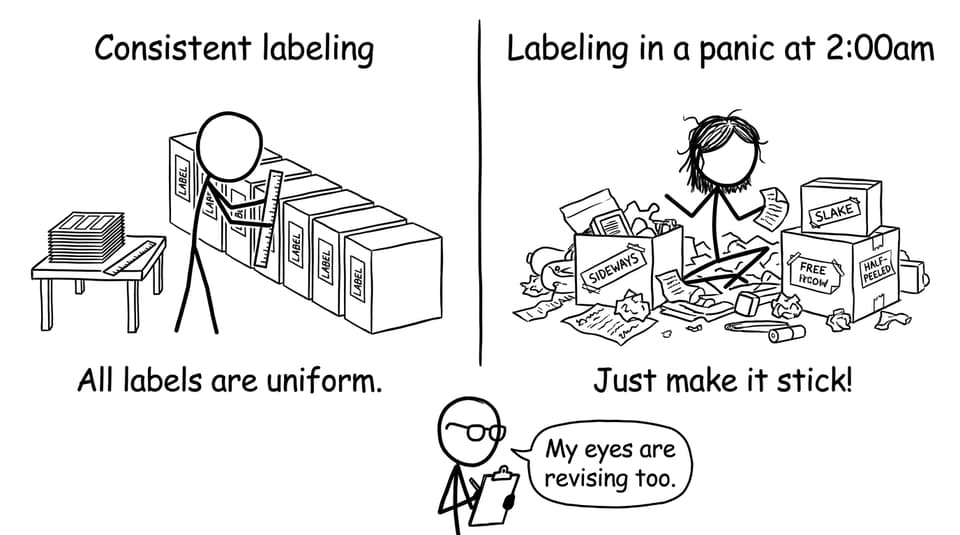
Mistake: Labels that look rushed
Inconsistent labels quietly signal “unfinished.” Even strong IB Visual Arts work can feel less resolved if titles, media, and sizes are missing or placed randomly.
Avoid it: choose one font, one size, one format, and one consistent placement. Build labels early so you’re not cutting paper in a panic.
Mistake: No flow, no sequence, no logic
Random placement makes viewers do extra mental work. In IB Visual Arts, that can weaken coherence, even if each individual piece is strong.
Avoid it: decide your organising principle: thematic progression, material shifts, scale changes, or emotional pacing. Draft a simple map, then do a slow walk-through as if you’re a first-time viewer. For theme clarity, see Best Themes for IB Visual Arts Exhibition.
Mistake: Squeezing 3D work into corners
3D pieces need space for safety, viewing angles, and presence. When a sculpture is trapped near a wall, it becomes furniture.
Avoid it: give 3D work a “viewing circle” so people can move around it. If you’re developing sculptural pieces, Sculptural Approaches to IB Visual Arts Exhibition helps you plan display needs early.
Mistake: Displaying weak or unfinished work to “fill”
Examiners don’t reward quantity. They reward control. In IB Visual Arts, one uncertain piece can pull the whole room downward.
Avoid it: remove anything you can’t defend in two sentences. If you want a benchmark for what “excellent” looks like, read What Makes a Level 7 IB Visual Arts Exhibition and Common Exhibition Mistakes That Cost IB Visual Arts Students Marks.
Closing: make your IB Visual Arts exhibition feel inevitable
A strong IB Visual Arts exhibition layout doesn’t shout “look how hard I worked.” It quietly proves it through space, sequencing, light, and small professional details.
When you want tools that make those decisions easier, RevisionDojo helps you tighten the whole course: Study Notes to keep criteria clear, Flashcards for key terminology, AI Chat to refine your curatorial rationale, Grading tools to sanity-check quality, and the Coursework Library for real examples. Pair that with targeted practice using the Questionbank, and finish your prep with Mock Exams and Predicted Papers for exam confidence.
If you’re building your exhibition right now, start by saving this page, then revisit the IB Visual Arts guides linked above and make one layout improvement today. One calm decision at a time.


