

When your artwork starts taking up real space
The first time you try sculpture in IB Visual Arts, it can feel like your idea has escaped the page.
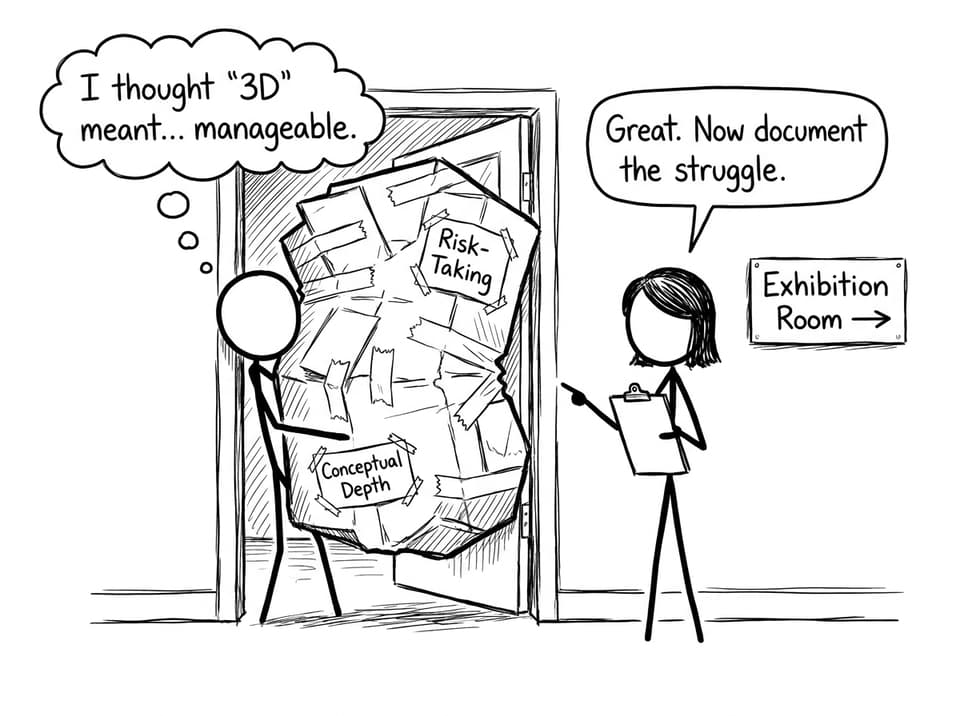
A drawing stays polite. A painting stays vertical. But a 3D piece demands floor space, lighting, transport, and a viewer who has to walk around it to understand it.
That is exactly why sculptural work can be such a smart move for your IB Visual Arts Exhibition: it makes your thinking physical. It shows risk-taking. And if you document it well, it gives examiners clear evidence of experimentation, problem-solving, and intention.
Quick checklist: before you commit to sculpture
-
Does your sculptural idea connect to your Exhibition theme? (If you need theme help, use Best IB Visual Arts Themes for Process Portfolios.)
-
Can you show variety within IB Visual Arts even if sculpture is your focus (scale, materials, methods, intent)?
-
Have you planned documentation from day one (photos, trials, failures, fixes)?
-
Do you know the Exhibition expectations and numbers for your level? See IB Visual Arts Exhibition: How to Succeed at SL vs HL.
-
Can you present it professionally (labels, stability, safe placement)?
Sculptural approaches that work well in IB Visual Arts
Clay and ceramics: form you can refine
Clay is forgiving early and demanding later, which is a good pattern for IB Visual Arts growth. Start with quick maquettes to test silhouette and symbolism, then move to a resolved piece where surface and finish become deliberate choices. Glaze tests, texture experiments, and even cracks can become evidence, as long as you explain what you learned.
Assemblage and found objects: meaning through selection
Assemblage is often where students become most “curatorial.” The material carries history: packaging, receipts, broken devices, fabric, rust. In IB Visual Arts, this can strengthen conceptual depth because your choices are readable. Photograph your materials before you build, annotate why each object belongs, and track how the structure evolved.
Wire and metal: drawing in space
Wire feels like line turned physical. You can explore tension, fragility, and negative space while still referencing skills you already have from drawing. For IB Visual Arts, this is a strong bridge medium: it shows translation of an idea across forms.
Wood and carving: patience as a visual language
Carving and constructed wood pieces tend to look “resolved” because the material has weight and permanence. If you go this route in IB Visual Arts, show your planning: joinery tests, tool marks, safety decisions, and surface treatments. Research cultural carving traditions thoughtfully, not as decoration, and reflect on what you borrowed (and why).
Installation: the room becomes part of the artwork
Installation is where IB Visual Arts becomes theatre. Light, sound, and placement change meaning. Think about the viewer’s route: where do they enter, what do they notice first, what do they discover last? If you include digital elements, this pairs well with How to Showcase Digital Art in IB Visual Arts Exhibition.
Textiles and soft sculpture: intimacy and identity
Soft sculpture can communicate body, memory, comfort, or discomfort in a way hard materials cannot. In IB Visual Arts, textiles are also great for iteration: stitching samples, stuffing tests, dye trials, and pattern adjustments are easy to document and reflect on.
Documenting sculpture so examiners can reward it
Sculpture is only “invisible” when you fail to capture it. Build your documentation habits around what IB actually grades in IB Visual Arts: experimentation, development, and reflection.
-
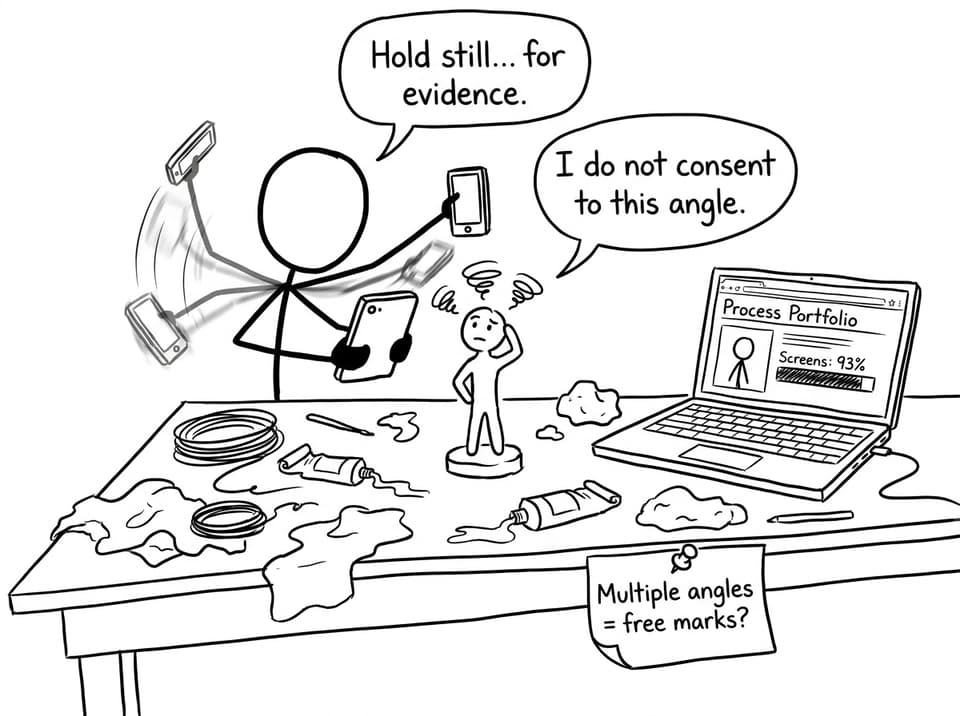
Photograph from multiple angles and distances (detail shots matter).
-
Record stages: armature, tests, failures, repairs, and final presentation.
-
Write short reflections that show intent, result, evaluation, and next step. Use How to Write Reflections in Your IB Visual Arts Portfolio.
-
Make experimentation obvious with side-by-side comparisons. See How to Show Experimentation in Your IB Visual Arts Process Portfolio.
-
Keep your structure examiner-friendly using IB Visual Arts Process Portfolio Structure (High-Scoring).
Common sculpture problems (and how to plan around them)
Space, cost, transport, and time are the classic traps in IB Visual Arts sculpture.
A practical fix is to prototype small, then scale only when your method is stable. Choose materials that are affordable and repeatable. And plan your Exhibition layout early so your 3D work has breathing room.
If you are unsure what “counts” across the course, keep these open while you plan: Requirements for IB Visual Arts and IB Visual Arts Assessment Criteria Explained Simply.
Closing: make sculpture your proof of growth
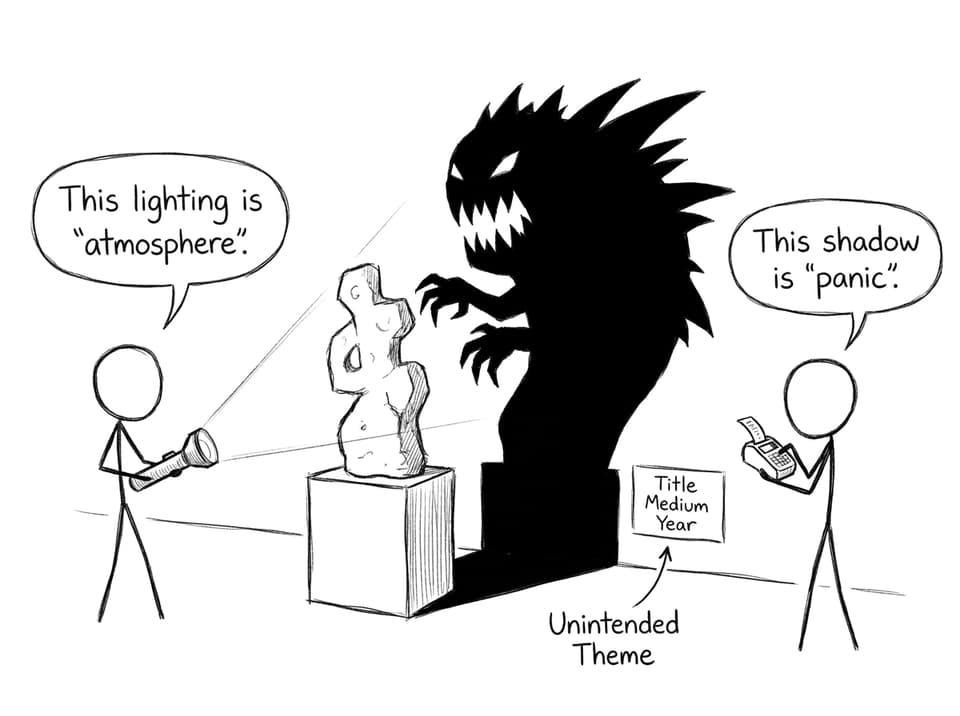
Sculpture can turn your IB Visual Arts Exhibition into something viewers remember because it asks them to move, look closer, and experience your idea in real space. Choose an approach that fits your theme, prototype before you scale, and document like your process is part of the artwork.
When you want everything in one place, portfolio structure, examiner expectations, and examples to model, RevisionDojo brings it together with Study Notes, Flashcards, AI Chat, Grading tools, Mock Exams, Predicted Papers, a Coursework Library, and Tutors. Your job is to make strong work. Our job is to make sure it is readable, assessable, and rewarded in IB Visual Arts.