
For IB students sitting exams in May 2028 (started DP1 in August 2026).
The best May 2028 IB ESS study advice is to build concise syllabus-linked notes, practise data and extended-response questions every week, and correct your work against markscheme expectations. Begin this routine in DP1 rather than waiting until the course feels complete, because ESS rewards connected understanding more than last-minute memorization.
That matters in Environmental Systems and Societies. A student can know the definition of biodiversity, for example, yet still lose marks by failing to apply it to a named ecosystem, interpret unfamiliar evidence, or evaluate a management strategy from contrasting perspectives.
The goal is not to collect the largest set of notes. It is to become fluent at moving between environmental knowledge, data, systems thinking, real examples, and balanced judgment.
The May 2028 ESS syllabus you should follow
The IB currently identifies the revised ESS course as the syllabus with first assessment in 2026. It is available at both SL and HL, so students sitting exams in May 2028 should study this version unless the IB later announces an amendment.
The current course is organized around eight syllabus topics:
- Foundations
- Ecology
- Biodiversity and conservation
- Water
- Land
- Atmosphere and climate change
- Natural resources
- Human populations and urban systems
The course uses concepts including systems, sustainability, perspectives, equilibrium, models, and environmental value systems across those topics. HL students also encounter additional depth and lenses involving environmental law, environmental and ecological economics, and environmental ethics.
The official IB Environmental Systems and Societies page provides the public subject briefs. For topic-by-topic learning and practice, use RevisionDojo’s IB ESS new syllabus resource.
As of October 2026, the final May 2028 examination timetable, May 2028 grade boundaries, and live examination questions have not been published. Do not rely on websites claiming to know them. Your school should communicate any subsequent IB clarification through its official programme resources.
A practical IB ESS 2028 study checklist
A reliable plan has five parts:
- Map every lesson and resource to the first-assessment-2026 syllabus.
- Build short notes around relationships, examples, evidence, and evaluation.
- Retrieve knowledge without looking before rereading anything.
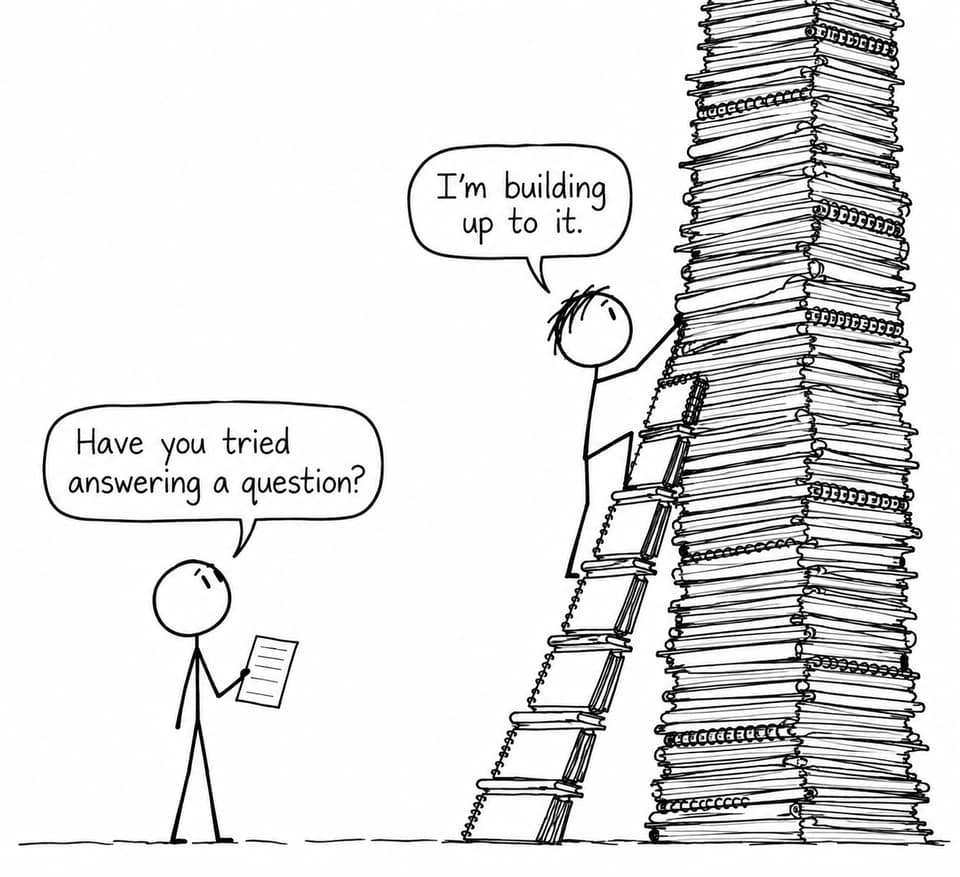
- Answer one or more syllabus-aligned questions every week.
- Keep an error log that changes what you practise next.
This looks almost too simple. That is usually a good sign. Sustainable revision systems are rarely complicated; they are repeated.
How to make ESS notes that remain useful
ESS notes should help you explain a system, not merely recognize a paragraph. After each subtopic, reduce the material to one compact page or digital equivalent built around five elements.
Start with the syllabus statement
Write the exact learning focus at the top in your own words. This prevents a familiar problem: making beautiful notes about interesting environmental issues that sit outside the assessable course.
RevisionDojo’s new-syllabus ESS study hub can help you keep Study Notes and Questionbank practice connected to the correct course.
Record relationships, not isolated facts
Use arrows and short causal chains. For example, do not stop at “deforestation reduces interception.” Continue through possible changes to infiltration, surface runoff, soil erosion, river discharge, habitat quality, and local livelihoods. Then identify conditions that could weaken or reverse parts of the chain.
ESS questions often reward the ability to explain consequences. A causal chain gives you something you can turn directly into an answer.
Attach evidence to a named example
For each major issue, retain a small number of examples you genuinely understand. Record the location, environmental process, stakeholder conflict, management response, outcome, and limitation. Avoid memorizing precise figures unless your teacher or a dependable source can verify them.
A flexible example is more valuable than a long case-study script. The same well-understood place may support questions about conservation, resource use, environmental governance, or competing value systems.
Add perspectives and limitations
Create a small box asking:
- Who benefits?
- Who carries the cost or risk?
- Which environmental value systems shape the disagreement?
- Over what timescale does the strategy work?
- What evidence is uncertain or incomplete?
This turns factual notes into evaluation notes. It is particularly useful for Paper 2 responses and for HL students applying legal, economic, and ethical lenses.
Finish with retrieval prompts
Convert each page into three to five questions. RevisionDojo Flashcards can handle definitions and short relationships, while AI Chat can test your explanation of a process or challenge an unsupported conclusion. The important step is answering before checking the Study Notes.
What to practise and how often
ESS preparation should begin untimed and gradually become timed. Accuracy comes first; speed becomes useful only after you know what a strong answer contains.
| Stage | Recommended ESS practice |
|---|---|
| Each lesson week | Two short retrieval sessions and one small set of structured questions |
| End of each topic | One mixed question set, one data-response task, and one extended response |
| Every 3-4 weeks | A cumulative session combining current and earlier topics |
| Final 4-6 months | Regular timed paper sections alongside targeted correction |
| Final revision period | Full Mock Exams, followed by focused repair of recurring weaknesses |
ESS practice should rotate through four distinct skills:
- Knowledge: define terminology and describe processes accurately.
- Application: connect knowledge to an unfamiliar environmental context.
- Analysis: interpret graphs, maps, tables, models, and competing evidence.
- Evaluation: reach a supported judgment after considering strengths, limitations, stakeholders, and perspectives.
Use the RevisionDojo Questionbank for focused sets, Grading tools for feedback on written answers, and Predicted Papers or Mock Exams for longer rehearsals. Coursework Library examples can also help you notice how environmental questions, methods, data, and conclusions fit together, although submitted work must remain your own.
Which practice materials match the syllabus
The label “ESS” is not enough. Materials should explicitly match the course first assessed in 2026, particularly because older resources may reflect a different syllabus structure or assessment model.
Prioritize materials in this order:
- The official ESS guide and subject brief provided through your school
- Official specimen material for the first-assessment-2026 course
- Session examination materials released through authorized IB channels when available
- Questions clearly mapped to the revised syllabus
- Teacher-created tasks checked against current assessment objectives
Older exam questions can still be useful when their underlying content and skill remain relevant. Use them as individual practice items, not as reliable models of the complete May 2028 papers. Remove questions your teacher confirms are out of scope, and do not infer the current weighting or structure from an older paper.
RevisionDojo’s ESS resource for the first-assessment-2026 syllabus is the appropriate starting point for aligned Questionbank practice, Study Notes, and revision tools.
Common mark-losing habits in ESS
The most expensive mistakes often look small.
Answering the topic instead of the command term
A student may write everything remembered about climate mitigation when the question asks for an evaluation. That answer contains knowledge but may never compare approaches, address limitations, or reach a reasoned conclusion. Circle the command term and translate it into an action before writing.
Describing data without using it
When a stimulus is provided, refer to its patterns, comparisons, anomalies, units, and relevant values. Then connect those observations to ESS knowledge. Copying a trend without explaining its environmental meaning is usually incomplete analysis.
Making absolute claims
Environmental systems are conditional. Replace claims such as “this strategy always works” with reasoning about scale, location, enforcement, stakeholder behavior, cost, timescale, and uncertainty. Qualification is not weakness; it is evidence of judgment.
Using examples as decoration
Naming a country or ecosystem earns little if the answer never explains what happened there. Use the example to prove or challenge a claim. Specificity should advance the argument.
Writing an unbalanced evaluation
Evaluation is not a list containing one advantage and one disadvantage. Establish criteria, weigh alternatives, consider perspectives, and make a conclusion that follows from the discussion. RevisionDojo Tutors and AI-supported grading can be useful when you need to identify why an apparently knowledgeable response remains underdeveloped.
HL versus SL study priorities
SL and HL students share the central ESS framework, but they should not prepare in identical ways.
The published assessment model gives SL Paper 1 a duration of 1 hour and Paper 2 a duration of 2 hours. At HL, Paper 1 is 2 hours and Paper 2 is 2 hours 30 minutes. The internal assessment contributes 25% at SL and 20% at HL, while external assessment contributes 75% and 80% respectively.
SL students should prioritize secure coverage, accurate terminology, systems reasoning, stimulus interpretation, and concise evaluation. Timed practice should focus on selecting enough relevant material without writing beyond what the marks justify.
HL students need the same foundation plus greater depth, synthesis, and confidence applying the HL lenses. Create separate retrieval prompts for legal mechanisms, economic reasoning, and ethical perspectives, then connect them to the core environmental topics. Do not study the lenses as isolated chapters; practise using them to interpret real decisions about conservation, pollution, climate policy, resources, and development.
Both levels benefit from the same cycle: answer, check, diagnose, and answer again. The difference is the expected breadth and depth, not the value of disciplined practice.
Build a system that survives a busy IB year
ESS will compete with other subjects, coursework, and the extended essay. A small weekly routine is therefore safer than a heroic revision plan that depends on unlimited time later.
RevisionDojo brings Questionbank practice, Study Notes, Flashcards, AI Chat, Grading tools, Predicted Papers, Mock Exams, the Coursework Library, and Tutors into one study system. The tools matter most when they shorten the distance between discovering a weakness and doing something about it.
Your specific next step is to open the RevisionDojo new-syllabus ESS Questionbank, choose the topic you studied most recently, and complete five questions without notes before reviewing every lost mark.