Levers feel like something from a physics workshop, until you notice you’ve been using them all day. Every time you lift your water bottle, rise onto your toes, or nod during a stressful revision session, you’re running a lever system. In IB SEHS, that simple idea is a quiet mark-generator: if you can spot the fulcrum, effort, and load, you can explain why the body sometimes chooses speed over strength (and why that matters in sport).
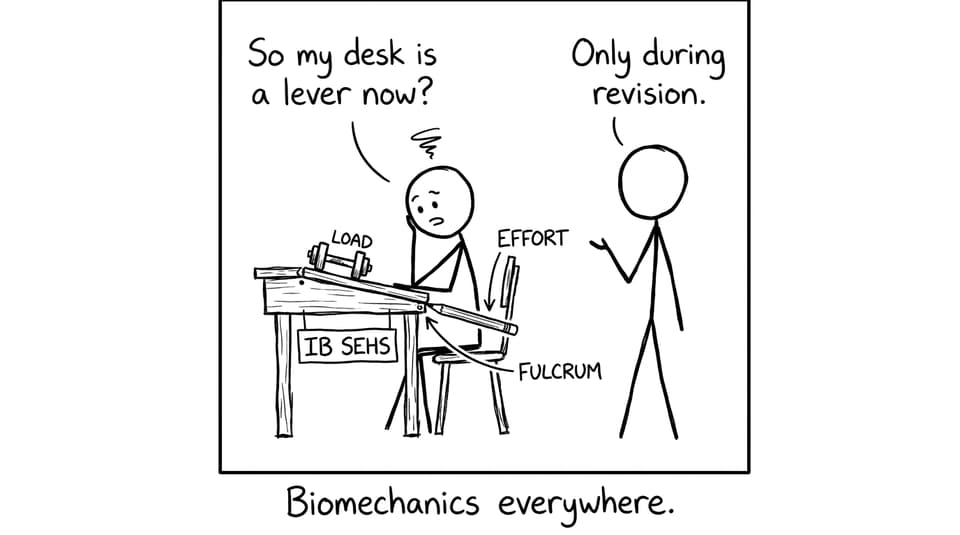
IB SEHS desk lever joke
IB SEHS lever checklist (what to label first)
When a lever question shows up in IB SEHS, don’t start with the lever class. Start with the three parts and the story of movement.
Fulcrum (pivot): usually the joint
Effort: muscle force (where the tendon pulls)
Load: resistance (body segment weight or an external object)
Then decide the class by asking: which part sits in the middle?
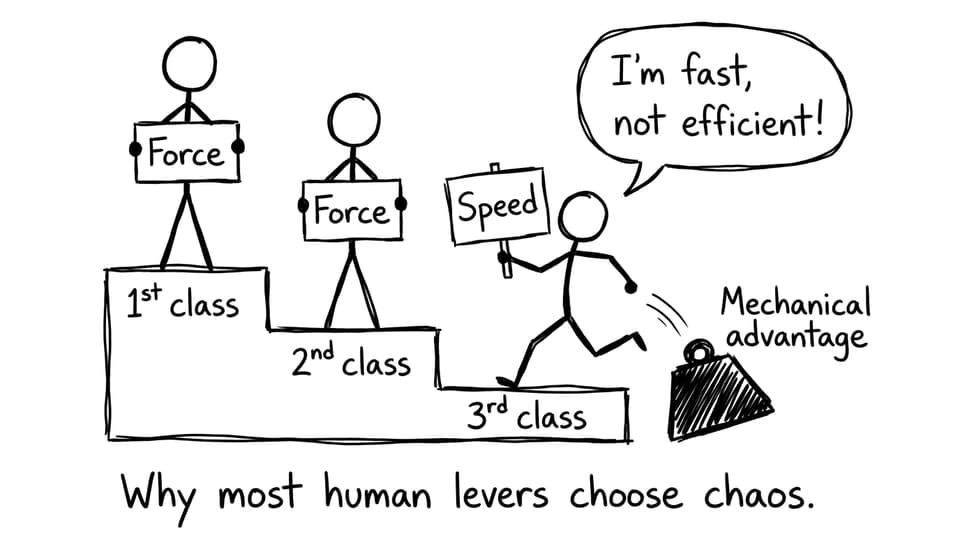
First-class levers in IB SEHS: balance and direction change
A first-class lever places the fulcrum between the effort and the load. In the body, it’s less common, which is exactly why exam questions like it: it tests whether you understand the rule, not just the most frequent example.
A classic example is neck extension/flexion when controlling the head. The joint acts as the fulcrum, neck muscles provide effort, and the head’s weight is the load. In IB SEHS, the scoring move is to describe the outcome: first-class levers can balance force and speed depending on the distances involved, and they can reverse direction of force.
A second-class lever places the load between the fulcrum and the effort. The feeling is “heavy but doable.” The body uses this arrangement sparingly, but when it does, it’s usually because force matters more than speed.
The go-to example is plantar flexion when rising onto tiptoes. The ball of the foot is the fulcrum, body weight is the load, and the gastrocnemius/soleus complex supplies the effort via the Achilles tendon. In IB SEHS, connect it to performance: second-class levers provide a mechanical advantage for force production, but typically sacrifice speed and range of motion.
Third-class levers in IB SEHS: speed wins (most of the time)
Third-class levers place the effort between the fulcrum and the load. This is the most common lever system in the human body, and it’s the one most sporting movements lean on.
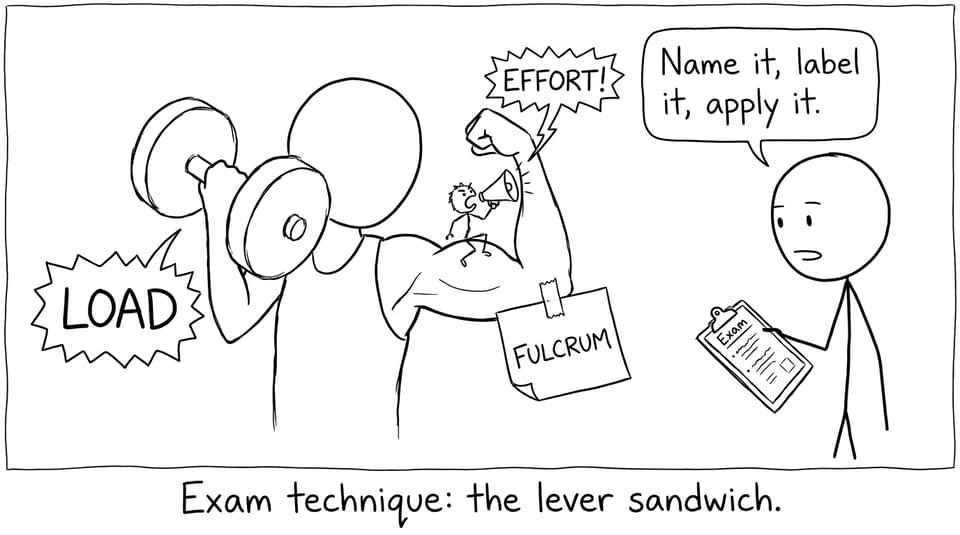
A clean example is elbow flexion in a biceps curl: the elbow joint is the fulcrum, the biceps apply effort on the radius, and the load sits in the hand (or is the forearm segment weight plus anything held). In IB SEHS, you should say the trade-off clearly: third-class levers create a mechanical disadvantage for force, but they allow greater speed and range of movement. That’s why they dominate sport.
The exam-level insight: levers are trade-offs, not “good vs bad”
A lot of students describe third-class levers as “inefficient” and stop there. In IB SEHS, that’s only half a sentence. The better explanation is: the body accepts lower force efficiency because sport often rewards limb speed, control, and large movement arcs.
This is also why muscles often have to generate large forces even for modest loads: the effort is applied close to the joint, so the effort arm is small. If you want to connect this lever idea to wider biomechanics thinking, Conquering Biomechanics: A Visual Guide to SEHS Topic 4 helps you link levers to force, motion, and movement analysis.
Biceps curl exam technique joke
How to answer IB SEHS lever questions (a mini template)
Use this structure to sound like the markscheme:
Name the lever class (first/second/third)
Identify F, E, L (fulcrum, effort, load) in the movement
State the mechanical outcome (force advantage or speed/ROM advantage)
Apply to sport (why it helps performance in that action)
Levers in the human body stop being “a topic” and start being a pattern once you always hunt for fulcrum, effort, and load first. That one habit turns IB SEHS biomechanics into something you can explain calmly under time pressure.
When you’re ready to go beyond reading, RevisionDojo is built for the full loop: Study Notes to verify definitions, Flashcards for recall, the Questionbank for exam-style practice, AI Chat to check your logic, Grading tools to polish responses, Predicted Papers and Mock Exams to rehearse timing, plus a Coursework Library and Tutors when you need targeted support. Use RevisionDojo to make IB SEHS lever questions feel like free marks, not surprises.
IB SEHS goal setting in sport made simple: goal types, SMART targets, common mistakes, and exam-ready tips using RevisionDojo practice tools.