Introduction: the “smart” combo that can still feel heavy
The first time you realise your week includes both a physiology question about fatigue and a stoichiometry problem about limiting reagents, it can feel like you accidentally chose two different lives.
But here’s the calmer truth: IB SEHS and IB Chemistry aren’t opposites. They’re two lenses on the same story -- how systems work, how energy moves, and how evidence turns into explanations. If you’re an IB student preparing for exams and wondering whether this is a good balance (or just a recipe for late nights), this guide will help you decide.
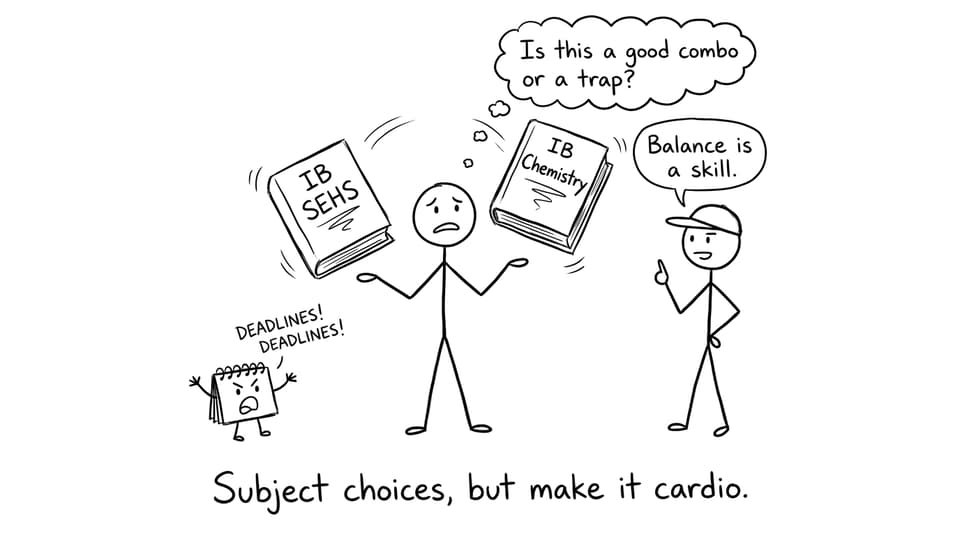
Student juggling IB SEHS and IB Chemistry
Quick checklist: when IB SEHS + Chemistry is a good fit
This pairing usually works well when you:
Want a health or life-science direction, but still want “serious science” depth
Like seeing theory show up in real human performance, nutrition, and recovery
Enjoy labs and data, and you’re willing to practise how marks are earned
Can handle switching between applied writing (IB SEHS) and abstract calculation (Chemistry)
Why IB SEHS pairs surprisingly well with Chemistry
People call IB SEHS “the practical one,” and Chemistry “the hard one.” That’s a stereotype, but it points to something useful: the two subjects pull your thinking in different directions.
IB SEHS asks you to connect concepts to living systems. You’ll work with anatomy, movement, energy systems, psychology, and health contexts. Revision often looks like: clear definitions, applied examples, and structured evaluation.
Chemistry asks you to explain why processes happen at a particle level. You need fluency in models, data handling, calculations, and mechanisms.
Together, IB SEHS gives you “what it looks like in the body,” while Chemistry gives you “what’s happening underneath.” Nutrition, metabolism, fatigue, and recovery become easier to reason about when you can move between both.
A nice way to experience this overlap is to revise one applied SEHS area (like movement) and then switch into the chemical thinking behind energy and structure. For example, you can review B.1 Generating movement in the body and then build your Chemistry foundations in a topic like Structure 2: Models of bonding and structure.
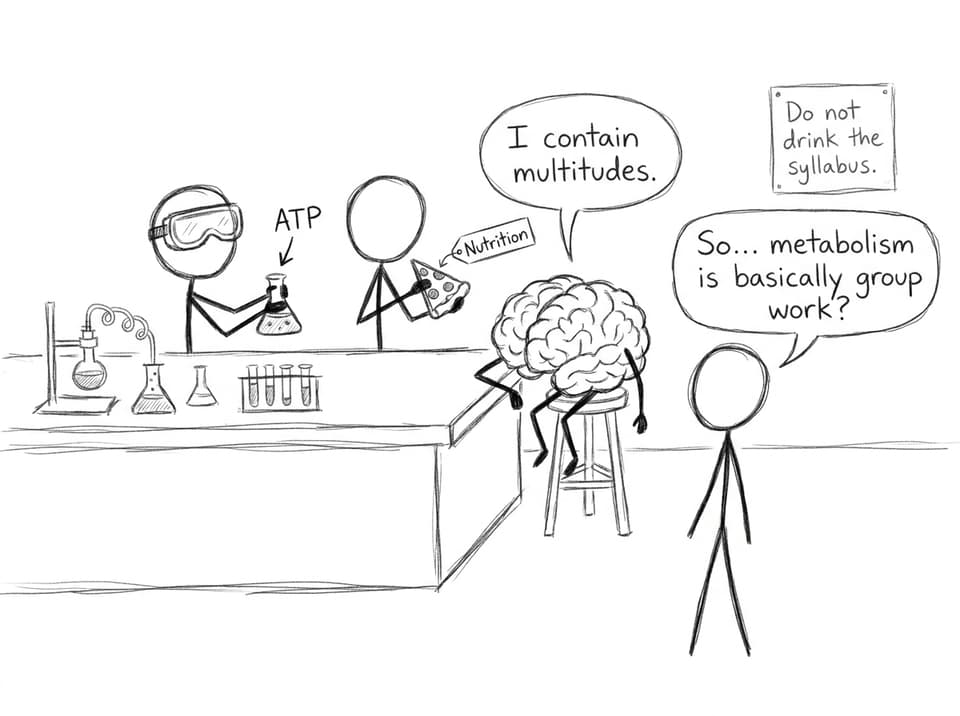
Chemistry lab meets SEHS metabolism
The real “balance” question: workload and exam skills
The balance isn’t just content. It’s how you earn marks.
Chemistry revision rewards repetition with feedback: practise questions, learn the markscheme logic, and patch gaps fast. SEHS rewards clarity and structure: correct terminology, correct links, and correct evaluation.
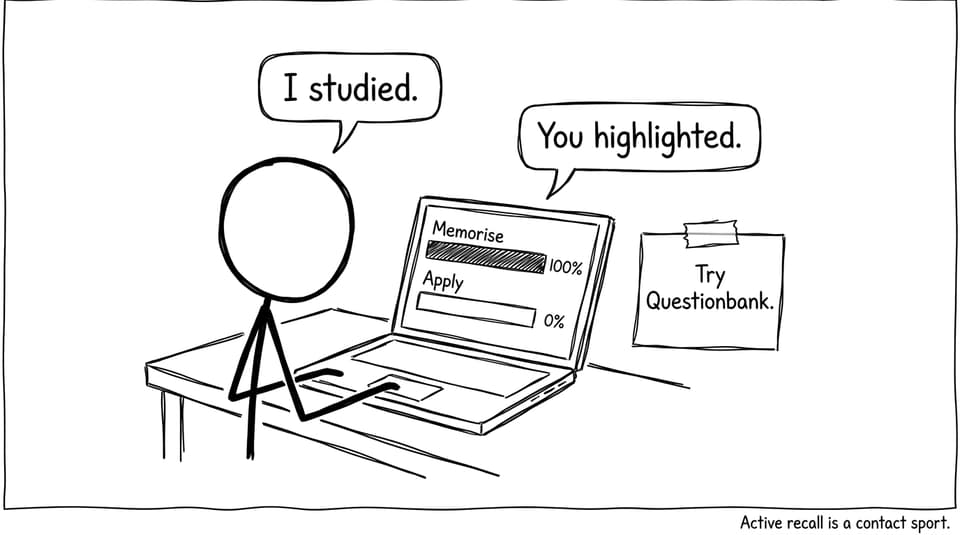
If you try to revise both by rereading notes, the combo can feel brutal. If you revise both using an active loop, it starts to feel manageable.
On RevisionDojo, that loop is built in:
Study Notes for fast clarity
Flashcards for daily recall (especially definitions in IB SEHS)
Questionbank to practise like the exam actually behaves
AI Chat when you’re stuck mid-session and need one clean explanation
Grading tools when you want feedback that’s specific, not vague
Mock Exams and Predicted Papers to train timing and stamina
Coursework Library to reduce stress around IAs/EE examples
Tutors when you need a human to diagnose what’s holding you back
In IB SEHS, marks usually follow a pattern: define, apply, support with evidence, then evaluate. Practise that structure deliberately.
A good revision target is a psychology or coping unit where evaluation matters. Try building your study session around C.4.2 Coping, then use flashcards to keep key terms exam-ready.
Make Chemistry your “daily proof” subject
Chemistry improves fastest when you can see proof. Do a set, mark it, and write one rule you’ll follow next time. If you’re rebuilding fundamentals, even one well-understood note can change a topic.
For example, reviewing 12.1 Electrons in atoms Notes and then immediately doing questions is more efficient than rereading three chapters.
Conclusion: yes, IB SEHS can balance Chemistry -- if you revise like an athlete
IB SEHS is a good balance with Chemistry when you want both applied health science and deep scientific reasoning, and when you’re willing to practise the exam skills each subject demands. The pairing can open doors in health, sport, and life sciences, but the real advantage comes from building a repeatable study system.
If you want that system in one place, RevisionDojo is built for it: Questionbank, Study Notes, Flashcards, AI Chat, Grading tools, Predicted Papers, Mock Exams, a Coursework Library, and Tutors. Start small this week: pick one IB SEHS topic and one Chemistry topic, practise questions on both, and let your results tell you what to study next. That’s how balance becomes confidence -- and how IB SEHS stops being a question and starts being an advantage.
IB SEHS goal setting in sport made simple: goal types, SMART targets, common mistakes, and exam-ready tips using RevisionDojo practice tools.