

The day you learn injury prevention is the day you stop guessing
Every IB athlete (and honestly, every IB student who sits too long) eventually meets the same moment: a small niggle becomes a bigger problem because training kept going like nothing happened. In IB SEHS, that moment matters because examiners reward students who can explain how injury prevention works, not just list a warm-up and move on.
Injury prevention strategies in sport sit right at the intersection of biomechanics, training principles, and health. So when you revise IB SEHS, treat prevention like a system: reduce risk, distribute forces, and manage fatigue before tissues hit their limit.
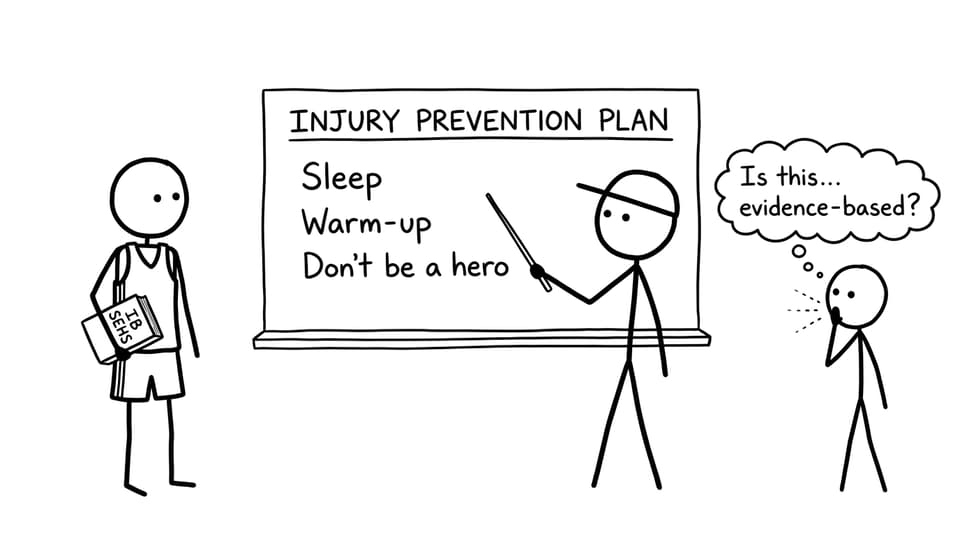
IB SEHS quick checklist: what to mention in an injury prevention answer
Use this as a mini framework when an exam question asks about prevention:
-
Training load management: gradual progression, avoid spikes
-
Technique/biomechanics: reduce harmful force concentration
-
Strength and conditioning: stability, shock absorption, balance
-
Recovery: sleep, rest days, variation, fatigue control
-
Equipment/environment: footwear, protective gear, safe surfaces
-
Warm-up: temperature + neuromuscular readiness
If you want to anchor the syllabus terms, start from the IB SEHS resource hub and move topic-by-topic.
Managing training load (the most common IB SEHS mistake)
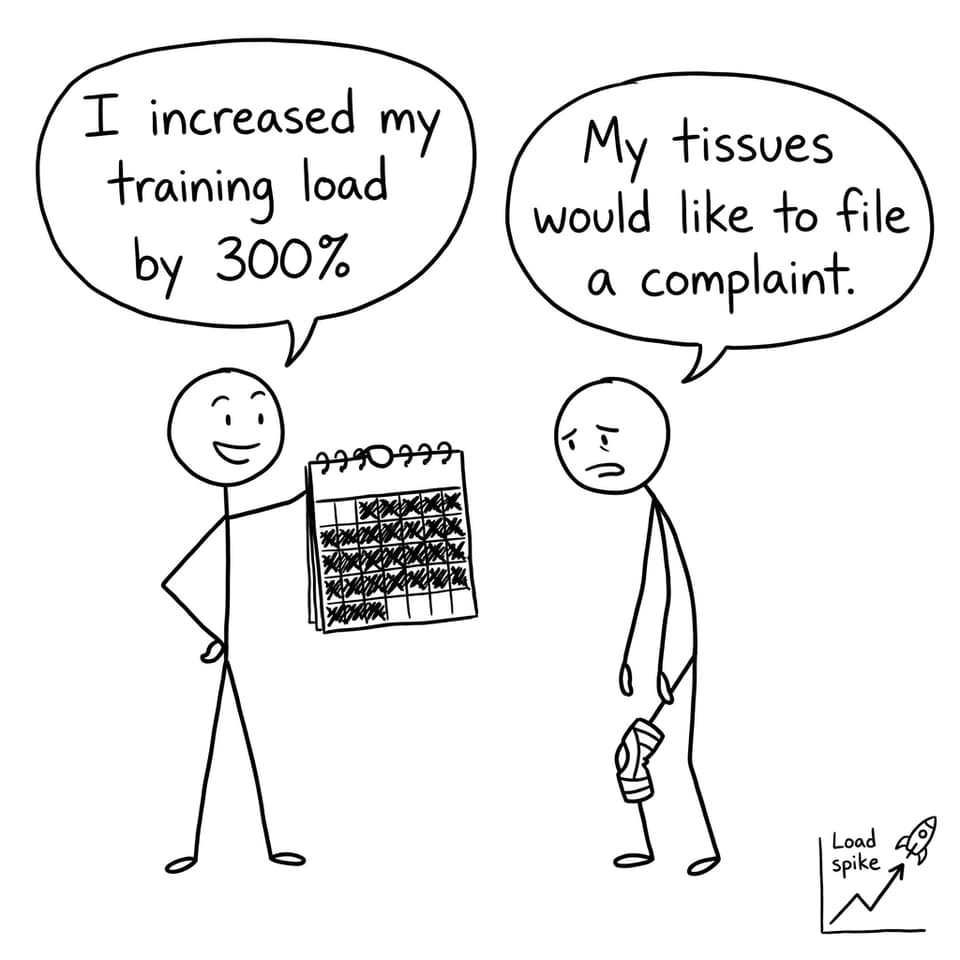
The fastest way to increase injury risk is a sudden jump in volume or intensity. In IB SEHS, you can describe this as tissues not having enough time to adapt, which increases the likelihood of overuse injuries and fatigue-related breakdown.
Practical prevention strategies include planned progression, built-in rest days, and avoiding week-to-week “hero jumps” in workload. This is especially relevant when students add extra sessions close to competitions or exams.
For targeted practice on injury questions, use the B.3 Injury Questionbank and look at how markschemes reward clear cause-and-effect.
Technique and biomechanics: reduce peak forces, not effort
Poor technique raises injury risk because it funnels force through tissues that are not positioned to tolerate it. A cleaner movement pattern spreads load more safely across joints and muscle groups.
In IB SEHS, you score more by explicitly linking technique to force distribution. Examples that work well in exam answers include correct landing mechanics (lower peak ground reaction forces), improved cutting technique (knee alignment), and correct lifting posture (reduced shear/compression in vulnerable positions).
To strengthen your mechanism explanations, pair this topic with How Forces Cause Injury so your prevention points sound biomechanically precise.
Strength and conditioning: build protection into the body
Strength training helps the body tolerate sporting forces. Stronger muscles improve joint stability, absorb shock, and control movement under fatigue. Balanced programmes also reduce muscle imbalances, which are a frequent risk factor in IB SEHS scenarios.
When you write this in an exam, avoid vague lines like “strength prevents injury.” Instead: strength increases stability, reduces ligament strain by improving muscular support, and improves force absorption during deceleration and landing.
If you need the syllabus language for risk factors, revise from B.3.1 Causes of injury Notes.
Recovery, rest, and warm-ups: the quiet strategies that save seasons
Recovery is where adaptation happens. Without it, fatigue accumulates, coordination drops, and technique degrades, which is why recovery belongs in prevention, not just rehabilitation.
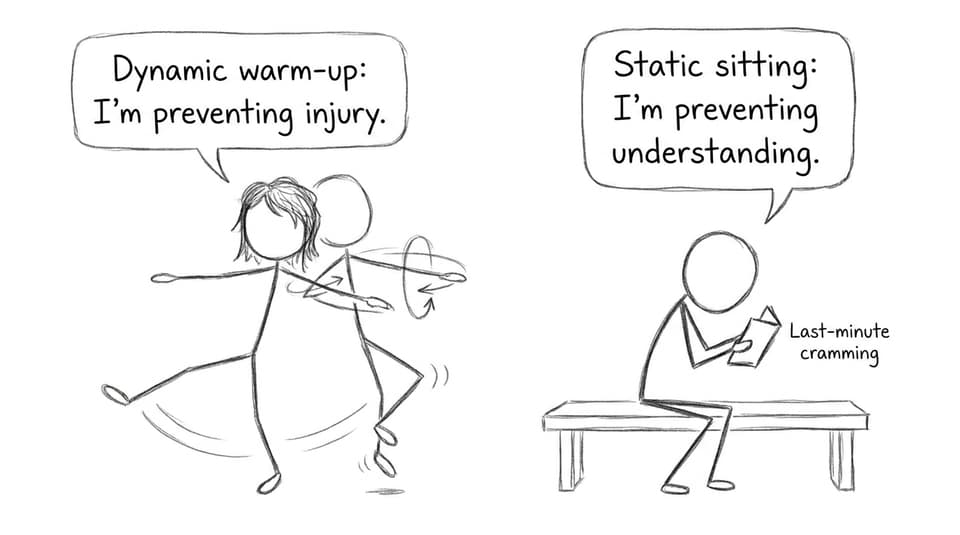
Warm-ups matter for a different reason: they increase muscle temperature and movement readiness, and they sharpen neuromuscular control before high-intensity actions.
To connect prevention to the bigger injury unit, see Acute vs Chronic Sports Injuries and Rehabilitation and Return to Play.
Using RevisionDojo to make your IB SEHS answers sharper
A reliable way to improve in IB SEHS is to learn the idea once, then practise applying it under exam conditions. RevisionDojo makes that loop simple: revise with Study Notes, lock in definitions with IB Flashcards with Spaced Repetition, and drill application using the Questionbank. When you want extra exam realism, add timed practice using IB Predicted Papers.
FAQ
How are injury prevention strategies assessed in IB SEHS?
In IB SEHS, questions often ask you to explain or discuss prevention strategies in a specific sporting context. That means you need more than a list. You should name a strategy, explain the mechanism (how it reduces risk), and apply it to the scenario (sport, athlete, setting). High-mark responses use cause-and-effect language: training load spikes lead to fatigue and overuse risk, while gradual progression allows tissue adaptation. Examiners also like when you connect prevention to biomechanics, such as reducing peak forces or improving force distribution. Finally, precise terminology (intrinsic/extrinsic factors, acute/chronic, overuse, neuromuscular control) helps your answer sound like the syllabus.
Why is training load management such a big deal for injury prevention?
Training load management is central in IB SEHS because many injuries are not “bad luck”; they’re predictable overload. When volume or intensity rises too quickly, connective tissues and muscle-tendon units may not adapt in time. Fatigue then changes technique, which increases harmful loading patterns during running, landing, or cutting. A good prevention explanation includes gradual progression, planned rest days, and avoiding sudden spikes. You can also mention monitoring signs of excessive fatigue, like persistent soreness or declining performance. In exams, this topic scores well because it links physiology, biomechanics, and practical coaching decisions in one clear chain.
How does strength and conditioning reduce injury risk in IB SEHS terms?
In IB SEHS, strength and conditioning reduce injury risk by improving stability, control, and force absorption. Strong muscles help stabilise joints, which can reduce stress on passive structures like ligaments. Better eccentric strength improves deceleration and landing mechanics, lowering peak forces in high-risk actions. Balanced programmes also address muscle imbalances that can shift loads onto vulnerable tissues. You can strengthen your answer by linking the idea to technique: as strength improves, athletes can maintain form for longer under fatigue. In exam scenarios, it’s often useful to specify the joint or action (for example, knee stability during cutting) rather than speaking generally.
Conclusion: write prevention like a system, not a slogan
Injury prevention strategies in sport are simple to list, but harder to explain well. That’s the opportunity: in IB SEHS, you can stand out by linking training load, biomechanics, strength, recovery, and environment into one clear risk-reduction story.
If you want to turn those stories into marks, build a weekly loop on RevisionDojo: learn from notes, memorise with flashcards, practise with the injury Questionbank, then test yourself under timed pressure. Your IB SEHS prevention answers will stop sounding like advice, and start sounding like examiner-ready analysis.