

When you are revising Japanese texts at 1 a.m., it is easy to feel like every paragraph you write is either brilliant or doomed. Grade boundaries do something quietly comforting: they give you a map. For IB Language A, that map helps you stop revising “generally” and start aiming for marks you can actually win.
This guide breaks down the IB Japanese A: Language and Literature HL 2025 grade boundaries by component and shows how to turn them into a simple, high-yield strategy.
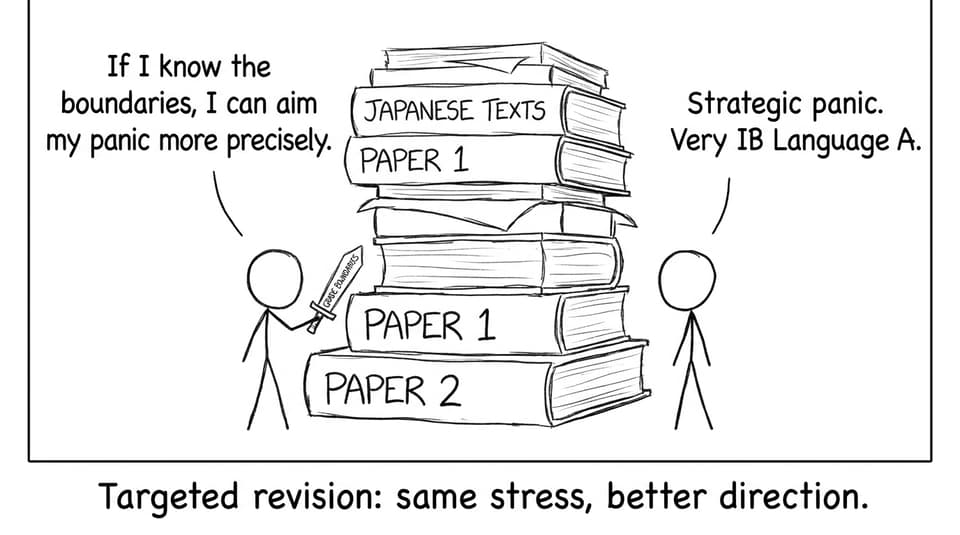
Quick checklist to use grade boundaries (IB Language A)
-
Save the boundaries where you can see them during revision.
-
Pick one “most improvable” component (often Paper 1 writing or Oral structure).
-
Train under time pressure at least once a week.
-
Use a feedback loop: attempt, get feedback, rewrite one section, repeat.
-
Keep coursework contained with time boxes so it does not eat exam prep.
If you want a broader explanation of how boundaries are set and why they move each session, keep this open: IB Grade Boundaries: How They're Actually Calculated.
IB Japanese A: Language and Literature HL 2025 grade boundaries
You are marked across the HL Essay, the Internal Assessment (Individual Oral), and exam papers. These IB Language A boundary ranges help you set targets for each component instead of guessing.
Essay (out of 20)
-
Grade 7: 18--20
-
Grade 6: 15--17
-
Grade 5: 13--14
-
Grade 4: 10--12
-
Grade 3: 7--9
-
Grade 2: 4--6
-
Grade 1: 0--3
Internal Assessment (Oral) (out of 40)
-
Grade 7: 34--40
-
Grade 6: 29--33
-
Grade 5: 24--28
-
Grade 4: 19--23
-
Grade 3: 13--18
-
Grade 2: 7--12
-
Grade 1: 0--6
Paper 1 (out of 40)
-
Grade 7: 28--40
-
Grade 6: 25--27
-
Grade 5: 22--24
-
Grade 4: 19--21
-
Grade 3: 13--18
-
Grade 2: 7--12
-
Grade 1: 0--6
Paper 2 (out of 30)
-
Grade 7: 24--30
-
Grade 6: 20--23
-
Grade 5: 16--19
-
Grade 4: 12--15
-
Grade 3: 9--11
-
Grade 2: 5--8
-
Grade 1: 0--4
Final overall grade (out of 100)
-
Grade 7: 77--100
-
Grade 6: 66--76
-
Grade 5: 55--65
-
Grade 4: 44--54
-
Grade 3: 30--43
-
Grade 2: 16--29
-
Grade 1: 0--15
For the official boundary table and session comparisons, bookmark: Language and Literature Grade Boundaries and the hub IB Grade Boundaries.
How to aim for a Level 7 in IB Language A (without burning out)
Build marks by component, not by mood
A calm IB Language A plan starts by choosing your “next output.” If your Paper 1 intros are vague, you do three introductions this week. If your Oral lacks a clear global issue line, you practice that one paragraph until it is automatic.
RevisionDojo makes this loop easier to run because the tools connect: use the Questionbank to practice exam-style prompts, then tighten memory with Flashcards, and use AI Chat to clarify one confusion before you repeat.
Use grading tools like a mirror, not a verdict
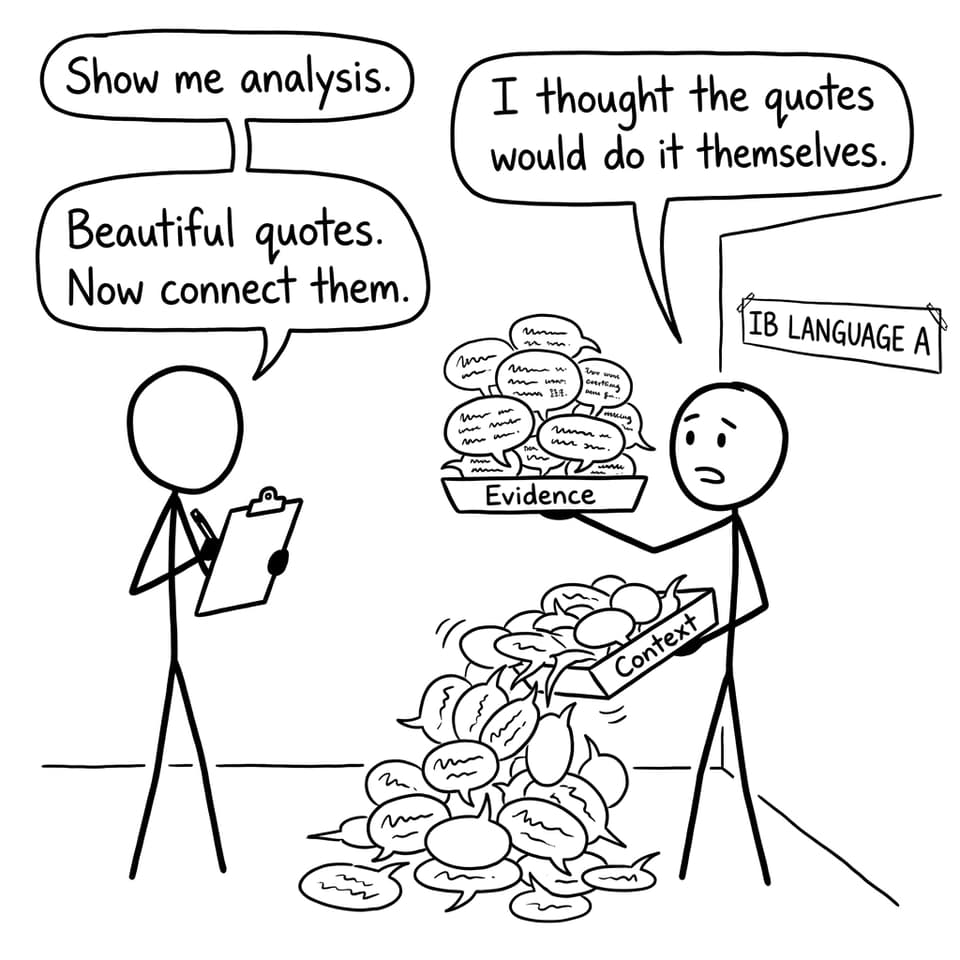
For Paper 2 and rubric alignment, the IB Language A L&L Paper 2 Grader is useful for spotting the same leaks students always have: summary replacing interpretation, evidence with no effect, and a thesis that does not control paragraphs.
Train the Oral as a performance skill
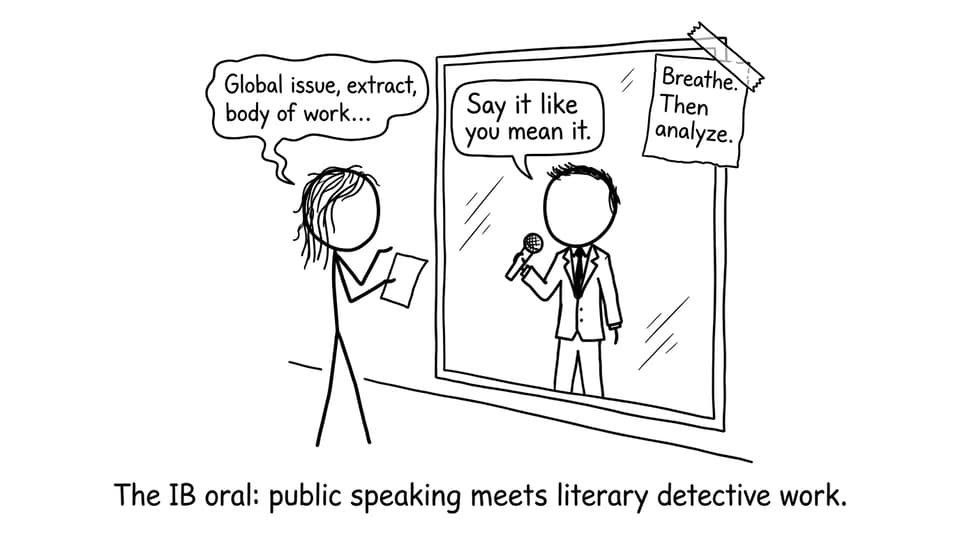
Your Oral improves fastest when you record it, listen once, and fix one thing at a time (pacing, signposting, or linking back to the global issue). For a structured workflow, see: Record and Grade IB Oral Presentations: All-in-One Platform.
FAQ: IB Language A Japanese A HL grade boundaries
Do grade boundaries guarantee my final grade?
No, grade boundaries do not guarantee anything, and that is oddly freeing. They are published thresholds that convert your final weighted mark into a 1--7 for a specific session. Boundaries can shift because exam difficulty and global performance vary. What you can control is the mark you earn inside each component. In IB Language A, that usually comes down to consistent analysis, clear structure, and using evidence to prove a claim rather than decorate it.
Should I revise based on the final boundary or the component boundaries?
Use both, but plan with component boundaries day to day. The final boundary tells you the overall destination, while component boundaries tell you where points are easiest to gain. For example, moving from 23 to 26 on Paper 1 might be more achievable than squeezing an extra point from a near-perfect essay draft. Component thinking also reduces panic, because it turns “I need a 7” into “I need 3 more marks in Paper 1.” That is a problem you can train.
What is the fastest way to improve in IB Language A close to exams?
Speed comes from repetition with feedback, not from rereading. Do a timed paragraph, get it checked against criteria, rewrite only the weakest section, then repeat two days later. Use tools that shorten the feedback loop: RevisionDojo’s Grading tools, AI Chat for quick clarifications, and Mock Exams for stamina. If coursework is still loud in your head, use a time box and a rubric-driven check so it stops bleeding into exam prep. The goal is not perfection, it is fewer unforced errors under time pressure.
Closing: turn boundaries into a plan
The 2025 boundaries are not a prediction to obsess over, they are a set of targets to practice toward. For IB Language A, the students who improve fastest are the ones who treat each component like a skill: train it, measure it, and tighten the next attempt.
If you want one home base for that loop, use RevisionDojo: Study Notes for clarity, Flashcards for daily recall, Questionbank practice for exam technique, AI Chat for fast unblocking, plus Grading tools, Predicted Papers, Mock Exams, the Coursework Library, and Tutors to keep your preparation steady all the way to the exam.