
Integrity in IB Language A is tested in a quiet way.
Not by a trick question or a surprise text type, but by a moment you will recognize: it’s 11:48 p.m., your draft feels thin, and a search result promises a “perfect analysis” in three clicks. The temptation isn’t evil. It’s fatigue dressed up as efficiency.
But the best IB Language A work has a particular feeling: it sounds like a real person noticing real choices in a real text, then building a claim they can defend. That is what examiners reward. And it is what academic integrity protects.
This guide is about ethical interpretation and original analysis for IB Language A exams. Not moralizing. Just practical habits that keep your voice intact under pressure.
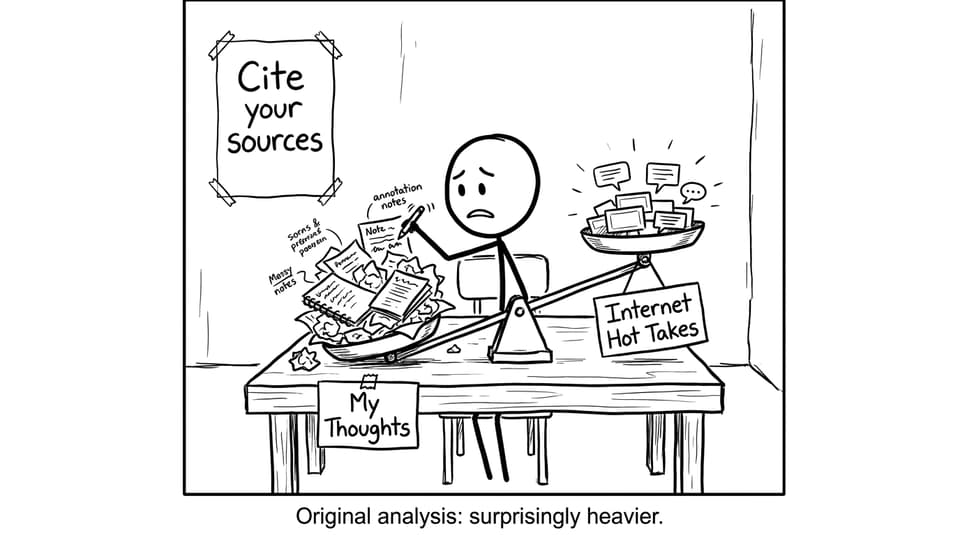
The quick integrity checklist for IB Language A
Use this before any timed practice, outline, or final draft. If you can tick these boxes, you are usually safe and genuinely improving.
-
I can explain my thesis out loud without reading.
-
My evidence comes from the primary text(s), not a commentator.
-
Any secondary idea (critic, interview, historical context) is clearly credited.
-
My notes separate quote vs paraphrase vs my interpretation.
-
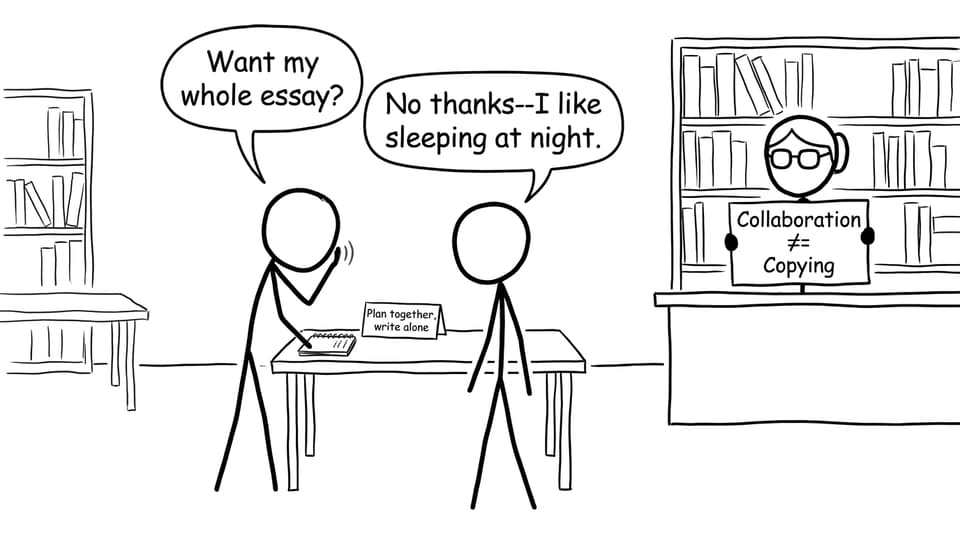
Collaboration stayed at the idea level (planning together, writing alone).
-
Any AI use helped understanding or feedback, not authorship.
If you want a broader map beyond IB Language A, keep this open as a reference: How to Uphold Academic Integrity in IB Assessments.
What integrity actually means in IB Language A
In IB Language A, integrity is less about being “original” in the sense of inventing never-before-seen interpretations. It’s about ownership.
Ownership means:
-
The argument is yours, even if it’s informed by others.
-
The wording is yours, even if you learned the structure from models.
-
The thinking is yours, meaning you can defend it under questioning.
That last point matters more than students expect. Examiners see thousands of scripts. When a paragraph feels like it came from “generic perfect student voice,” it often lacks the small, specific noticing that comes from real reading.
If you’re building your foundations for the course, start with RevisionDojo’s central hub: IB English A Lang & Lit Resources.
Ethical interpretation: how to read without borrowing a voice
Ethical interpretation in IB Language A starts with a simple rule: your first contact with a text should be private.
Not secretive. Just uncontaminated.
Before you read summaries, watch analysis videos, or ask friends what they “think it means,” give yourself one clean pass where you annotate:
-
what feels deliberate,
-
what repeats,
-
what shifts,
-
and what the text seems to be doing to the reader.
That private pass is where your voice forms.
A reliable method is close reading that converts observation into claim. If you need a clear technique flow for Paper 1 style analysis, use: Close Reading Techniques for Prose and Poetry.
The “interpretation ladder” (a fast way to stay honest)
When you write IB Language A paragraphs, climb this ladder in order:
-
Notice a choice (diction, syntax, structure, image, omission).
-
Describe its effect (tone, pacing, mood, credibility, tension).
-
Interpret the meaning (what idea or value is being shaped).
-
Implications (why this matters for audience, context, purpose).
Plagiarism often happens when students jump straight to step 3 with someone else’s interpretation. If you force yourself to start at “Notice,” your work becomes harder to fake and easier to defend.
How to build original analysis when everyone studies the same texts
A fear sits underneath IB Language A revision: If we all read the same works, won’t our essays sound the same?
They won’t, if you make two disciplined choices.
Choose a narrower lens than your classmates
Instead of “power” or “identity,” pick a more precise pressure:
-
the cost of public performance,
-
the ethics of silence,
-
the difference between authority and legitimacy,
-
the way humor hides fear.
Then track how authorial choices repeatedly apply that pressure.
If you’re practicing comparisons for Paper 2, this helps you avoid summary-by-paragraph. Use: Thematic Comparisons Across IB Prescribed Texts.
Build a “thesis bank,” not a quote bank
A quote bank is useful, but it can become decorative. A thesis bank forces thinking.
For each text, write 8--12 mini-theses that follow this shape:
- Authorial choice + effect + idea
Example template:
- “By ___ (choice), the writer ___ (effect), suggesting ___ (interpretation).”
This is where RevisionDojo becomes practical: use Study Notes to clarify terminology and frameworks, then turn each idea into active recall with Flashcards (inside RevisionDojo), so your voice stays consistent under timed conditions.
Using secondary sources ethically (without letting them drive)
Secondary sources can elevate IB Language A work when they do one job: they sharpen what you already noticed.
They become a problem when they do a different job: replacing your noticing.
Use this rule:
-
If the secondary source changes your thinking, cite it.
-
If it simply confirms your thinking, cite it (briefly) or skip it.
-
If your paragraph is mostly the source’s idea plus your agreement, rewrite.
A practical habit: keep a tiny “sources log” in your notes. One line per source: author, title, date, page, and the exact idea you used. This prevents accidental plagiarism when you revisit notes weeks later.
For a wider integrity framework that applies perfectly to IB Language A, see: Why Academic Integrity Matters in the IB.
Collaboration without collusion (the boundary that protects you)
In IB Language A, discussion is fuel. But sharing drafts can become a trap, especially when everyone’s stressed.
Here’s the clean boundary:
-
Collaborate on questions, plans, and evidence lists.
-
Write sentences and paragraphs alone.
A good group session ends with three things each person writes independently:
-
their own thesis,
-
their own topic sentences,
-
their own paragraph order.
If your school culture blurs the boundary, protect yourself by keeping dated planning notes and drafts. Integrity is easier to prove when your process leaves footprints.
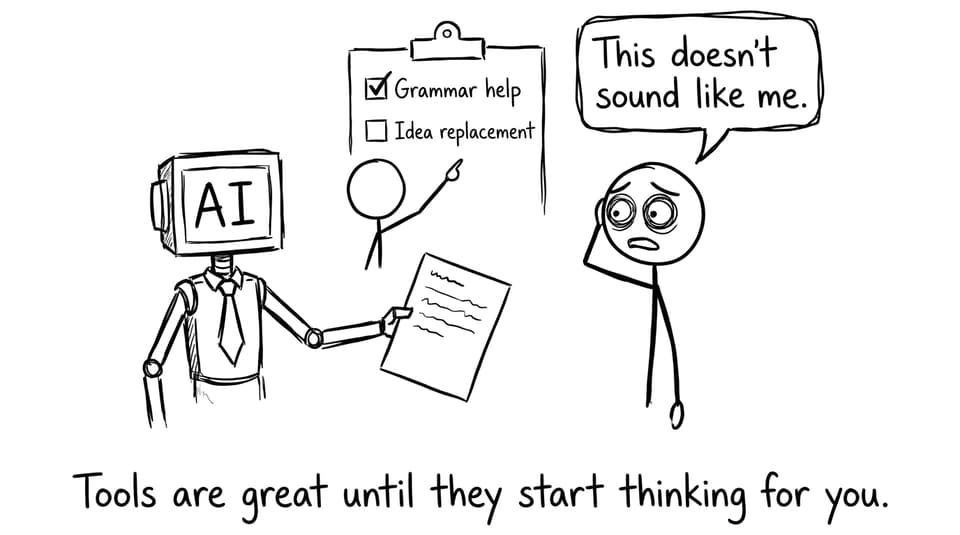
Responsible AI use in IB Language A (helpful, not harmful)
AI is part of modern study life. The issue in IB Language A is not whether you used a tool. It’s whether the tool became the author.
Safe, integrity-aligned uses typically include:
-
asking for an explanation of a term (e.g., modality, register, focalization),
-
generating practice questions,
-
getting feedback on structure against a rubric,
-
checking clarity, grammar, and cohesion.
Risky use is when AI generates your interpretive claims, comparisons, or final paragraphs and you submit them as your own voice.
If you want an IB-specific breakdown, use: IB AI Tools: Ethical Use Without Penalties and Can IB Detect ChatGPT? AI, Integrity, and Smart Study.
RevisionDojo’s advantage here is that its ecosystem is designed around practice and feedback rather than content dumping: Questionbank for exam-style training, AI Chat for explanations, Grading tools for rubric-aligned feedback, and Tutors when you need a human to challenge your reasoning.
A simple integrity-first exam prep workflow (built for IB Language A)
When exam season compresses time, integrity often fails because organization fails. So keep the loop simple.
Build your base
-
Review a focused skill using IB English Study Techniques That Actually Work.
-
Use RevisionDojo Study Notes to confirm definitions and structures.
Train under pressure
-
Use RevisionDojo Questionbank to practice Paper-style prompts.
-
Run timed practice with Mock Exams and IB Predicted Papers by IB Examiners (Free), especially for English A Lang & Lit via English A Lang & Lit Predicted Papers.
Get feedback that doesn’t steal your voice
-
Use the IB Language A L&L Paper 1 Grader to see rubric-aligned strengths and fixes.
-
Use AI Chat to ask: “Where is my claim unclear?” not “Write me a better paragraph.”
This is how IB Language A integrity becomes a system, not a willpower contest.
FAQ: Integrity in IB Language A
What counts as plagiarism in IB Language A exams and practice?
Plagiarism in IB Language A is using someone else’s words or ideas as if they were yours. That includes copying from websites, study guides, or shared documents, but it also includes paraphrasing an interpretation you found online without credit. A common mistake is writing notes from a summary site, then later forgetting that the phrasing and ideas came from that source. That’s why separating “quote,” “paraphrase,” and “my interpretation” in your notes matters so much. In timed practice, plagiarism can show up as memorized paragraphs that do not match the stimulus or prompt. The safest habit is to build your argument from the text in front of you, then use any external ideas only as clearly credited support.
Can I use AI tools while preparing for IB Language A without breaking the rules?
Yes, you can often use AI tools ethically for IB Language A, but you must keep authorship and decision-making with you. AI is most defensible when it helps you understand a concept, practice a skill, or receive feedback, because you are still producing the claims and wording. Problems start when AI generates analysis or comparative points that you submit as your own, especially if you cannot explain them naturally out loud. If AI meaningfully shapes your structure or phrasing, you should be prepared to be transparent according to your school’s expectations. A good self-test is: could you recreate the paragraph from scratch tomorrow using only your notes and the text? If the answer is no, the tool probably did too much.
How do I stay original in IB Language A when my classmates have the same themes and quotes?
Originality in IB Language A is less about having a rare theme and more about making defensible, text-rooted choices. Two students can write about “power,” but one might track how sentence length controls urgency, while the other tracks how irony creates distance and skepticism. You stay original by narrowing your lens, choosing evidence that fits your lens, and explaining effects with precision rather than broad claims. It also helps to write a thesis bank, because theses force you to commit to a particular angle and sequence of reasoning. Discussion with classmates can still help, but treat it as brainstorming and testing, not drafting. If you can explain your interpretation using three tiny textual details your classmates did not mention, you are already sounding like yourself.
Closing: Integrity is a competitive advantage in IB Language A
In IB Language A, integrity isn’t just a rule you follow to avoid trouble. It is a strategy.
When you train yourself to notice first, argue second, and credit influences clearly, your writing becomes calmer and more specific. You stop chasing the “perfect analysis” and start building one you can defend. That confidence shows up on the page.
If you want a platform that makes this easier in real exam season, use RevisionDojo as your home base: Study Notes for clarity, Flashcards for retention, Questionbank for application, AI Chat for explanations, Grading tools for rubric feedback, Predicted Papers and Mock Exams for timed realism, a Coursework Library for models you learn from (not copy), and Tutors when you need direct guidance.
Make your next practice session an integrity session: open a fresh text, do one private annotation pass, write one paragraph in your own voice, then check it against the rubric. That is how IB Language A excellence is built.
