



Revising for the IB has a strange emotional rhythm.
One day you feel fluent: definitions snap into place, methods feel obvious, essays almost write themselves. Then a week passes, you open your notebook, and it’s like reading someone else’s life.
That gap isn’t laziness. It’s biology.
This is a guide on How to Use RevisionDojo Notes to Boost Long-Term Retention so your learning survives the quiet days between lessons and the loud days of exams. We’ll turn notes into a system that remembers for you: short, structured, revisited at the right time, and constantly tested in exam language.
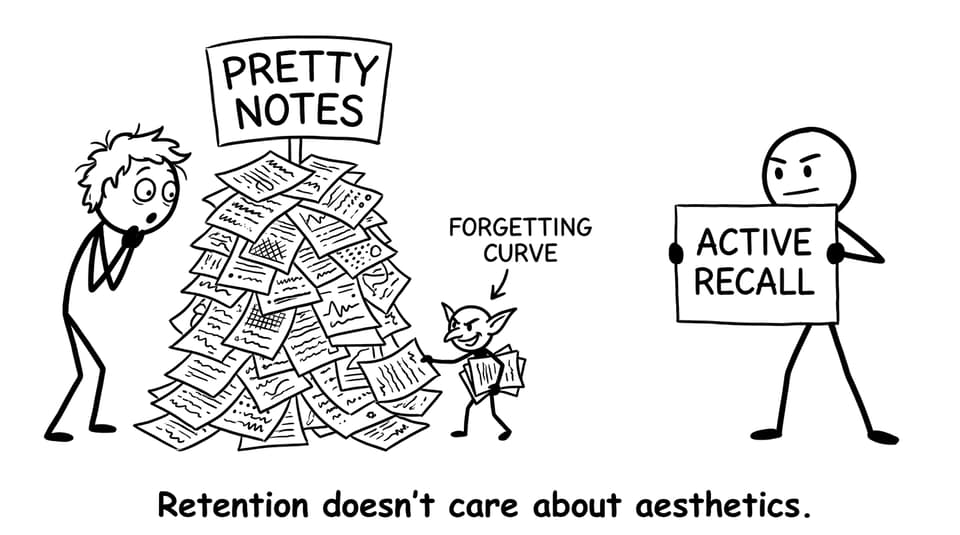
Quick checklist: the retention loop (steal this)
If you only do one thing after reading, do this loop. It’s the spine of How to Use RevisionDojo Notes to Boost Long-Term Retention:
-
Pick one micro-topic (10-20 minutes of content, not a whole unit)
-
Read the matching Study Notes once for clarity
-
Convert the key ideas into 5-10 recall prompts (Flashcards or self-quiz questions)
-
Do a short drill in the Questionbank to force application
-
Log one “error rule” and update your note
-
Schedule the next review using spaced repetition intervals
When this becomes habit, revision stops being a mood and becomes a machine.
Why most notes fail under exam pressure
Most notes are written as if your future self will have unlimited time and zero stress.
That’s not exam day.
On exam day you need fast retrieval: the right definition, the right method, the right structure, in the right phrasing. Passive notes (copying, highlighting, rewriting) feel productive because you’re moving. But they don’t force your brain to retrieve. And retrieval is what makes memory durable.
RevisionDojo works best when you treat notes as a launchpad into active recall. The platform is designed as a connected system: Study Notes link naturally into Flashcards, then into the Questionbank, then into feedback loops through AI Chat and Grading tools, and finally into realistic rehearsal with Mock Exams and Predicted Papers.
How to Use RevisionDojo Notes to Boost Long-Term Retention with “micro-notes”
The first move is counterintuitive: make notes smaller.
Open Study Notes and choose a slice of the syllabus you can finish in one sitting. A micro-topic could be a single process in Biology, one diagram in Economics, one literary device pattern in English, or one proof idea in Math.
Then build your note page with three blocks:
The “explain it like I’m tired” summary
Write 4-6 lines in your own words. Not because originality is required, but because translation forces processing.
A good test: if you can read your summary after a week and immediately understand what the topic does, you’ve written for retention.
The “exam wants this” bullet list
Add the terms, assumptions, command-term expectations, and common mark-winning points. This is where your note becomes exam-shaped, not textbook-shaped.
If you want a broader mindset shift here, Active Recall for IB: The Only Method You Need pairs perfectly with this approach.
The “I always mess this up” error rule
One line only. Examples:
-
“If the question says ‘evaluate’, I must include a limitation and its implication.”
-
“If a graph is involved, label axes before interpreting trends.”
-
“If I use a formula, I write what each variable means once.”
That single sentence is often worth more than another page of explanation.
Build connections inside your notes (memory loves relationships)
Long-term retention improves when ideas have hooks.
Inside your note, add a “Connections” mini-section:
-
What earlier topic does this depend on?
-
Where does it show up again later?
-
What’s the most similar idea in another unit?
This matters because IB questions rarely announce themselves politely. They blend topics. If your notes are isolated, your recall will be isolated too.
For a wider library of structured materials across subjects, IB Subject Note Collections: Comprehensive Study Materials is useful when you’re building a consistent system.
Convert notes into questions immediately (same day)
If you remember one principle from How to Use RevisionDojo Notes to Boost Long-Term Retention, make it this: reading becomes memory only after you try to retrieve.
Right after you finish a note, create prompts that force answers.
-
Definition prompts: “Define X in one sentence that would earn marks.”
-
Process prompts: “List the steps in order for Y.”
-
Application prompts: “Given Z, which model/method applies and why?”
Then run them through Flashcards so the prompts come back at the right time.
If you want inspiration for stronger card design, Flashcard Techniques for Long-Term Retention in IB is a practical companion.
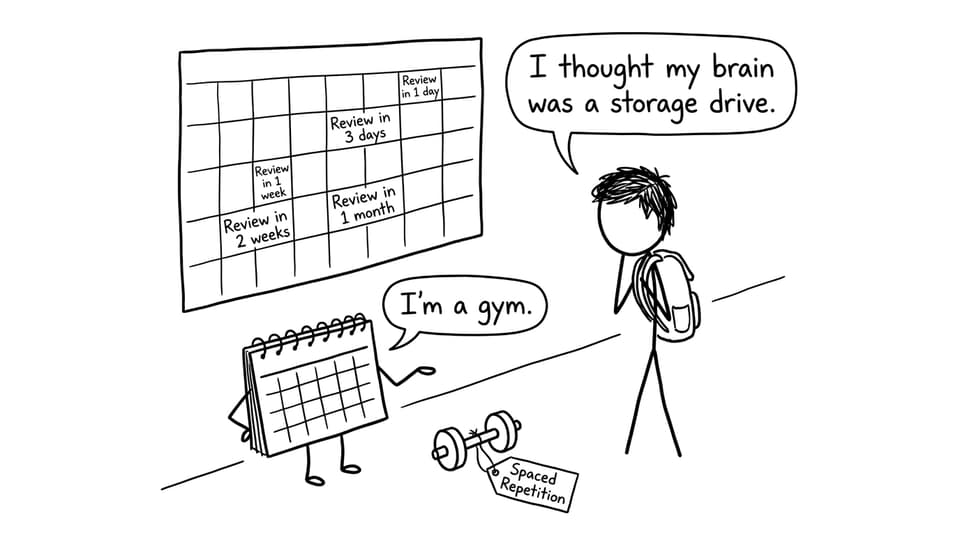
Use spaced repetition scheduling (without overthinking it)
Spaced repetition sounds technical, but you can run it with a simple rhythm:
-
Review 1 day later
-
Review 3 days later
-
Review 1 week later
-
Review 2 weeks later
-
Review 1 month later
The point isn’t perfection. The point is that your brain meets the material again just as it starts to fade.
If you want the deeper “why” behind the method, Spaced Repetition for IB: Scientific Study Method explains it clearly.
Pair notes with exam-style application (this is where retention becomes marks)
Notes alone can create a comforting sense of progress. Exams punish that comfort.
After a short note + flashcard session, open the Questionbank and do 8-15 questions on the exact micro-topic you just studied.
Two rules make this work:
-
Short sets, immediate review. Don’t save feedback for later.
-
Update the note after mistakes. Add a new example, tighten a definition, or write a new “error rule.”
If you want a more complete “practice strategy” around this, IB Question Bank | How to Use It Effectively fits neatly into this workflow.
Use AI Chat like a tutor, not like a search engine
When you get stuck, the temptation is to collect more explanations.
Try a different approach: ask for a test.
In RevisionDojo, use AI Chat to:
-
Generate 5 recall questions from your note
-
Challenge your explanation (“What would an examiner mark as vague here?”)
-
Force clarity (“Give me a one-sentence definition that includes the required terms.”)
This is also where the platform feels quietly different: it doesn’t just store content; it helps you practice retrieval and tighten exam language.
Pressure-test weekly with timed practice
Long-term retention isn’t only about remembering calmly. It’s about remembering while the clock is loud.
Once a week, do a timed session using Mock Exams or Predicted Papers. Then review your mistakes and feed them back into your notes.
If you study with friends, Collaborative IB Mock Exams: Study with Friends Online makes timed practice feel less isolating without making it less serious.
This weekly rehearsal is the “long-term” part of How to Use RevisionDojo Notes to Boost Long-Term Retention: it keeps old topics alive while you’re learning new ones.
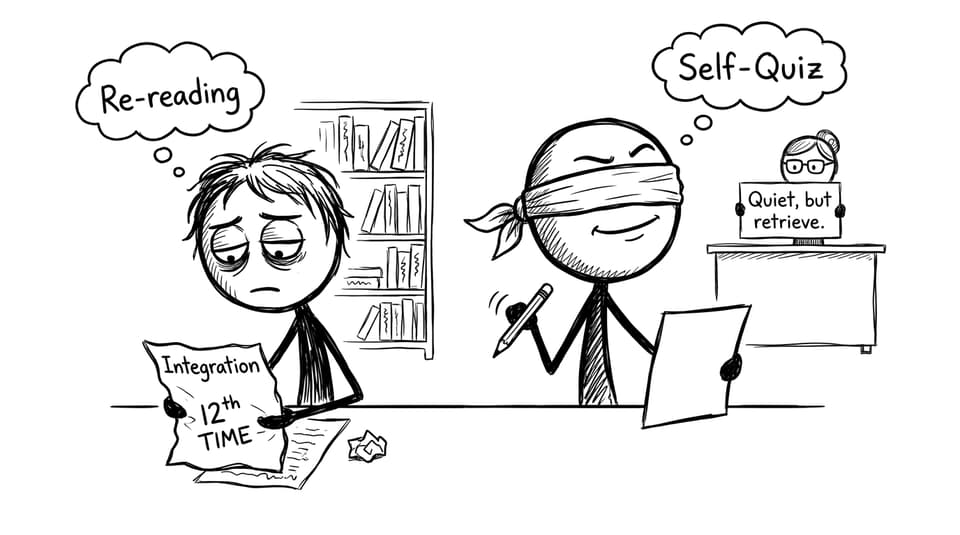
Common mistakes that quietly destroy retention
Making notes too beautiful to use
If notes feel precious, you won’t change them. Retention requires edits.
Writing notes that can’t be tested
If a paragraph can’t become a question, it’s probably too vague.
Reviewing only when you feel behind
Spaced repetition works because it’s scheduled, not emotional.
Practicing without feedback
Practice without correction builds confidence, not accuracy. Use Grading tools when written responses matter, and use the Questionbank’s feedback to learn the marking logic.
Closing: make notes behave like a memory system
IB students don’t fail because they never studied. They fail because the studying didn’t survive the calendar.
Now you have a system: How to Use RevisionDojo Notes to Boost Long-Term Retention by keeping notes small, connected, testable, and revisited on purpose. Read with Study Notes, remember with Flashcards, apply with Questionbank, tighten with AI Chat and Grading tools, then rehearse with Mock Exams and Predicted Papers.
If you want your revision to feel calmer, start today with one micro-topic and run the loop once. Tomorrow, run it again. That’s how long-term retention is built: not in one burst, but in small sessions that compound inside RevisionDojo.