
The moment you realize you're behind
The worst part isn't the workload.
It's the story your brain starts telling you at 11:47 p.m. when you open your laptop and the IB feels less like a program and more like a weather system. Notes you meant to rewrite. Topics you meant to "properly understand." A calendar that suddenly looks… hostile.
If you're behind in the IB, you don't need a heroic, all-night comeback montage.
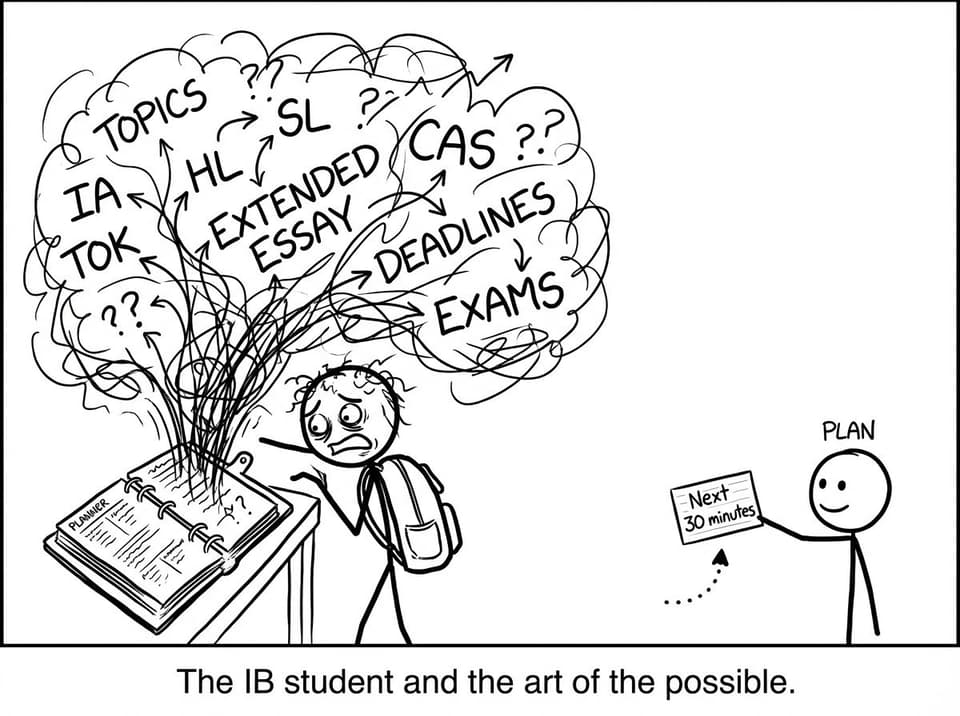
You need a smaller plan than you think. A plan that turns panic into sequence.
Because the quiet truth about IB exams is this: you don't catch up by doing more. You catch up by doing what counts, in the right order, repeatedly.
A quick IB catch-up checklist (read this first)
When you feel behind, the goal is to stop the bleeding before you try to build strength.
Here's the minimum effective checklist for IB exam prep:
- Pick the next 14 days (not the next 14 weeks)
- Rank subjects by mark impact (HL usually needs more attention)
- Choose 3 weak topics per subject (not 12)
- Do daily active recall (Flashcards, quick quizzes)
- Do frequent exam-style practice (Questionbank sets)
- Review mistakes like they're data (patterns, not guilt)
- Run one timed session weekly (Mock Exams or Predicted Papers)
- Use fast help when stuck (AI Chat or a Tutor)
If you want the all-in-one workflow that matches this, start with RevisionDojo for IB.
Why "being behind" feels bigger in the IB
In the IB, content isn't the only thing that piles up.
Technique piles up too.
You're not just learning Biology or History or Math. You're learning how the IB rewards answers: command terms, mark allocation, structure, precision, timing. That's why rereading notes can feel comforting but not improving. It calms the nerves without training the skill.
Being behind usually means one of three things:
- You're missing content (gaps in understanding)
- You're missing retrieval (you "know it" until you're asked)
- You're missing exam behavior (timing, structure, command terms)
A good IB plan fixes all three, but in a specific order.
If you want a reminder that the IB is as much about invisible habits as visible studying, this piece helps: IB Exams Without Pausing Your Life.
The IB catch-up rule: train, don't collect
A student I once met described their revision like "building a museum."
They curated beautiful notes. Highlighted definitions. Color-coded headings. It looked impressive. It felt productive.
Then they did a timed paper section and realized the museum didn't help them move.
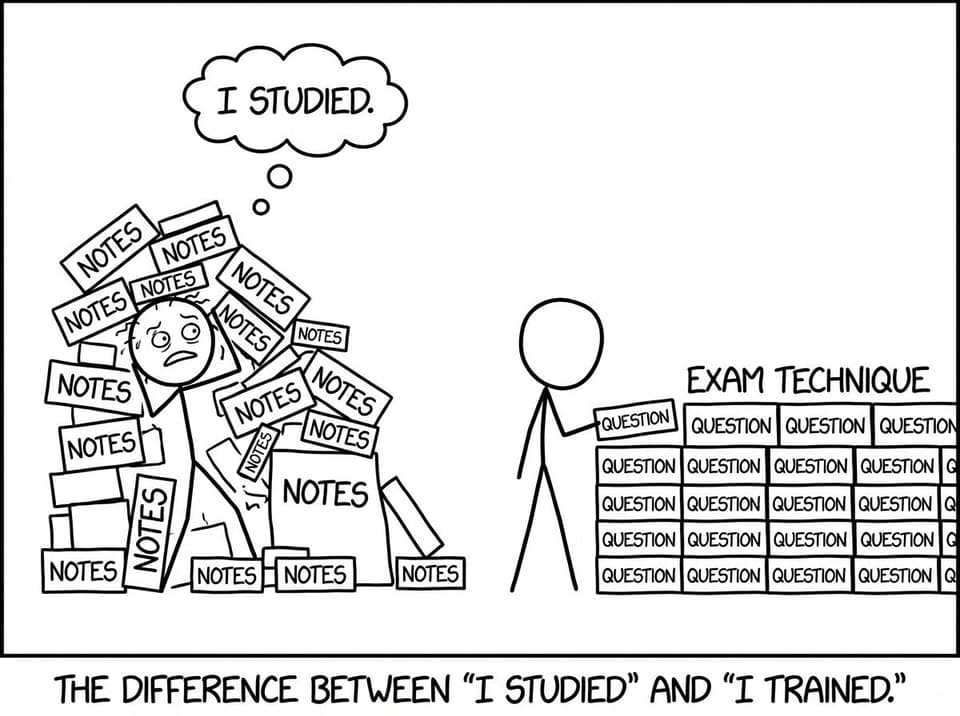
The IB doesn't award points for owning information. It awards points for using it under constraints.
That's why catch-up studying works best when it looks a little boring:
- Learn a small slice.
- Test it.
- Mark it.
- Fix it.
- Repeat.
RevisionDojo is built around that loop: Study Notes to learn fast, Flashcards to keep recall alive, Questionbank to practice under exam logic, AI Chat (Jojo) to get unstuck, plus Mock Exams and Predicted Papers to build timing and stamina.
To see how the platform connects those steps, read: RevisionDojo App: The Smarter Way to Prep for IB Exams.
How to study for IB exams when you feel behind: a 3-layer plan
Layer 1: Triage (Days 1-3)
Your first job is not "cover everything."
Your first job is to find the highest-return gaps.
Do this:
- For each IB subject, list the 3 topics you avoid.
- For each topic, attempt 10-15 exam-style questions.
- Mark and tag what goes wrong: concept, method, command term, or timing.
This is where Questionbank | RevisionDojo is a cheat code: it lets you practice by topic and get instant feedback so you stop guessing what matters.
If you want a deeper explanation of why this is so effective, use: Comprehensive IB Question Bank: Thousands of Practice Questions.
Layer 2: Stabilize (Days 4-10)
Now you build a rhythm your future self can repeat.
A simple daily structure for IB catch-up:
- 10 minutes: Flashcards (spaced repetition)
- 25 minutes: Study Notes for one micro-topic
- 35 minutes: Questionbank practice on that micro-topic
- 10 minutes: Mistake log (what happened, why, what rule prevents it)
The key is that your day ends with proof. Not vibes.
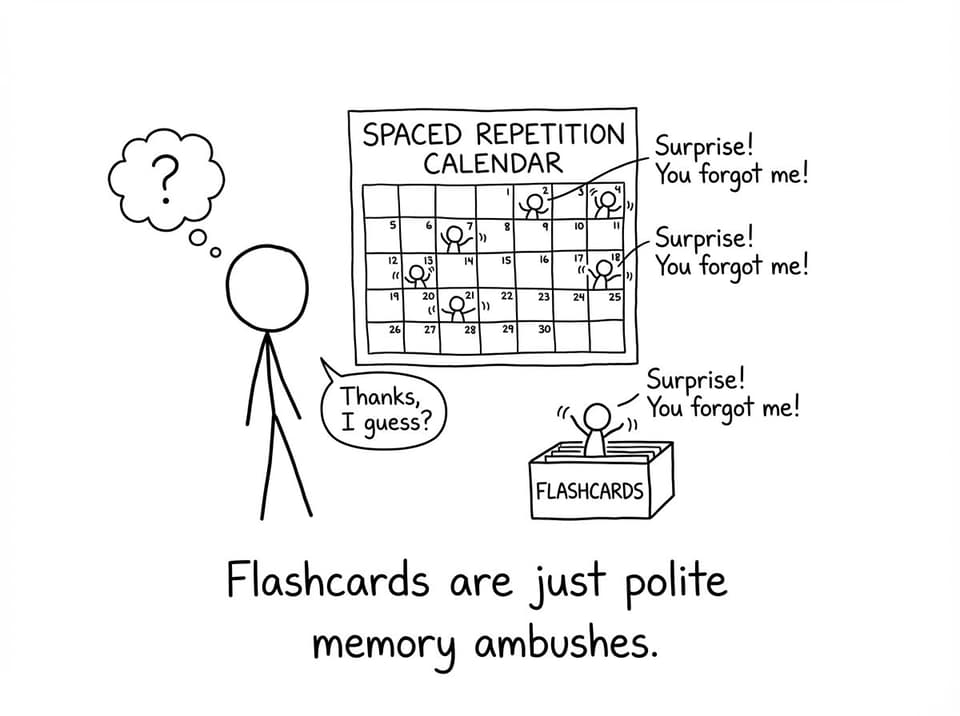
Flashcards matter here because they keep yesterday from disappearing. If you need help turning "I read it" into "I remember it," start with IB Flashcard System: Active Recall for Better Memory.
Layer 3: Simulate (Days 11-14)
By week two, your biggest risk is false confidence.
So you simulate.
- Run one timed session per subject (or rotate subjects).
- Review like a scientist: what types of questions, which command terms, which timing traps.
This is where Mock Exams and Predicted Papers become less about forecasting and more about building calm through familiarity.
If your subject has them, you can access them inside your subject hub (example): Math AI Predicted Papers.
For the broader system behind timed practice, see: How to Run Timed IB Mock Exams in RevisionDojo.
The "two kinds of IB time" problem (and how to win)
When you're behind, you start valuing time the wrong way.
You value time that feels productive.
But IB success values time that produces feedback.
Two hours rewriting notes can feel like discipline. Two hours doing exam-style practice can feel like stress. Yet the second is what changes your score.
A useful rule:
- If you can't mark it, it's probably not your main study block.
That's why RevisionDojo's Grading tools and feedback loop matter: your studying becomes measurable, and measurable becomes manageable.
And if coursework stress is leaking into exam season (it often does), the fastest way to lower that mental noise is clear feedback: IB Coursework Grader | RevisionDojo and the Coursework Library for exemplars.
What to do when you get stuck mid-session (the IB momentum saver)
Every IB student knows the spiral:
You hit a question you don't understand. You open a tab. Then another. Then a video. Then a document. Twenty minutes later, you're "studying," but you've lost the thread.
The fix isn't more willpower.
It's a faster "unstuck" button.
Use AI Chat to:
- Clarify one concept in plain language
- Ask what the command term requires
- Ask for the marking logic (what earns marks)
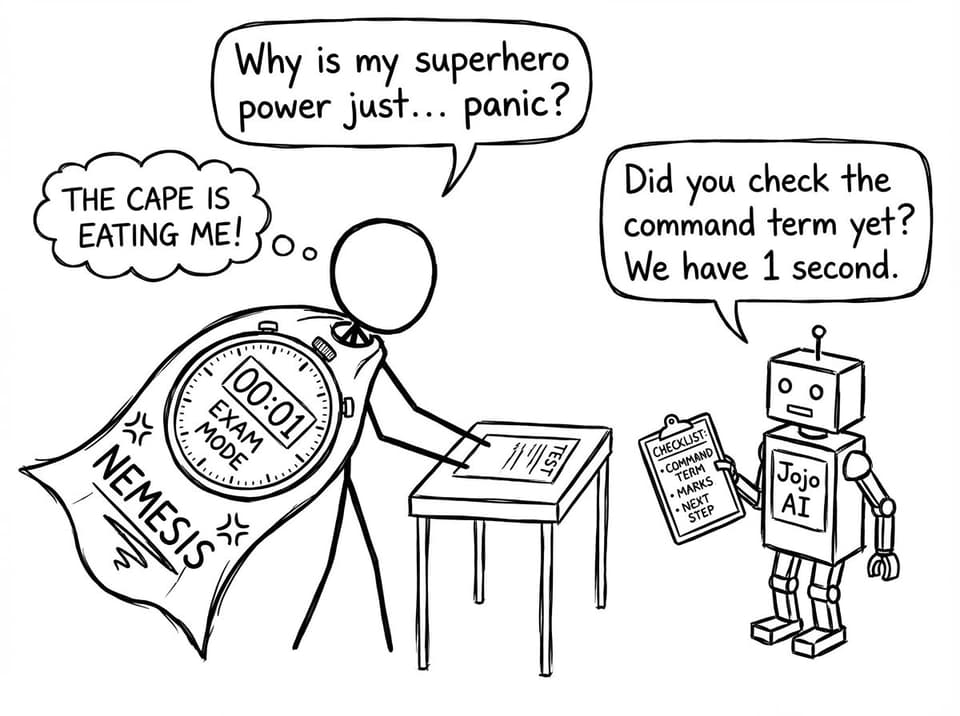
RevisionDojo's Jojo AI is designed for this kind of IB-specific support inside the platform's workflows, so you don't have to leave your session to recover clarity. Pair it with a human when you need accountability or strategy: Tutors are there for the moments where one conversation can save a week.
If you want a practical guide to asking better questions, see: IB Study: Text to Your AI Tutor.
A 7-day "I'm behind" IB reset schedule
Use this if you want a concrete starting point.
Day 1
- Choose 2 subjects to rescue first
- Do 30 minutes of Questionbank triage per subject
Day 2
- Study Notes on one weak topic
- Flashcards (short)
- 45 minutes targeted practice
Day 3
- Repeat Day 2 for a different weak topic
- Mistake log cleanup
Day 4
- Mixed-topic practice (build flexibility)
- One short timed block (25-35 minutes)
Day 5
- Fill the biggest gap revealed by your mistakes
- Ask AI Chat to explain your most common error pattern
Day 6
- Timed block again
- Review for timing decisions, not just wrong answers
Day 7
- Light day: flashcards + mistake log + planning next week
The IB rewards consistency more than intensity. That's good news when you're behind.
Closing: the IB doesn't require perfection, it requires sequence
If you feel behind in the IB, you're not broken. You're just holding too many decisions at once.
Shrink the horizon to 14 days. Choose the next topic. Do the next set. Review the mistakes. Repeat.
That's how IB exam prep stops being a storm and becomes a staircase.
If you want an all-in-one system that makes that staircase easier to climb, use RevisionDojo as your home base: Study Notes for speed, Flashcards for daily recall, Questionbank for exam-shaped practice, AI Chat for momentum, Grading tools and the Coursework Library for clarity, and Mock Exams plus Predicted Papers for confidence under time. Start here: International Baccalaureate (IB) Hub.