


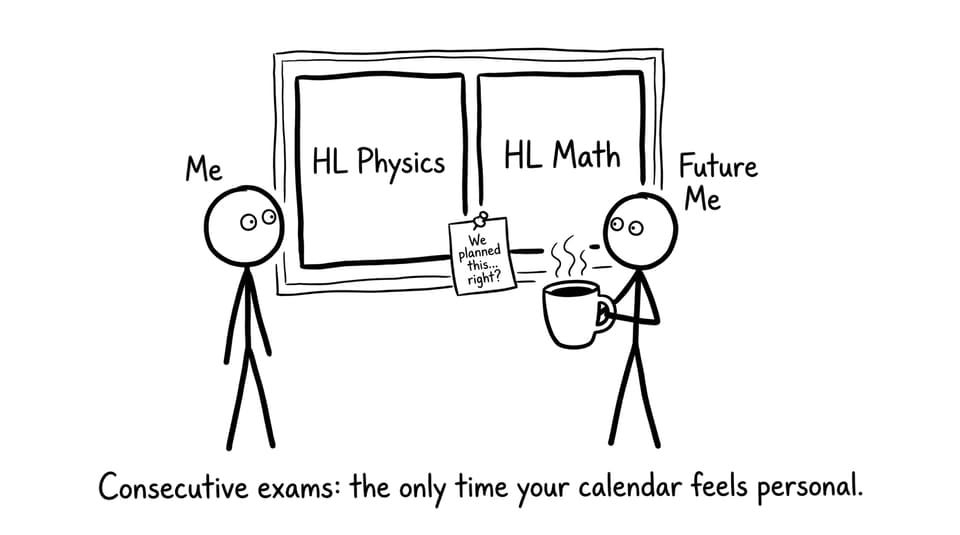
Consecutive hard IB exams can feel like the schedule is arguing with you personally. One day you are fine, the next you are staring at two back-to-back papers thinking, “If I ace the first, I’ll be too tired to think in the second.”
The truth is quieter: most IB students don’t struggle because they lack ability. They struggle because their revision plan treats each paper like a separate event. But consecutive IB exams are one combined performance block. You are training consistency, not a single peak.
A quick IB checklist for back-to-back exams
-
Finish heavy learning early for both IB subjects (weeks before)
-
Alternate subjects to practice switching gears
-
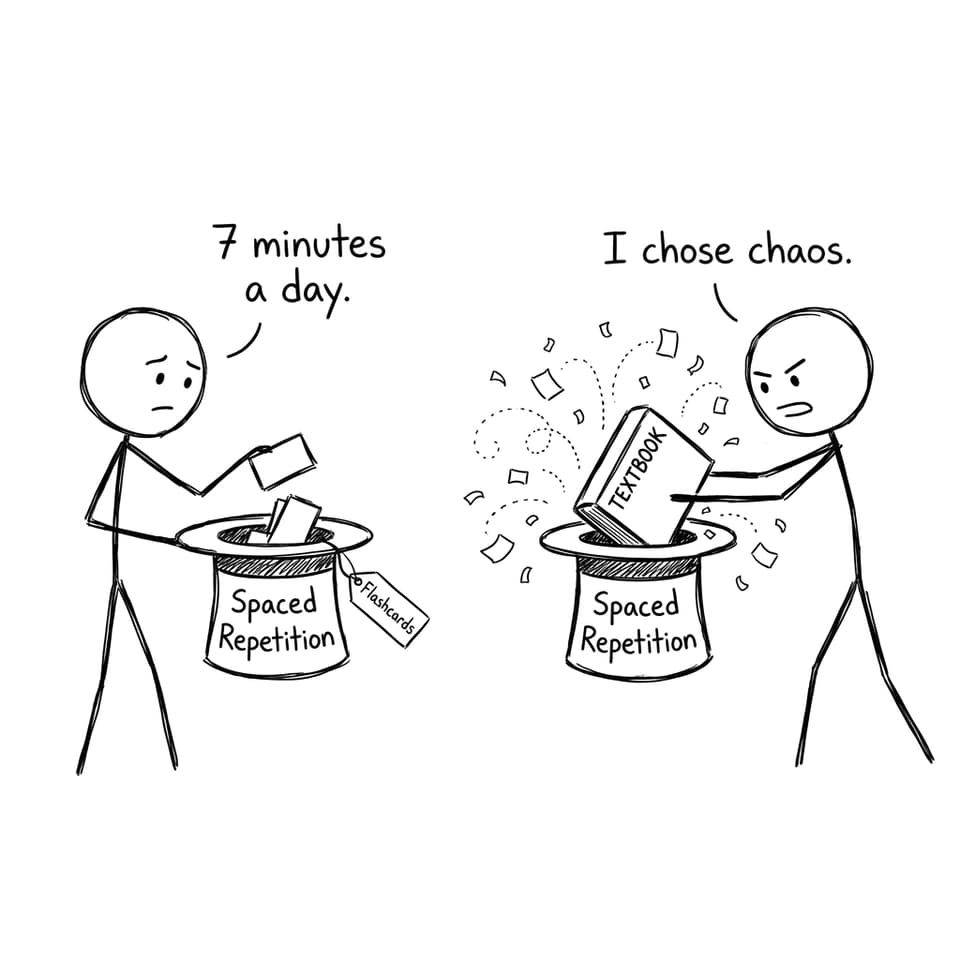
Use active recall daily (Flashcards, quick quizzes)
-
Do targeted exam-style questions, not endless rereading
-
In the final days: light consolidation, mistakes, and timing
-
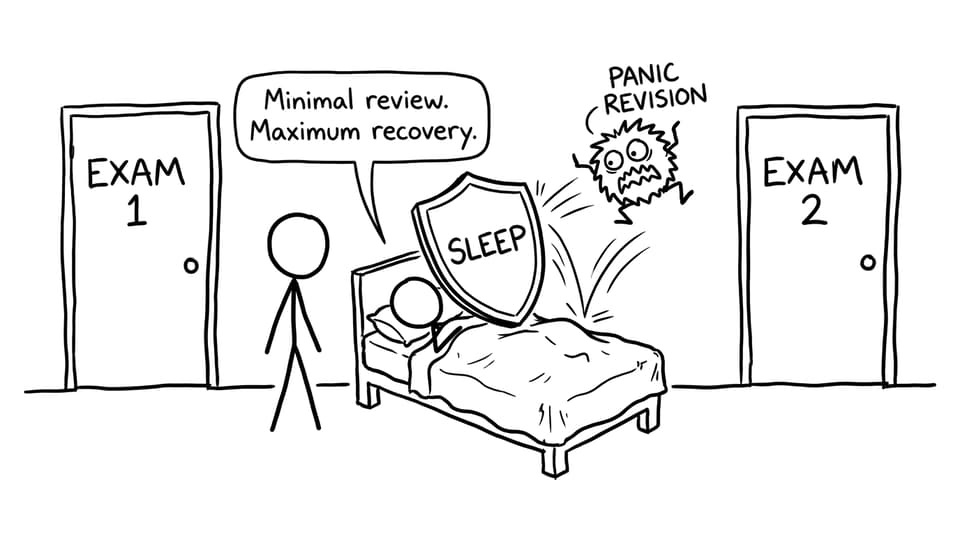
Between exams: protect sleep, eat, reset, minimal review
The biggest IB mistake: “I’ll focus on the first one”
It sounds rational: prioritise the first IB exam, then “deal with” the second later.
But this creates an ugly trade:
-
You feel confident walking into Exam 1
-
You walk out drained
-
You realise Exam 2 is closer than your brain is ready for
A better IB strategy is to build both subjects to a stable baseline before exam week. That way, exam day is execution, not rescue.
Think in blocks: the IB consecutive-exam mindset
When the hardest IB exams are consecutive, you are preparing for fatigue and focus shifts.
That means you practice:
-
switching from one subject’s thinking style to another
-
doing “good enough” work under pressure
-
recovering quickly instead of grinding longer
If you want a structure that makes this easier, borrow the rhythm from How to Create a Balanced IB Study Schedule and keep your week honest.
How to revise before IB exams begin (the high-leverage phase)
This is where most points are won. Not by hero hours, but by reducing how much your future self must hold at once.
Alternate your IB subjects on purpose
Instead of doing four days of one subject and then swapping, rotate more frequently. Two reasons:
-
It prevents “warm-up cost” on exam day.
-
It exposes weak spots earlier.
A practical loop using RevisionDojo:
-
Patch understanding with Study Notes
-
Convert to memory with IB Flashcards
-
Convert to marks with the Questionbank
-
Use AI Chat to get unstuck fast (so you don’t lose an hour spiralling)
If you want extra technique ideas, keep 10 Proven Study Techniques for IB Students open like a menu and pick what you can sustain.
The final days: lighter IB revision, sharper focus
Right before consecutive IB exams, your job changes. You are no longer building the whole house. You are checking the locks.
Prioritise:
-
a tight list of high-frequency topics
-
your mistake log (recurring errors beat rare gaps)
-
exam technique: command terms, structure, timing
This is also when realistic rehearsal helps. Use IB Predicted Papers strategically, and pair them with targeted drills after. If you want clarity on how to use them well, read IB Predicted vs Specimen Papers: What They Mean.
For broader planning, Best Revision Order Based on the IB Exam Schedule is a good reminder that the order matters more than motivation.
The gap between exams: recovery is part of IB performance
Between consecutive IB exams, the temptation is to “catch up.” That’s usually panic wearing a productivity costume.
Do this instead:
-
20-40 minutes of minimal review (definitions, formulas, essay plans)
-
one short set of easy confidence questions
-
then stop
Sleep is not a reward. It is a strategy.
Using RevisionDojo to stay steady across consecutive IB exams
When your hardest IB exams are consecutive, you need one place where planning, practice, and feedback connect.
RevisionDojo helps you run the full loop:
-
Questionbank to target weak topics fast
-
Study Notes to relearn efficiently
-
Flashcards for daily active recall
-
AI Chat for instant explanations
-
Grading tools to understand markscheme logic
-
Predicted Papers and Mock Exams for timed rehearsal
-
Coursework Library and Tutors to reduce background stress and fix bottlenecks
To plan the whole run-up clearly, use the RevisionDojo Study Planner.
Conclusion: treat consecutive IB exams like one event
Consecutive IB exams don’t require superhuman effort. They require a plan that respects fatigue, alternates subjects early, and protects recovery when it matters most.
If you want one system to run that plan, use RevisionDojo to practise with the Questionbank, lock recall with Flashcards, rehearse timing with Predicted Papers, and map it all inside the RevisionDojo Study Planner. Your IB revision will feel less like panic and more like momentum.