


When your teen stops caring about the IB
The scary part isn’t the messy desk or the missing homework. It’s the sentence parents hear in the doorway, said with a tired shrug: “I don’t care about the IB anymore.”
In the IB, motivation rarely disappears overnight. It fades in quiet installments: one rough test, one late Internal Assessment draft, one weekend that becomes a “recovery weekend,” then two. If you’re reading this as a student preparing for exams, you’ll recognize it too: the work is there, but the spark isn’t.
This guide is written for parents, but it’s designed to help IB students rebuild momentum without drama.
A quick checklist to restart IB motivation
-
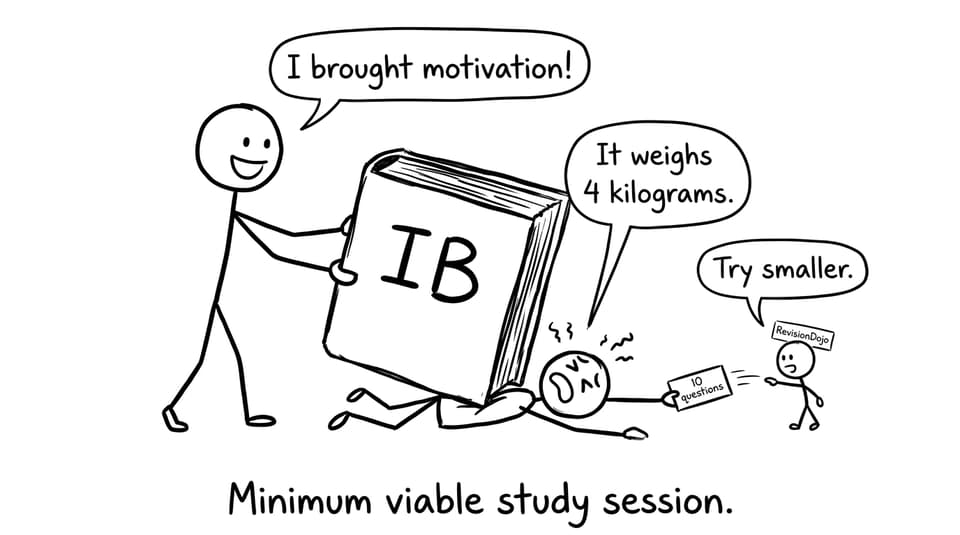
Reduce the workload to a “minimum viable session” (10-25 minutes)
-
Swap rereading for active recall (Flashcards or questions)
-
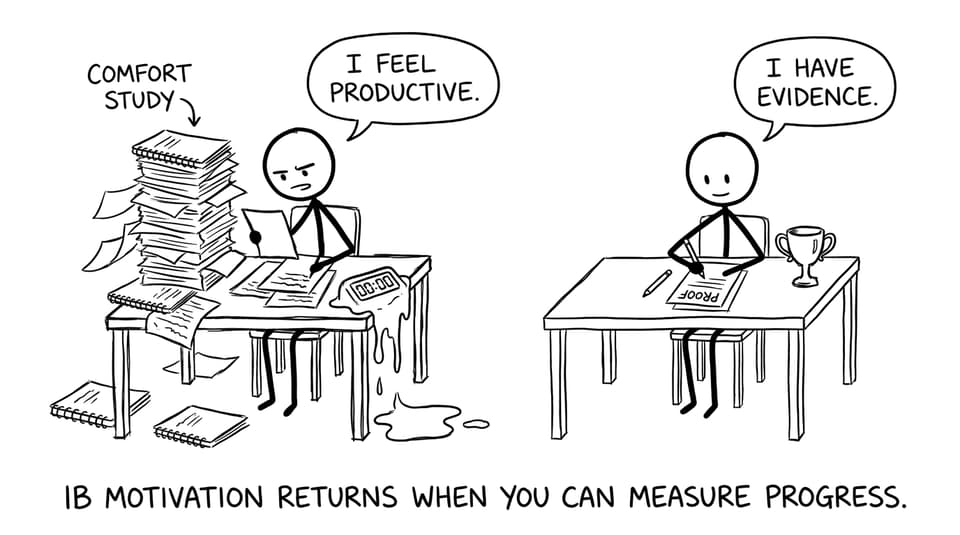
Create proof of progress daily (small, trackable wins)
-
Add support without adding pressure (better questions, not louder reminders)
-
Use one platform to remove friction (RevisionDojo tools in one place)
Why teens lose motivation in IB (and why it’s not laziness)
Motivation drops when effort stops producing confidence. In the IB, that often happens for three reasons:
Burnout and constant switching
The programme asks students to hold six subjects plus TOK and coursework in their head. Even strong students get tired of context switching. If you want language for what’s happening, this piece helps: IB Burnout Psychology: Why It Happens and How to Recover.
Comfort study replaces performance
When students feel behind, they reach for what feels safe: rereading notes, rewriting headings, highlighting. It soothes anxiety but doesn’t always raise marks. The fix is to return to “proof” work: questions, marking, and corrections.
The goal gets blurry
A teen can want good grades and still feel disconnected from why the IB matters. Reconnecting to a concrete target (a course requirement, a predicted score goal, a specific exam paper) often brings energy back.
What parents can do (and what IB students can copy)
Listen first, then shrink the task
Start with a calm question: “What part of the IB feels heaviest right now?” Not “Why aren’t you studying?”
Then help them choose a tiny next action that is hard to refuse: 10 questions on one subtopic, or 7 minutes of Flashcards. RevisionDojo is built for this kind of reset: RevisionDojo for IB.
If you need a student-friendly plan for low-motivation days, this is the cleanest one: How to Study When You Don’t Feel Like It (IB Edition).
Rebuild confidence with a tight feedback loop
Confidence is usually a math problem: attempts + feedback + repetition.
A simple loop:
-
Study Notes to clarify one concept: IB Subject Note Collections
-
Flashcards to keep it alive daily
-
Questionbank to test it under exam-style conditions: IB Question Bank | How to Use It Effectively
Parents can support by asking for evidence, not hours: “Show me the mistakes you fixed today.” Students can track this inside RevisionDojo using Questionbank results and review habits.
Use help to get unstuck quickly
Sometimes motivation dies because one concept becomes a wall. That’s where AI Chat or a tutor matters: it turns a 60-minute spiral into a 5-minute clarification.
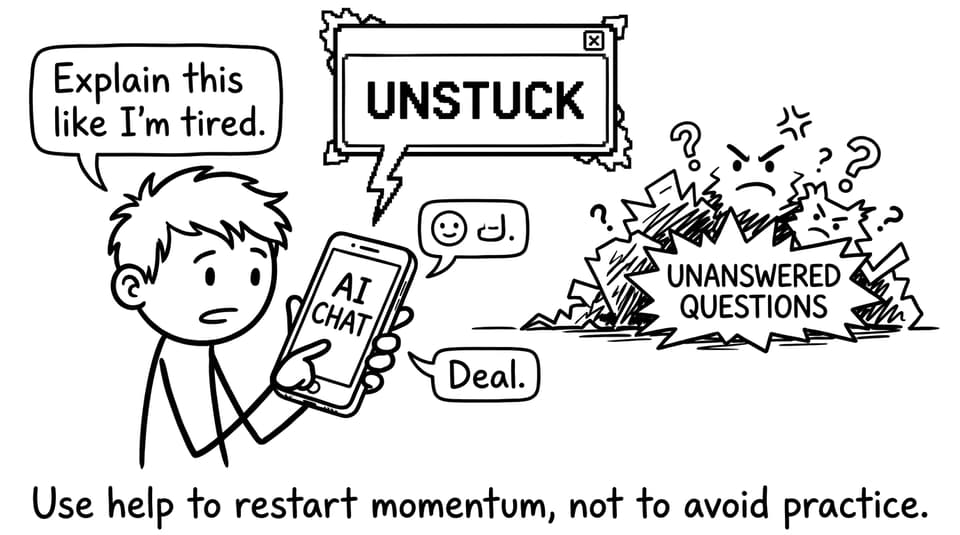
For parents: the win is not “more studying.” The win is “less stuck.” For students: use AI Chat as an unstuck button, then immediately return to questions.
If burnout is clearly the root problem, read: How Can I Talk to My Teen About Burnout Before Exams?.
A calm close: make IB progress feel possible again
The fastest way to rebuild IB motivation is to stop asking for a heroic comeback and start collecting small proof. One short session. One set of questions. One mistake corrected into a rule.
If you want the simplest structure to follow, use RevisionDojo as the home base: Study Notes for clarity, Flashcards for daily recall, Questionbank for practice, AI Chat for fast unblocking, Grading tools for feedback, and Mock Exams plus Predicted Papers when you’re ready to rehearse timing. Start small, make it repeatable, and let confidence do what pep talks can’t.