
The day your brain says "no" (and you still have IB)
There's a specific kind of quiet panic that only an IB student recognizes.
You sit down with good intentions. You open your laptop. You stare at the work. And nothing happens.
Not because you don't care. Not because you're not capable. But because your brain has decided, very calmly, that it would prefer literally anything else.
In the IB, this moment is dangerous. Not because one bad day ruins your grade, but because one avoided day tends to grow into two, then a week, then that heavy feeling that you're "behind" in every subject at the same time.
This article is a practical guide for how to study when you don't feel like it: specifically as an IB student preparing for exams. No pep talk. No guilt. Just systems that make starting easier, and feedback loops that make continuing automatic.
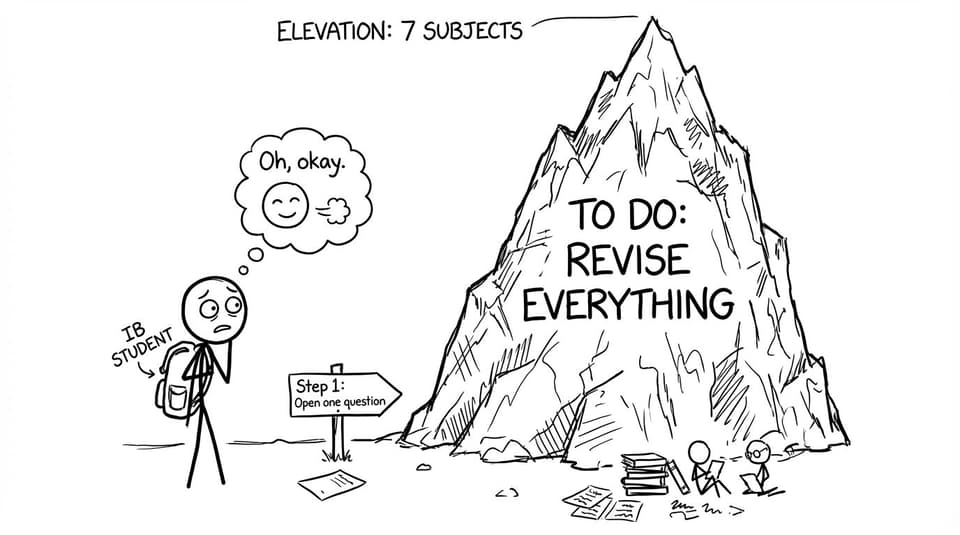
A quick IB checklist for low-motivation days
If you're in a slump right now, borrow this IB checklist:
- Pick one subject and one micro-topic (not "revise Chemistry," but "electrolysis: one question set").
- Set a timer for 10-25 minutes.
- Do active recall first (questions or flashcards), not rereading.
- Review mistakes immediately (one small "error rule").
- End by choosing tomorrow's first task.
If you need a full exam-prep structure beyond today, keep this nearby: How to Study for IB Exams: Step-by-Step Guide.
Why IB motivation disappears (and why it's not laziness)
Most IB students assume motivation is a personality trait.
But motivation is usually a signal. And the IB environment sends three signals that drain it fast:
You're facing a task with no finish line
"Revise Biology" is infinite. Your brain can't see the end, so it resists starting.
You're doing work that doesn't give feedback
Rereading notes can feel productive, but it often doesn't prove anything. No proof means no momentum.
You're carrying invisible stress
Six subjects. TOK. EE. IAs. CAS. Life. The IB workload is not just large; it's layered. When your energy is low, your brain protects itself by avoiding anything that feels emotionally heavy.
This is why the best fix isn't "try harder." The best fix is to make the next action smaller and more measurable.
If your avoidance is mixed with anxiety, this guide helps too: How to Beat IB Exam Anxiety (Without Burning Out).
The most reliable trick: motivation usually comes after you start
Here's the uncomfortable truth about IB revision: waiting to feel ready is the fastest way to stay stuck.
The students who look "disciplined" often aren't wrestling with motivation every day. They've built routines where starting is simple and the work gives quick feedback.
A helpful mental switch:
- Don't ask, "Do I feel like studying?"
- Ask, "What is the smallest action that counts as studying?"
In the IB, that smallest action can be:
- 8 flashcards
- 5 questions
- one timed 10-minute section
- one paragraph plan using command terms
When you keep the start small, the brain stops arguing.
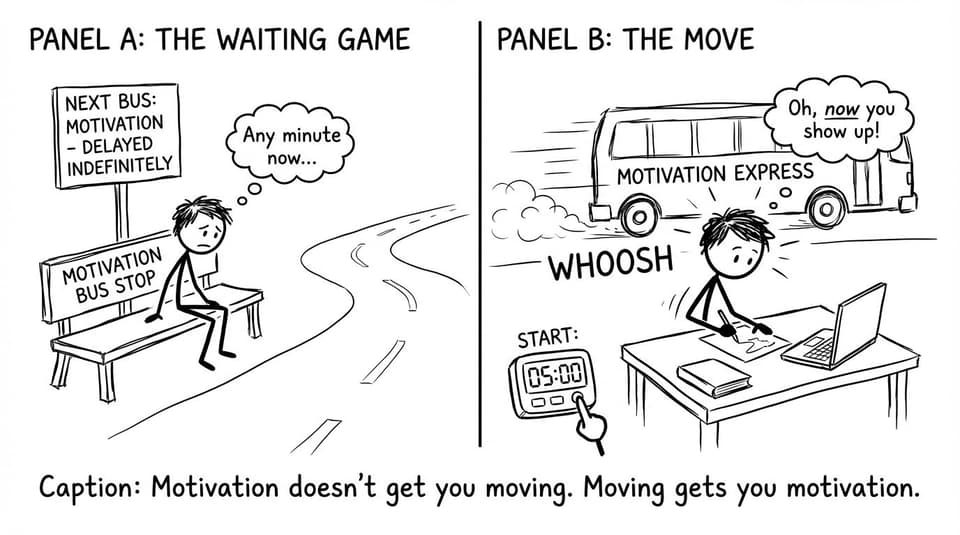
Build an "IB momentum loop" (so studying feels less like willpower)
If you want studying to happen even when you don't feel like it, you need a loop that does two things:
-
makes starting easy
-
makes progress visible
Here's the simplest IB loop that works across subjects:
Learn (fast clarity)
Use short, syllabus-aligned notes to refresh one concept. Don't try to "cover a chapter." Try to answer: what would the IB ask me to do with this?
RevisionDojo makes this easy with Study Notes that are designed for exam application, not just reading.
Test (immediate proof)
Do exam-style practice right away. This is where momentum is born.
Use the Questionbank to target a topic, see what you miss, and get feedback while you still remember what you were thinking.
Lock it in (tiny daily recall)
Use Flashcards for spaced repetition. It's the IB version of "maintenance," especially when you're busy.
Get unstuck (protect the session)
When one confusing step threatens to derail you, use AI Chat like an "unstuck button." Ask one specific question, then go back to practice.
If you want to understand that full ecosystem, this walkthrough helps: RevisionDojo App: The Smarter Way to Prep for IB Exams.
Make the task smaller than your resistance
On low-energy days, your job is not to win the day. Your job is to create a win.
Here are "small enough" starting tasks that still count as real IB study:
The 10-minute "warm start"
- 3 minutes: open notes, read one subheading
- 7 minutes: do 3-5 questions on that exact subheading
Small, but it breaks the ice.
The "one set only" rule
Promise yourself one question set, not a full session. You can quit after.
Most students don't quit; but the permission removes pressure.
The "minimum viable progress" block
If you're genuinely exhausted:
- 7 minutes: flashcards
- 8 minutes: one short question set
- 5 minutes: write one error rule
That is still IB training. It still compounds.
Use your environment like a lever (not a moral test)
When you don't feel like studying, it's tempting to blame your character.
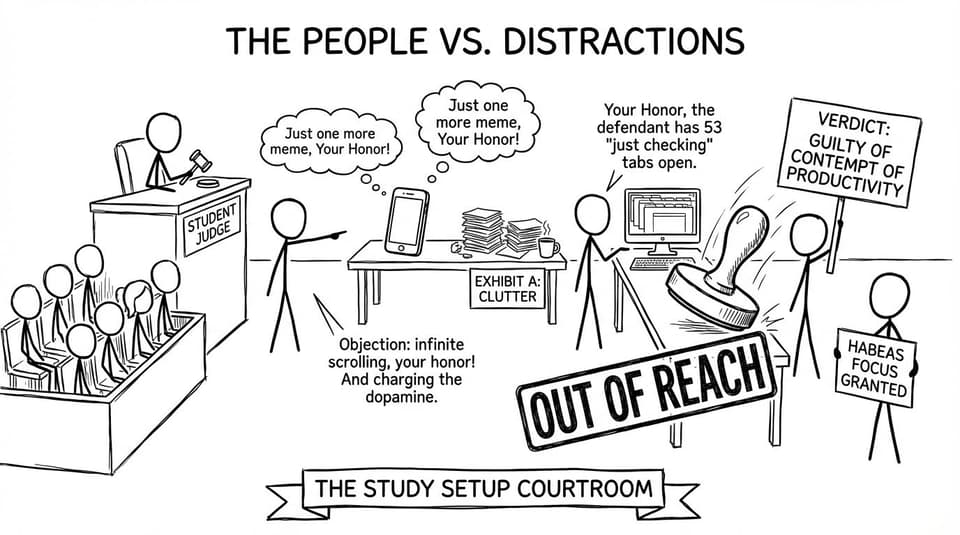
But focus is often environmental. If your setup makes distraction easy, your brain will take the easiest exit.
A simple IB rule: if it's within reach, it's within your attention.
Try this "courtroom" approach:
- Put your phone across the room.
- Close every tab except the one you're using.
- Keep a single scrap paper for "later thoughts" so you don't open new rabbit holes.
- Use a timer so your brain trusts there's an end.
If your biggest issue is schedule chaos, pair today's advice with: Best Time Management Techniques for IB Students in 2025.
Stop trying to "study everything" and start training papers
A hidden motivation killer in the IB is planning in subjects.
Subjects feel endless. Papers feel specific.
So instead of:
- "Study Economics"
Try:
- "Paper 1: 20-minute plan + one response"
Instead of:
- "Revise Chemistry"
Try:
- "Topic drill: acids and bases, 15 questions, review mistakes"
This is also where RevisionDojo's structured practice tools matter: Questionbank for targeted drills, Mock Exams for stamina, Predicted Papers for realistic exam readiness, and Grading tools to turn vague answers into mark-winning ones.
If you want a longer runway plan, this helps you pace the final months: Countdown to IB Exams: A Guide to Effective Studying.
The "reward" that actually works: visible progress
The most sustainable motivation in IB season isn't hype.
It's evidence.
Evidence looks like:
- "I improved from 52% to 66% on this topic."
- "I stopped losing marks on command terms."
- "I can now finish Section A on time."
This is why question-driven revision tends to revive IB motivation faster than note-driven revision.
On RevisionDojo, progress becomes easier to see because you can:
- practice with Questionbank and track weak areas
- reinforce with Flashcards in small daily sessions
- ask AI Chat to quiz you on misconceptions
- run Mock Exams to make timing feel familiar
- use Predicted Papers to practice exam-style realism without guessing
- use Grading tools and the Coursework Library to improve written work with criteria
- use Tutors when you need a human plan, not more content
A quick funny break (because your brain needs it)
Sometimes the most honest reason you don't feel like studying for IB is that your brain is negotiating.
It offers you deals like: "Let's just check one message first."
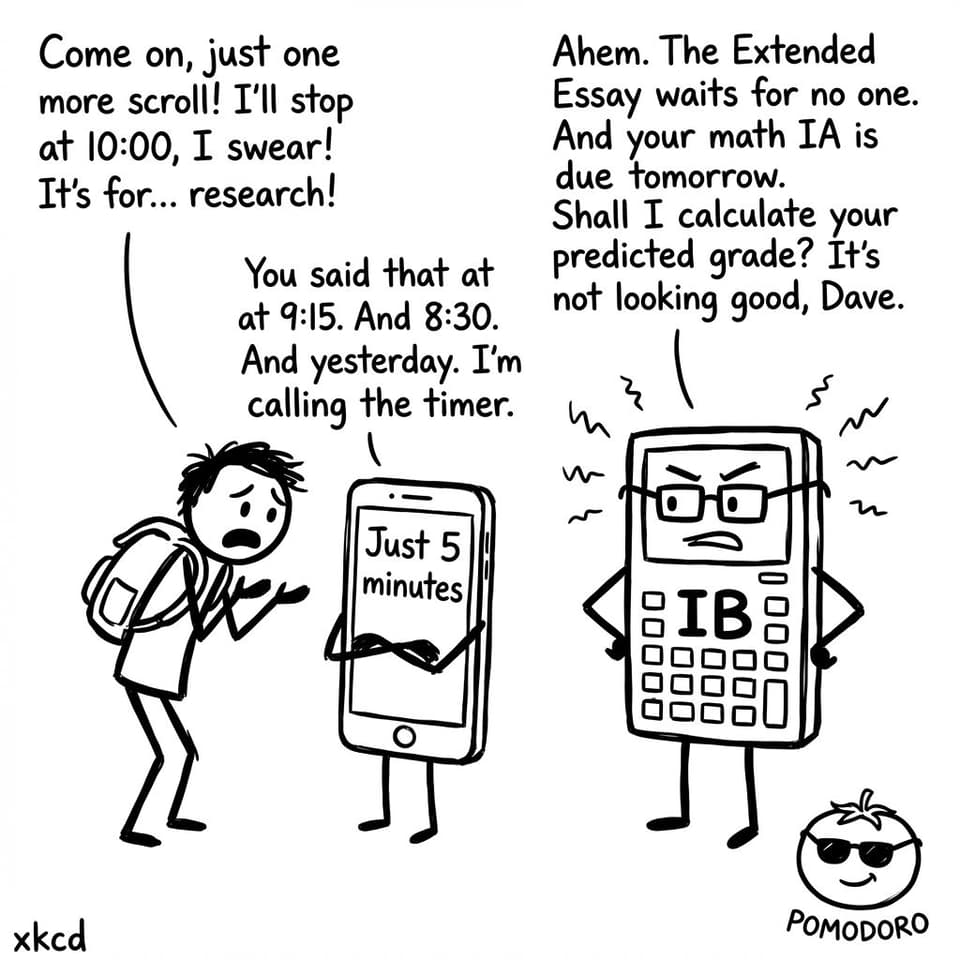
When that happens, don't argue. Redirect.
Open the smallest possible task. Start the timer. Let the negotiation fade.
Closing: your job isn't to feel like it; it's to begin
The most calm, effective IB students aren't the ones who feel motivated every day.
They're the ones who know how to start small, collect evidence, and keep the loop going.
So if today is one of those days when you don't feel like it, don't aim for perfection.
Aim for one honest rep: a short flashcard set, a small Questionbank drill, a single reviewed mistake.
Then let RevisionDojo carry the weight your mood can't: Study Notes for clarity, Flashcards for daily recall, AI Chat for fast unblocking, Grading tools and the Coursework Library for criteria-based improvement, and Mock Exams plus Predicted Papers for the kind of realistic practice that makes IB exams feel familiar.
Open one task. Start the timer. Let motivation catch up later.