
A quiet classroom can feel like a library until exam season arrives. Then it becomes something else: a place where stress is traded like currency, and everyone is trying to guess what “good revision” actually looks like.
EdTech helps when it turns guessing into a system. And for IB students, the best systems are simple, repeatable, and built around feedback. That is why these Studying Tips focus on tools teachers can integrate without turning lessons into a tech circus.
A practical EdTech checklist (teacher-friendly, student-proof)
Use this quick checklist to integrate EdTech in a way that supports real Studying Tips:
-
Choose one outcome: recall, practice, feedback, or timing
-
Start small: one class routine, one week
-
Make it visible: students should know what success looks like
-
Track progress weekly (not obsessively daily)
-
Iterate: keep what works, delete what does not
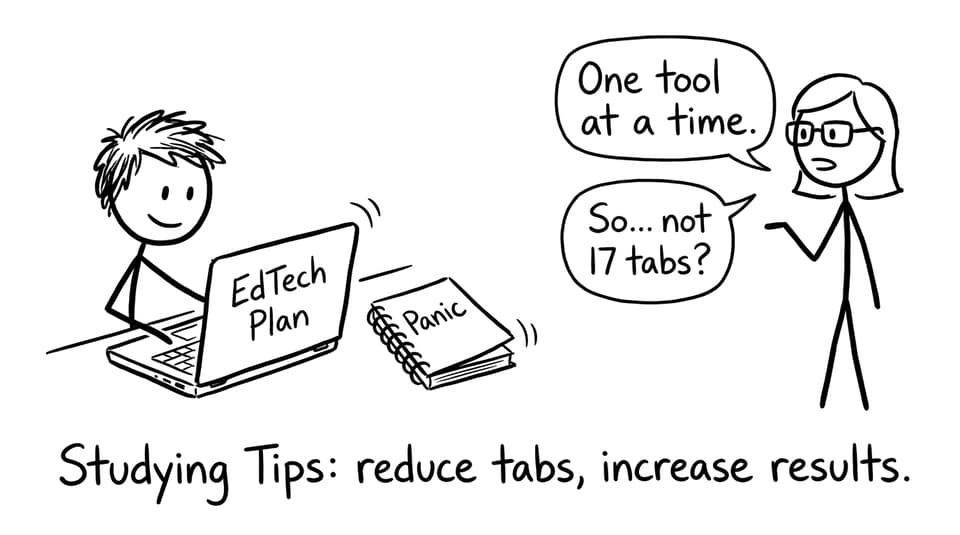
Start small: one tool, one habit
The fastest way to fail with EdTech is to adopt five platforms and use none of them consistently.
Instead, pick one “anchor” tool. For many IB classrooms, that anchor is practice and feedback: students learn best when they can attempt exam-style questions, see what went wrong, then try again.
RevisionDojo is built for that loop, starting with the RevisionDojo Questionbank and connecting naturally to notes, flashcards, and support.
For students, this becomes a clean set of Studying Tips: do a small set of questions, review mistakes, then fix one weakness.
Blend EdTech into lessons (without losing the room)
EdTech works best when it feels like part of the lesson rather than an interruption.
Use a tight “learn, recall, apply” flow
A teacher can set up a 30--40 minute cycle:
-
Learn: assign a short reading or targeted explanation
-
Recall: 5 minutes of closed-book retrieval
-
Apply: a short Questionbank set and a quick debrief
If students need structure, point them to RevisionDojo’s bigger routines like How to Study for IB Exams: Step-by-Step Guide or the more realistic pacing in Countdown to IB Exams: Use IB Resources That Work.
Personalize without extra marking
Personalization is the promise of EdTech. But teachers do not need another spreadsheet.
Use tools that generate feedback quickly:
-
Question practice with immediate corrections
-
Flashcards for daily recall
-
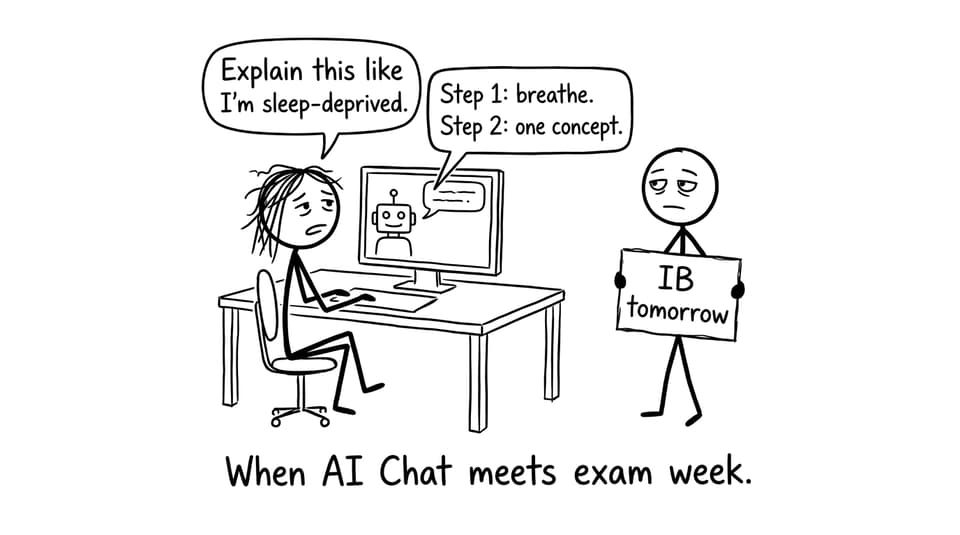
AI help for “small confusion” before it becomes “big avoidance”
RevisionDojo connects these pieces across Questionbank, Study Notes, Flashcards, AI Chat, Grading tools, Predicted Papers, Mock Exams, Coursework Library, and Tutors. Students can start with strategy-focused Studying Tips like those in 10 Proven Study Techniques for IB Students.
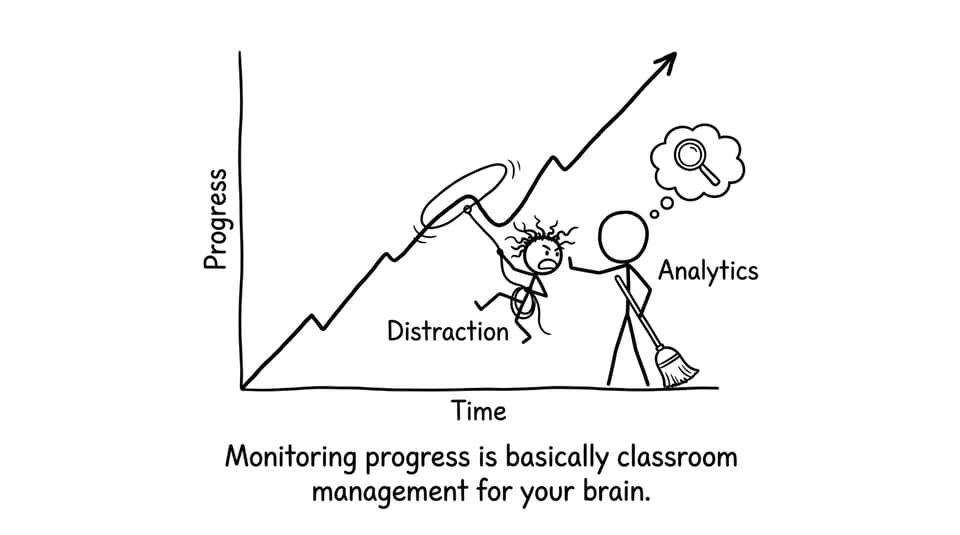
Monitor progress (lightly) and adapt
Analytics should reduce stress, not multiply it.
A simple weekly routine:
-
One “timed” check-in (short section, not a marathon)
-
One error log reflection: what cost marks?
-
One targeted fix using notes + practice
If students are exhausted, it helps to normalize the feeling and still give them a plan. Share How to Study for IB Exams Without Burning Out and the tactical clarity in IB: I Study All Day but Remember Nothing. These are Studying Tips that turn time into outcomes.
Common EdTech problems (and what to do instead)
-
Tech fails mid-lesson: keep a paper fallback and a “pair-share” retrieval task ready
-
Student resistance: start with the smallest possible win (10 questions, 10 minutes)
-
Time pressure: automate what can be automated (feedback, tracking, scheduling)
For broader resource planning, students can use Best Resources for IB Exam Preparation and anchor their overall approach with The Ultimate Guide to Revision for IB Students.
Closing: turn EdTech into an advantage, not a distraction
The point of EdTech is not to look modern. It is to make progress easier to produce and easier to see.
If you want Studying Tips that actually translate into marks, build one small loop: learn a little, recall it, apply it, review mistakes, repeat. RevisionDojo is designed to support that entire loop with Questionbank practice, Study Notes, Flashcards, AI Chat, Grading tools, Predicted Papers, Mock Exams, Coursework Library, and Tutors.
Pick one routine, start this week, and let consistency do what last-minute panic never can. Those are the Studying Tips that scale.
