



Listening doesn’t fail you in IB Chinese B because you’re “bad at Chinese.”
It fails you because it’s the only part of the exam where time keeps moving even when your brain wants to pause. Two plays. Real speed. A question page that suddenly feels too small for all the details you’re trying to catch.
That’s why improving listening is less about talent and more about training. And if you’re an IB student trying to do this inside the broader world of IB Languages, it helps to treat listening like a skill with mechanics: predict, capture, confirm.
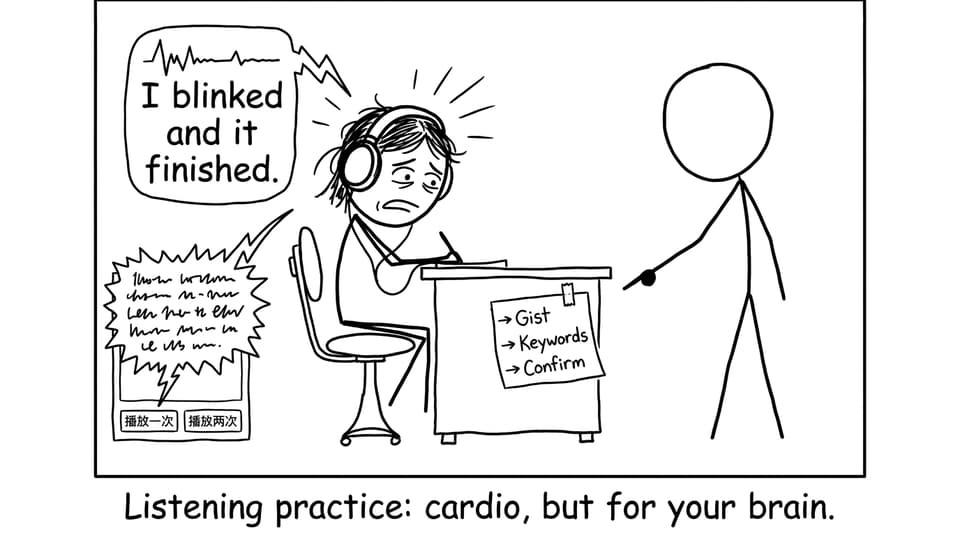
Quick listening checklist (save this for tomorrow)
-
Listen 10 minutes daily (short beats heroic).
-
Read questions first and predict topic vocabulary.
-
Aim for gist + anchors (names, numbers, opinions).
-
Note keywords, not sentences.
-
Hunt for signal words (因为, 所以, 但是, 然而, 首先).
-
Review with a transcript loop: listen, check, relisten.
-
Do one timed practice weekly in true exam conditions.
If you want one hub that keeps this organized (questions, vocab, drills), start with IB Chinese B Resources.
Why listening matters in IB Chinese B (and in IB Languages)
In IB Chinese B, listening is part of Paper 2 and carries serious weight in your final grade. But the deeper reason it matters is simpler: listening controls the pace of everything else. If your ear can track meaning at speed, your speaking improves, your vocabulary becomes “usable,” and reading feels less like decoding.
Across IB Languages, top scorers rarely “understand every word.” They understand structure. They hear relationships: cause, contrast, sequence, conclusion. That’s what the exam rewards.
For a clear overview of the exam components and what to expect, see What to Expect from IB Chinese B Exams: 2025 Overview.
Build a daily listening habit that actually changes your score
The most common trap is doing long listening sessions once a week, then wondering why nothing sticks.
A better model is two small modes:
Extensive listening (confidence and stamina)
Pick something you can tolerate daily: short news clips, vlogs, simple podcasts, even school announcements in Chinese. The goal isn’t accuracy. It’s staying calm while the audio keeps moving.
Intensive listening (marks and mechanics)
Take 1-2 short clips per week and treat them like a lab. Pause only after you finish (not during), then dissect what happened.
On RevisionDojo, you can keep this “lab work” focused by pairing listening practice with targeted skills training across the course workflow: Questionbank for exam-style comprehension, Flashcards for spaced vocabulary, and AI Chat for quick clarification when a phrase doesn’t make sense. If you’re building your full routine, How to Revise Effectively for IB Chinese B Exams maps listening into the bigger plan.
Stop chasing 100% comprehension: train for gist and anchors
Listening scores improve fastest when you stop trying to “catch everything.” In IB Chinese B, you need the main idea and enough anchors to answer the questions.
Use this three-part focus:
-
Topic: What is this about (school, travel, technology, environment)?
-
Stance: Is the speaker positive, negative, worried, excited?
-
Anchors: numbers, dates, locations, names, comparisons.
This is especially important in IB Languages, because the listening texts often include a few unfamiliar words on purpose. The exam expects you to infer.
If you want a dedicated breakdown of tactics, Listening Strategies for IB Chinese B Paper 2 is a strong companion read.
Note-taking that helps instead of hurts
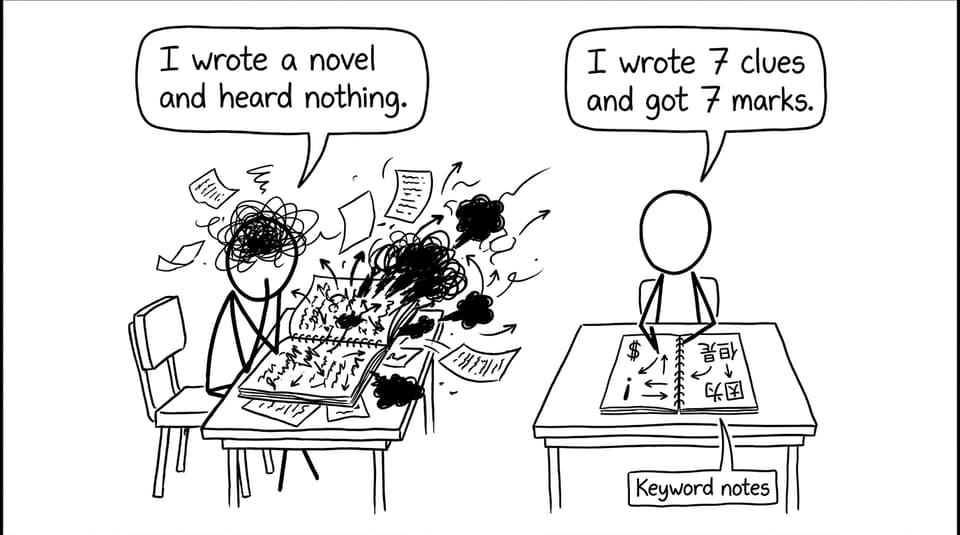
During listening, your pen can become your enemy. The more you write, the less you hear.
A practical note system:
-
Write one word per idea (not sentences).
-
Circle numbers immediately.
-
Use arrows for relationships: 因为 -> 所以, A vs B.
-
Create tiny abbreviations (环 for 环境, 教 for 教育).
If you want to practice exam-style answers and get feedback on what you missed, the Questionbank feature is designed for exactly that kind of loop: attempt, check, fix, repeat.
Signal words: the cheat codes your ear can catch at speed
When audio feels fast, you need “hooks” that your brain recognizes instantly. Signal words are those hooks.
Build a short list and overlearn it:
-
Cause/effect: 因为, 所以, 因此
-
Contrast: 但是, 然而, 虽然…但是…
-
Sequence: 首先, 然后, 最后
-
Summary: 总的来说, 总之
In IB Chinese B, these words often appear right before the sentence that carries the mark-winning detail. Across IB Languages, signal words do the same job: they reveal structure.
For theme-aligned practice (so your vocabulary matches what IB actually tests), explore a theme questionbank like Identities 身份认同 Questionbank or Sharing the Planet 共享地球 Questionbank.
Use transcripts the right way (a 3-pass loop)
Transcripts are powerful, but only if you avoid the common mistake: reading first.
Try this loop instead:
-
First listen (no transcript): write gist + anchors.
-
Second listen (with transcript): highlight where your ear failed (not where you “didn’t know the word”).
-
Third listen (no transcript again): check if recognition improved.
This teaches your brain to map sound to meaning. It also builds the kind of calm automaticity that IB Chinese B listening requires.
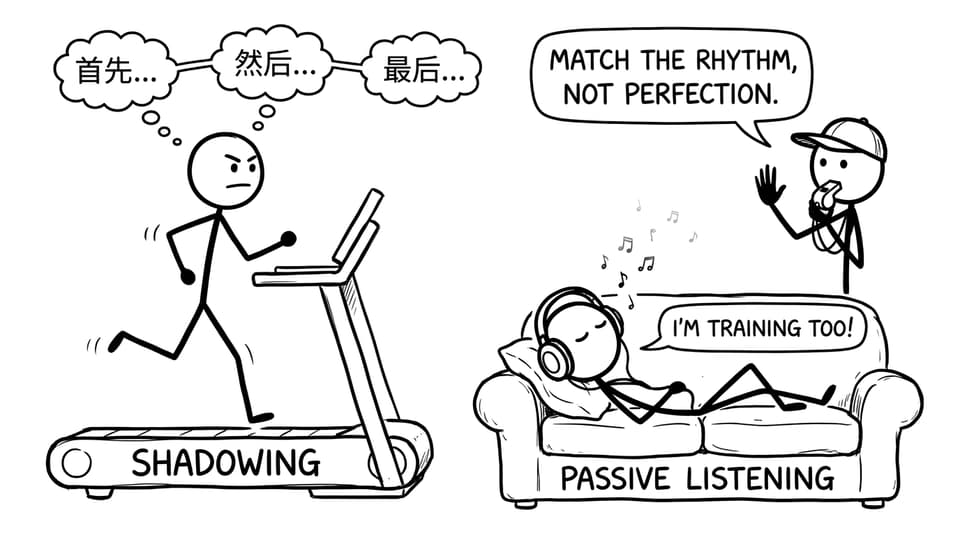
Shadowing: the fastest way to make speed feel slower
Shadowing means repeating at the same time as the speaker, even if you’re imperfect. It’s uncomfortable for three days, then strangely addictive.
Why it works:
-
It forces your brain to process Mandarin rhythm in real time.
-
It improves tones and chunking, which boosts comprehension.
-
It reduces the “translation pause” that kills listening speed.
If you want a broader resource stack for Chinese B students inside IB Languages, see Best Resources for IB Chinese B Students.
Exam-day strategy for Paper 2 listening
Your goal is to use each play differently.
-
Before audio: read questions, predict vocabulary, mark what each question demands (number? opinion? reason?).
-
First play: follow the storyline. Capture gist and major anchors.
-
Second play: hunt for the missing marks: exact numbers, key reasons, specific comparisons.
-
Final check: keep answers tight. Don’t add extra information unless asked.
To make exam practice feel familiar, build timed sessions with RevisionDojo’s Mock Exams and Predicted Papers workflows (especially when you want structure, pacing, and feedback without guessing what to do next). For platform strategy, RevisionDojo App: The Smarter Way to Prep for IB Exams shows how to turn practice into a repeatable system.
Closing: make listening boring, and your score gets exciting
The students who improve fastest in IB Chinese B don’t do magical strategies. They do small, repeatable work: 10 minutes daily, keyword notes, signal words, transcript loops, and one timed session a week.
If you’re serious about pushing listening up in IB Languages, build your routine around feedback, not hope. Start with IB Chinese B Resources, then use RevisionDojo’s Questionbank, Study Notes, Flashcards, AI Chat, Grading tools, Predicted Papers, Mock Exams, Coursework Library, and Tutors to keep practice focused, measurable, and calm.
Listening becomes easier when you stop treating it like a surprise and start treating it like training.