
Multiple offers feels like winning until you realise you’re the one who has to choose.
One minute you’re knee-deep in IB revision, the next you’re staring at UCAS Track with three different futures, three different sets of conditions, and a brain that keeps whispering: what if I pick wrong? The truth is that UCAS decisions aren’t about finding the “perfect” university. They’re about building a smart, calm system that protects you while you chase what you want.
This guide shows IB students preparing for exams how to handle multiple UCAS offers strategically, without letting the decision steal your focus.
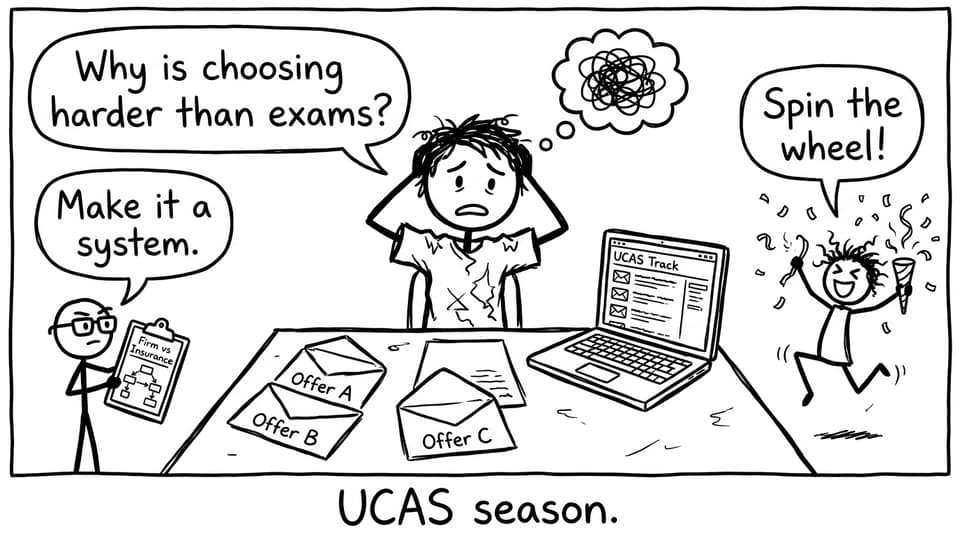
UCAS multiple offers: a quick checklist
When UCAS gives you more than one offer, do these first:
-
Wait until all universities respond before deciding
-
Write each offer’s conditions in one place (total points, HL/SL requirements)
-
Compare conditions to your realistic trajectory using the IB Grade Calculator
-
Consider course fit and student-life fit (not just prestige)
-
Choose one firm choice and one insurance choice
-
Decline the rest through UCAS Track
If you need a refresher on the platform itself, see What UCAS Is and How It Works.
Don’t decide early (even if your nerves want to)
UCAS gives you a response deadline once decisions are in. That window exists for a reason: most bad choices happen when students decide too quickly just to get rid of uncertainty.
Use the time like you’d use reading time in an exam. You’re not being slow; you’re being accurate.
A practical move: open a single document titled “UCAS Offers” and paste in the exact wording of each condition. Vague memories create vague choices.
Compare entry requirements against your IB reality
With multiple UCAS offers, the key is balance: one ambitious target, one genuine safety net.
Make your firm choice ambitious but realistic
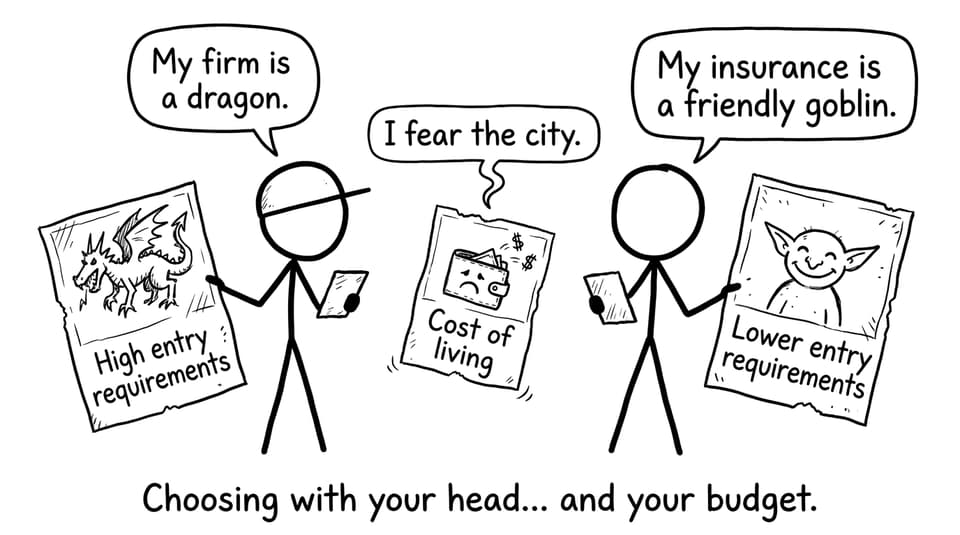
Your firm choice should be the place you’d be excited to attend and a set of conditions you can reasonably meet with focused work. If it’s wildly above your current performance, it’s not motivation; it’s a stress multiplier.
To ground this in evidence, estimate where you are now. Use the IB Grade Calculator, then set a short improvement plan (two weeks, not two months). If you’re worried about how predicted grades play into offers, How Much Do Predicted Grades Actually Matter? explains the stakes clearly.
Make your insurance choice a real cushion
An insurance choice should have meaningfully lower requirements. If your firm and insurance are basically identical, UCAS isn’t giving you a backup, just two versions of the same risk.
If you’re currently under your prediction (or panicking about final performance), read IB: What to Do If You Miss Your Predicted Grades.
Look beyond rankings: choose the place you can thrive
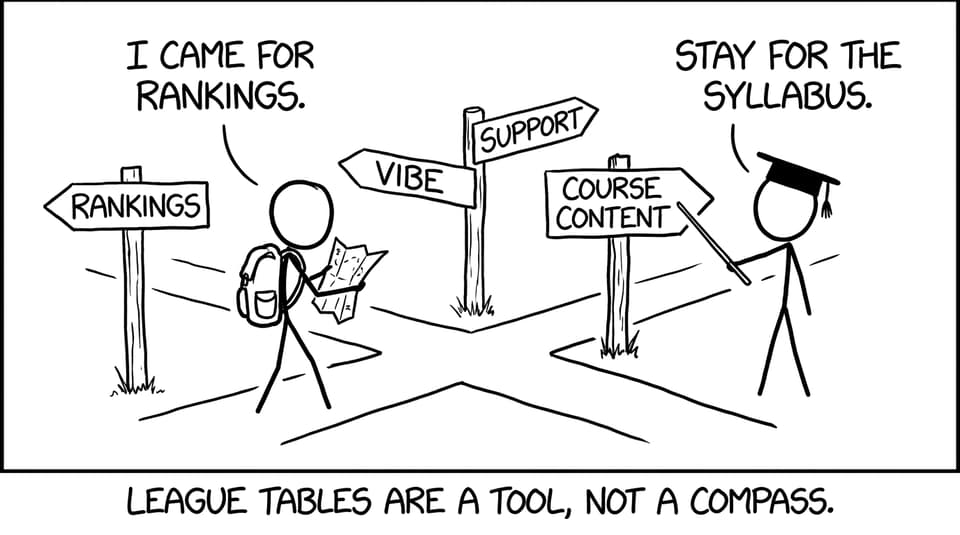
Rankings are useful data. They are not a personality test.
When comparing UCAS offers, ask:
-
Does the course content match what you actually want to study day-to-day?
-
Is it a campus or city environment, and which helps you concentrate?
-
What’s the cost of living and accommodation reality?
-
What support exists if you struggle academically or personally?
A lower-ranked university can still be the better decision if the teaching, community, or course structure fits you. Your performance matters more than the label.
Choose your UCAS firm and insurance without losing exam focus
Here’s the quiet trick: treat UCAS decisions like revision. Build a loop.
-
Get clarity fast (course pages, offer conditions, open days)
-
Test your assumptions (talk to students, read module lists)
-
Decide with a rule (firm = best fit, insurance = safest fit)
-
Then return to the work that makes the decision real: your IB exams
RevisionDojo exists for that second half. When UCAS conditions start living rent-free in your head, shift into execution: use Study Notes to patch gaps quickly, drill weak topics with the Questionbank, and keep daily recall alive using IB Flashcards. When you get stuck, RevisionDojo’s AI Chat can explain the markscheme logic, and grading tools can show you how to earn method marks, not just “know content.”
If you want a calm system for the final stretch, How to Study for IB Exams Without Burning Out pairs well with UCAS decision season.
Common mistakes with multiple UCAS offers
-
Picking two choices with similar conditions (no true insurance)
-
Letting friends’ choices choose for you
-
Accepting quickly just to stop thinking
-
Overvaluing prestige and undervaluing fit
If you’re unsure what’s myth vs fact in the process, Common UCAS Myths Busted is worth ten minutes.
Conclusion: make the UCAS choice, then earn it
Getting multiple UCAS offers is a good problem. It means you’ve already done something right.
Now make it simple: choose a firm that excites you, an insurance that protects you, and decline the rest with confidence. Then return your attention to the part you can still control: your exam performance. RevisionDojo helps you do that with Study Notes, Flashcards, Questionbank practice, AI Chat, grading tools, predicted papers, mock exams, a Coursework Library, and Tutors, so your UCAS decision is backed by results, not hope.