
Your UCAS decision might feel like a single dramatic moment: one dream university, one perfect course, one neat ending. But IB students know life rarely behaves like a markscheme. Exam seasons wobble. A paper goes weird. You miss a condition by a point. And suddenly the thing you barely thought about, your UCAS insurance choice, becomes the calmest part of your whole plan.
This guide explains the real role of a UCAS insurance choice, how it works on Results Day, and how to choose one that protects your future without feeling like you settled.
UCAS insurance choice: a quick checklist
If you want the fast version, here’s the UCAS insurance choice checklist most IB students wish they had earlier:
-
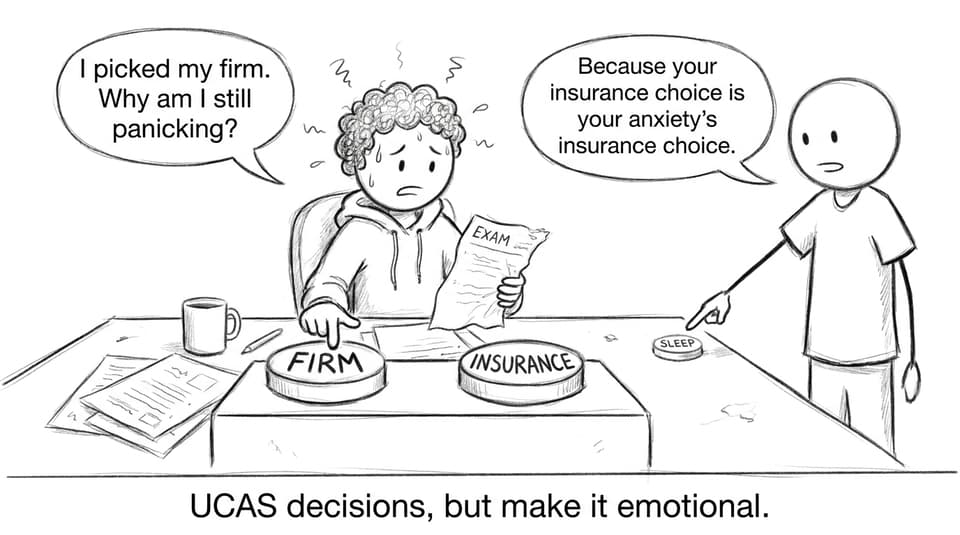
Your firm choice is your first preference.
-
Your insurance choice is your backup if you miss your firm conditions.
-
Your insurance should usually have lower entry requirements than your firm.
-
It still needs to be a course you would genuinely attend.
-
UCAS will automatically consider your insurance offer if you don’t meet your firm.
If you’re still comparing multiple offers, it helps to read How to Handle Multiple Offers from Universities alongside this.
What an insurance choice actually does in UCAS
A useful way to think about UCAS is that it’s not just an application system; it’s a decision system. When results arrive, you don’t want extra steps, extra phone calls, or extra uncertainty.
That’s what the insurance choice is for. If your IB results don’t meet the conditions of your firm offer, UCAS checks whether you meet the conditions of your insurance offer. If you do, that becomes your confirmed place.
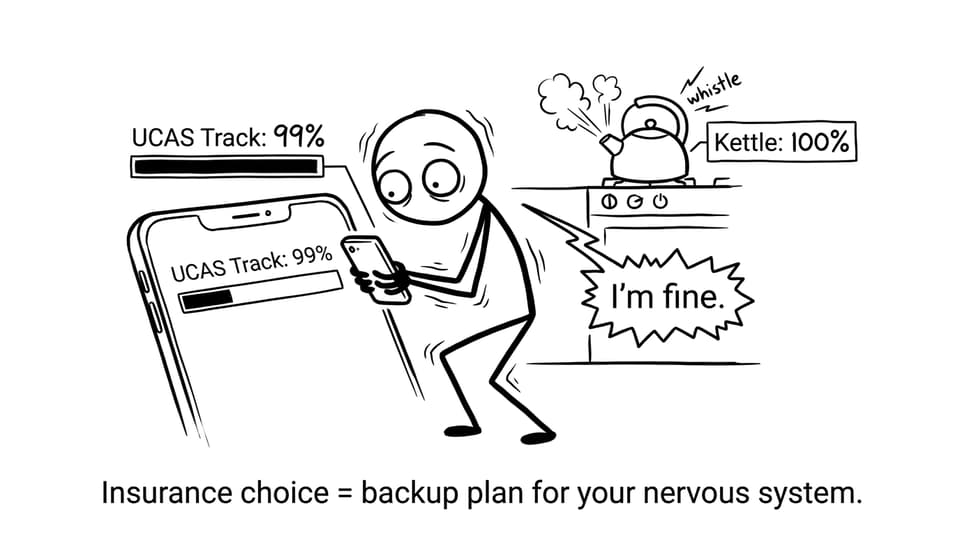
The point isn’t pessimism. It’s control. A smart UCAS insurance choice turns a stressful day into a simple fork in the road: one outcome or the other, both planned.
To understand the wider “what if I miss?” scenario, see What Happens If You Don’t Meet Your Firm Choice.
How to choose a good UCAS insurance choice (without regret)
The best UCAS insurance choices have two qualities that look boring on paper but feel amazing on Results Day: they’re realistic, and they’re still a good life.
Make the requirements meaningfully lower
Your insurance should be easier to meet than your firm. Ideally, it’s one clear step down in points and/or subject requirements. Not because you expect to miss your firm, but because you respect uncertainty.
If you’re not sure how to interpret conditions or deadlines, use UCAS: How to Accept or Decline University Offers as your practical companion.
Choose a course you would honestly attend
A weak UCAS insurance choice is one you wouldn’t take, even if you got it. That kind of “token backup” doesn’t reduce anxiety; it just postpones it.
Ask:
-
Would I like the course content enough to stay motivated?
-
Would I be okay living in that location for years?
-
Does the campus lifestyle fit how I actually work and recharge?
Don’t copy your firm choice in disguise
Many students pick an insurance that is basically the same offer as the firm, just at a different university with nearly identical requirements. It feels ambitious. It also defeats the purpose.
If you want a broader strategy for ranking choices, read How to Rank Your UCAS Choices Strategically.
Common UCAS insurance choice mistakes IB students make
These mistakes are common because they’re emotionally logical, not strategically logical:
-
Two similar offers: firm and insurance with almost identical conditions.
-
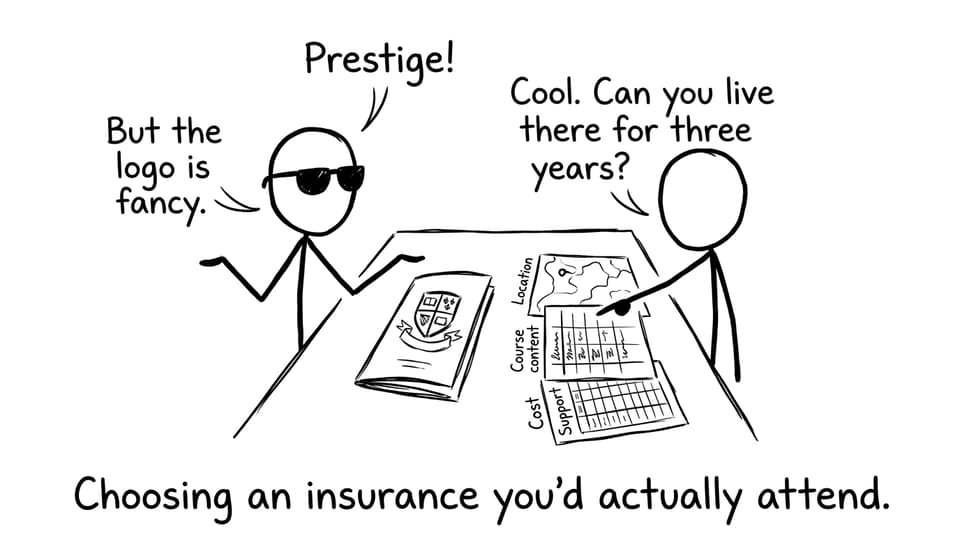
Choosing based on prestige only: ignoring course fit, location, and support.
-
Treating insurance as unimportant: deciding quickly just to “be done.”
-
Not preparing for Results Day: knowing your choices but not your plan.
A lot of the panic comes from the day itself, not just the decision. If you want a calm plan, read What Should I Do on the IB Results Day? and IB Results Day: How to Prepare Emotionally.
How RevisionDojo helps you make better UCAS decisions while studying
When your brain is full of IA deadlines and revision schedules, UCAS choices can feel like “future me’s problem.” RevisionDojo is built to stop that drift.
Use RevisionDojo Questionbank to turn uncertainty into data: what are you actually scoring in the topics that drive your HL grade? Then reinforce weak spots with Study Notes and daily Flashcards sessions. If you’re stuck, AI Chat can help you explain concepts clearly, and Grading tools can reduce the lingering worry that coursework will surprise you later. As exams get closer, Predicted Papers and Mock Exams add realism, while the Coursework Library and Tutors give you targeted support when it matters.
In other words: better studying helps you make calmer UCAS choices, and calmer UCAS choices help you study better.
Closing: treat your UCAS insurance choice like future-you’s gift
The quiet truth about UCAS is that your firm choice gets the spotlight, but your insurance choice often delivers the peace. It’s the difference between “I hope this works” and “I’m prepared either way.”
If you want to make your next UCAS decision with less stress, build the academic side too: practise with RevisionDojo’s Questionbank, tighten understanding with Study Notes, lock in recall with Flashcards, and use AI Chat, Grading tools, Predicted Papers, Mock Exams, the Coursework Library, and Tutors to keep your exam season steady. Your future options feel bigger when your plan is.