


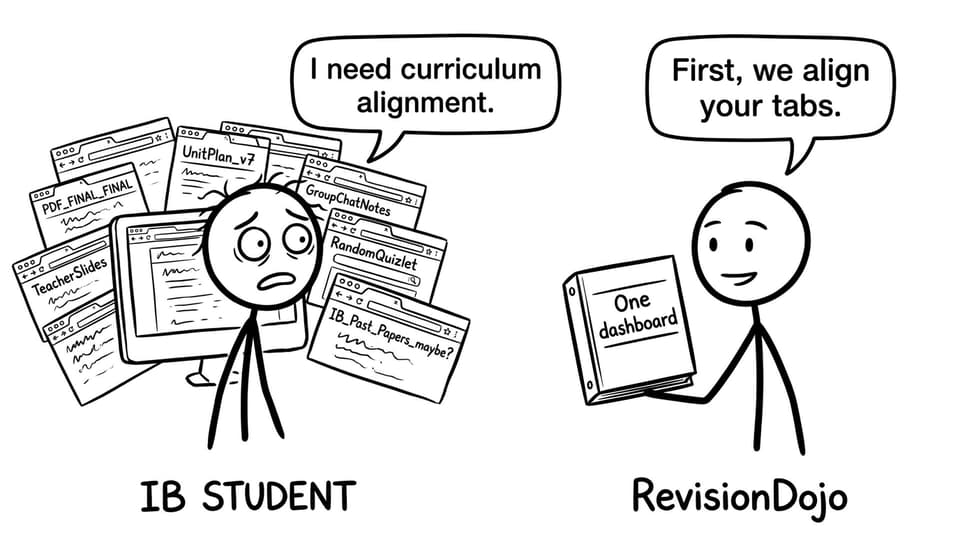
If you have ever watched your school prepare for an IB review, you have seen the same quiet chaos: documents everywhere, good intentions scattered across folders, and the feeling that the real story of teaching gets lost in the paperwork.
Students feel it too. A curriculum that is slightly out of sync shows up as mixed messages: one teacher emphasises command terms, another skips them; one subject drills criteria, another leaves it vague. In IB, those small misalignments become big stress close to exams.
RevisionDojo exists to turn that chaos into something calmer and more honest: a shared space where curriculum reflection is organised, evidence is easy to find, and students end up with clearer, more consistent preparation.
A quick checklist for IB curriculum review (student-friendly)
Even though curriculum review is often led by teachers and coordinators, it affects how you learn and revise. Here is the IB-aligned cycle you can look for in a well-run school:
-
Clear unit goals that match the IB guide and assessment style
-
Consistent use of command terms, criteria language, and mark allocation logic
-
Regular reflection (not one panicked meeting in Term 3)
-
Evidence that skills are being built across subjects (ATL, thinking skills, writing, analysis)
-
Practice resources that mirror exam reality (timing, question style, feedback)
RevisionDojo supports each piece of that cycle through one platform that connects teaching decisions to student outcomes.
Why IB curriculum review matters for your exam outcomes
It is tempting to think curriculum development is a “school admin” issue. But IB exams reward a specific kind of learning: not just knowing content, but showing it in the way the assessment expects.
When a curriculum is reviewed properly, three things improve for students:
You get fewer surprises
A well-aligned IB curriculum repeats the exam logic all year: how questions are phrased, what “evaluate” actually demands, and how marks are awarded.
You get more consistent feedback
If teachers are using shared reflection and shared frameworks, your feedback stops depending on who you happen to have. It becomes more stable, and stability is what makes improvement feel possible.
You revise with a clearer map
When coverage and alignment are visible, revision becomes less guesswork. You can spend time on weak areas instead of re-reading what you already know.
For a broader view of the programme structure students are navigating, see In-Depth Review: The International Baccalaureate (IB) Diploma Programme.
How RevisionDojo supports IB curriculum review and development
RevisionDojo helps schools review and develop curriculum in a way that is practical, trackable, and ultimately student-facing. The tools are built for a loop: reflect, measure, improve, repeat.
Centralised reflection that actually stays central
Curriculum review fails when reflection is “somewhere.” Someone wrote it down. Someone emailed it. Someone saved it on a drive with three similar folder names.
RevisionDojo gives schools a structured place for reflection so it is:
-
Consistent across departments
-
Easy to tag and retrieve later
-
Connected to real teaching evidence
For students, the downstream effect is that teaching decisions become more coherent. And coherence is one of the hidden advantages in IB.
If your school is exploring the full school platform, start with RevisionDojo for Schools.
Analytics dashboards that show alignment (not just activity)
A tricky truth: schools often track what was done, not what was learned.
RevisionDojo dashboards help departments see patterns that matter for IB outcomes:
-
Which skills are being emphasised repeatedly (and which are missing)
-
Where assessment variety is thin
-
Where students are consistently dropping marks by topic or question type
Students experience this as faster course correction: teachers can reteach what is genuinely weak instead of repeating what feels important.
To see how the same analytics mindset supports exam preparation at scale, read How RevisionDojo Simplifies IB Exam Review for Large Cohorts.
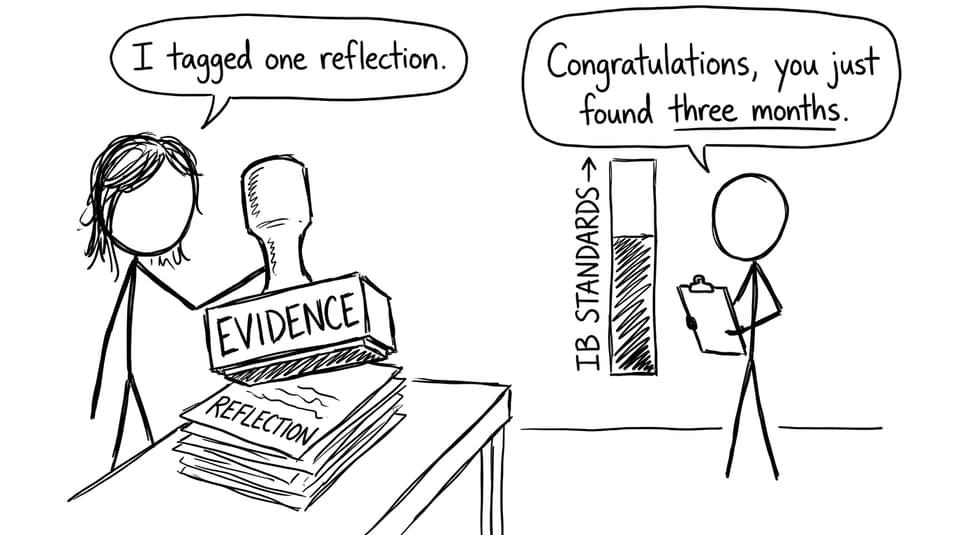
Evidence tracking for IB Standards and Practices (without the panic)
When an IB evaluation approaches, schools scramble for evidence: minutes, reflections, samples, proof of collaboration, proof of inquiry, proof of assessment thinking.
RevisionDojo makes evidence easier to capture as part of normal work, not a last-minute hunt. Tagged reflections and organised documentation create a trail you can export and discuss.
And while that might sound like it benefits only coordinators, it changes student life too: less staff stress tends to mean more thoughtful teaching and more timely feedback.
Collaboration tools that make “continuous improvement” real
Curriculum development is strongest when teachers compare notes openly: what worked, what did not, where students got confused, and how assessment could be clearer.
RevisionDojo supports shared frameworks for this kind of collaboration. Instead of isolated reflections, departments can develop shared decisions that become visible across a whole subject.
A practical related example is learner profile integration. If you are curious how whole-school tracking works there, see How RevisionDojo Elevates IB Learner Profile Development Across the Curriculum.
Linking curriculum review to the student revision loop (the part you feel)
The best curriculum review shows up in revision resources. That is where students notice the difference.
RevisionDojo is built as an end-to-end IB system:
-
Questionbank for exam-style practice with structure
-
Study Notes for syllabus-aligned clarity
-
Flashcards for spaced repetition and daily retrieval
-
AI Chat (Jojo) for rapid explanations and error diagnosis
-
Grading tools for feedback that mirrors criteria and mark logic
-
Predicted Papers and Mock Exams for timed rehearsal
-
Coursework Library for models and reference points
-
Tutors when you need a human to spot patterns you keep missing
If you want the student workflow version of this, RevisionDojo App: The Smarter Way to Prep for IB Exams connects the pieces clearly.
What this means for IB students preparing for exams
Even if you never attend a department meeting, you can benefit from curriculum review when your school uses RevisionDojo well.
More targeted practice, less generic revision
A properly aligned IB curriculum produces clearer practice priorities. On the student side, RevisionDojo makes it easy to go from “I’m weak at this topic” to “Here are 25 exam-style questions that train exactly that.”
To understand how to use this kind of practice effectively, see IB Question Bank: How to Use It Effectively and Comprehensive IB Question Bank: Thousands of Practice Questions.
Better notes because the notes are built for the exam
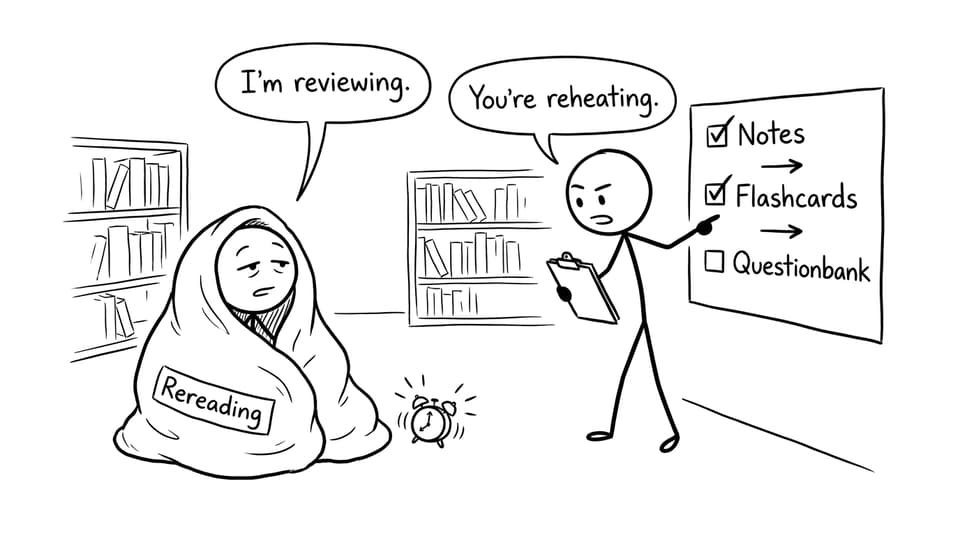
In IB, the danger is notes that feel productive but do not translate into marks.
RevisionDojo’s notes ecosystem is designed to connect content to performance. If you want to build your own system alongside it, these guides help:
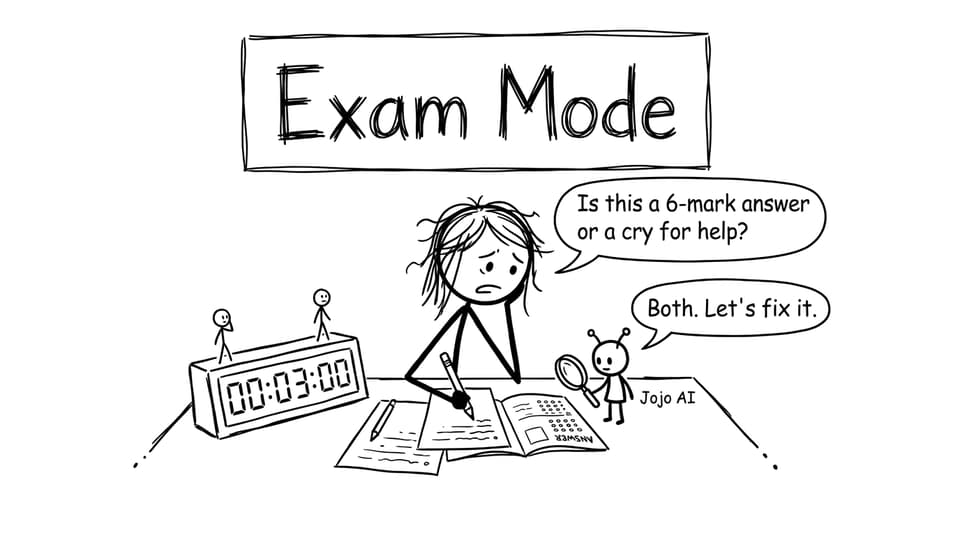
More realistic rehearsal (because exam confidence is trained)
Timed work is its own skill in IB.
RevisionDojo supports that realism through Mock Exams and Predicted Papers, plus feedback loops that tell you what to fix next. If you are deciding when to use which type of rehearsal, read IB Predicted vs Specimen Papers: What They Mean and Best IB Mock Exam Platform: Why Students Pick RevisionDojo.
Conclusion: IB alignment is quiet, but it changes everything
The best IB schools do not treat curriculum review as a five-year scramble. They treat it as a continuous habit: reflect, measure, adjust, and keep going.
RevisionDojo supports that habit in a way students can feel. When curriculum review is organised and evidence-based, your lessons become clearer, your feedback becomes more consistent, and your revision stops being a gamble.
If you want to see how this looks at whole-school level, explore RevisionDojo for Schools. And if you want to start improving your own IB results right now, build the simplest loop: Study Notes for clarity, Flashcards for recall, Questionbank for application, and timed Mock Exams to make exam day feel familiar.