
Prokaryotes don’t get the luxury of long meetings.
A bacterium can’t call a committee to debate whether it should produce an enzyme. If the environment changes, it must respond now. That urgency is why IB Biology loves operons: they’re the cleanest story of how life saves energy, stays efficient, and still adapts fast.
In this guide, you’ll see how an operon acts like a single switch for multiple genes, why the lac operon and trp operon are always on exam radar, and how to turn the idea into marks.
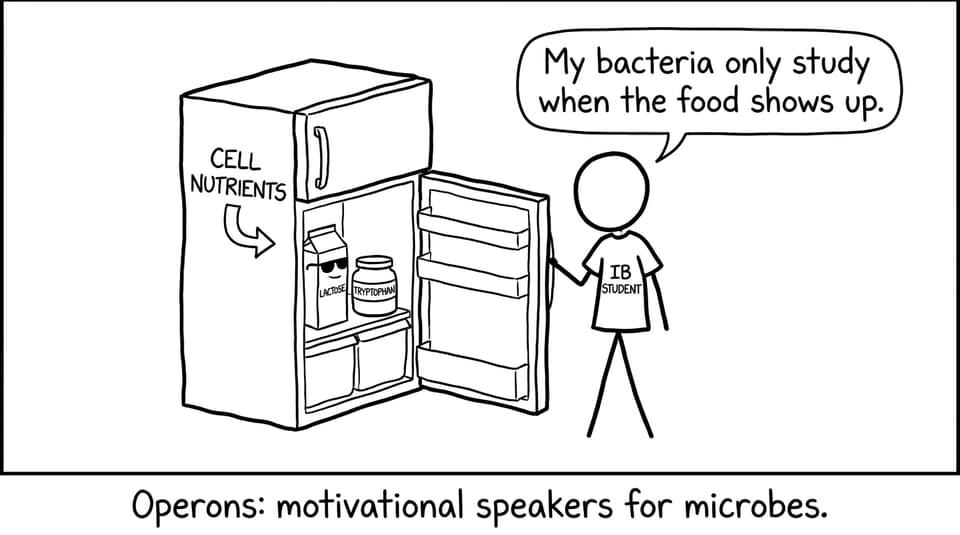
IB Biology operons: the quick checklist
Use this as your IB Biology mental model before you write any operon explanation:
-
Operon = a cluster of functionally related genes regulated together
-
Promoter = where RNA polymerase binds to start transcription
-
Operator = DNA “switch” region where a regulator protein binds
-
Structural genes = genes transcribed together into one mRNA
-
Regulatory gene (often elsewhere) = codes for a repressor or activator
-
Two classic patterns: inducible (usually OFF) vs repressible (usually ON)
If you want extra syllabus-aligned context, pair this with How Gene Structure Controls Expression and the HL-aligned D2.2 Gene expression cheatsheets.
How operons regulate prokaryotic genes
In prokaryotes, genes that work in the same pathway are often physically grouped. Instead of regulating each gene separately, the cell regulates the whole set in one move. That’s the point of operons.
Mechanistically, operons regulate prokaryotic genes mainly at the transcription level:
-
If a repressor binds the operator, RNA polymerase can’t transcribe (genes OFF).
-
If the repressor is removed or inactivated, RNA polymerase transcribes the operon (genes ON).
-
In some systems, an activator increases transcription by helping RNA polymerase bind effectively.
This is why operons feel so “economic” in IB Biology: they prevent waste. Making proteins costs ATP, amino acids, ribosome time, and opportunity.
For a broader link to regulators, see IB Biology: How Activators & Repressors Control Genes.
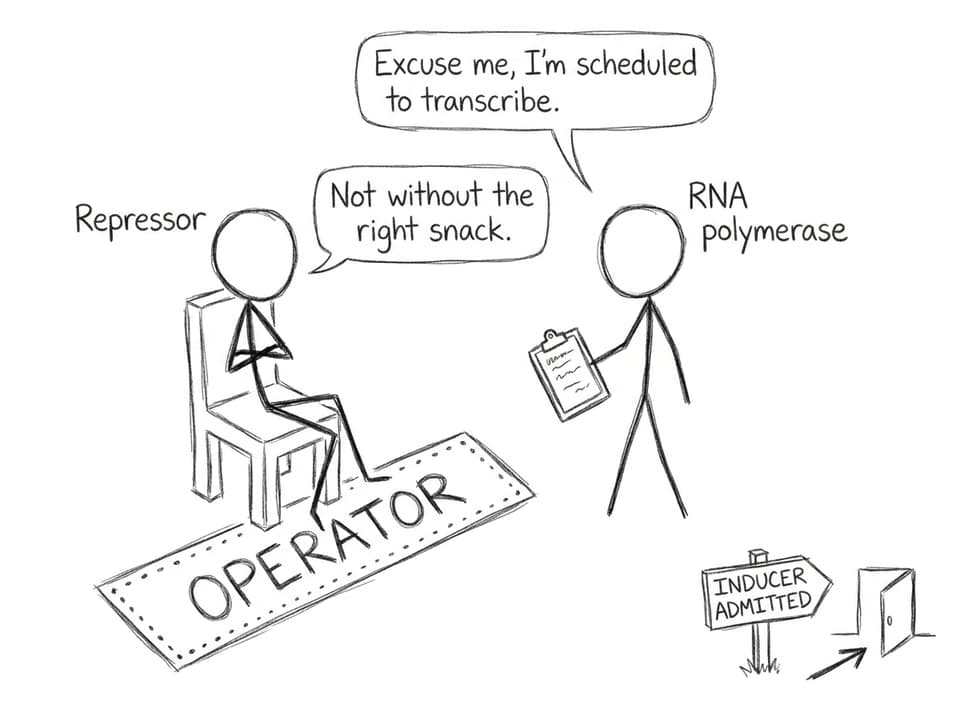
The lac operon (inducible): OFF until lactose arrives
The lac operon is the classic inducible system: it’s usually OFF, and turns ON when the substrate shows up.
-
When lactose is absent, the lac repressor binds the operator and blocks transcription.
-
When lactose is present, a lactose-derived inducer (commonly taught as allolactose) binds the repressor, changing its shape so it can’t bind the operator.
-
RNA polymerase then transcribes the structural genes that help import and break down lactose.
In exam language, this is a clean cause-and-effect chain: environmental signal (lactose) -> regulator protein changes -> transcription changes -> enzymes produced only when useful.
For a dedicated walkthrough, use How the Lac Operon Shows Inducible Expression and the syllabus notes page D2.2.11 External factors impacting the pattern of gene expression.
The trp operon (repressible): ON until tryptophan is abundant
The trp operon is the mirror image: a repressible system that’s generally ON, but shuts down when there’s enough product.
-
When tryptophan is low, the repressor is inactive, so transcription proceeds and enzymes for tryptophan synthesis are produced.
-
When tryptophan is high, tryptophan acts as a corepressor by binding to the repressor and activating it.
-
The active repressor binds the operator and blocks transcription.
This is negative feedback at the gene-expression level: the product helps shut off its own production. For the full explanation, see How the trp Operon Shows Repressible Control.
How to turn operons into marks in IB Biology answers
When an IB Biology question asks about operons, you usually earn marks for:
-
Naming promoter, operator, and structural genes
-
Stating what binds where (RNA polymerase to promoter; repressor to operator)
-
Explaining the condition (lactose present/absent; tryptophan high/low)
-
Linking regulation to energy conservation and rapid response
To practise exam-style wording, use RevisionDojo’s IB Biology resources hub, then drill weak spots with the IB Biology Topic Cell Biology Questionbank (SL/HL). For memorising definitions like “operator” and “repressor,” the Flashcards for Cell biology - IB help lock in the phrasing that examiners reward.
Closing: make operons feel inevitable
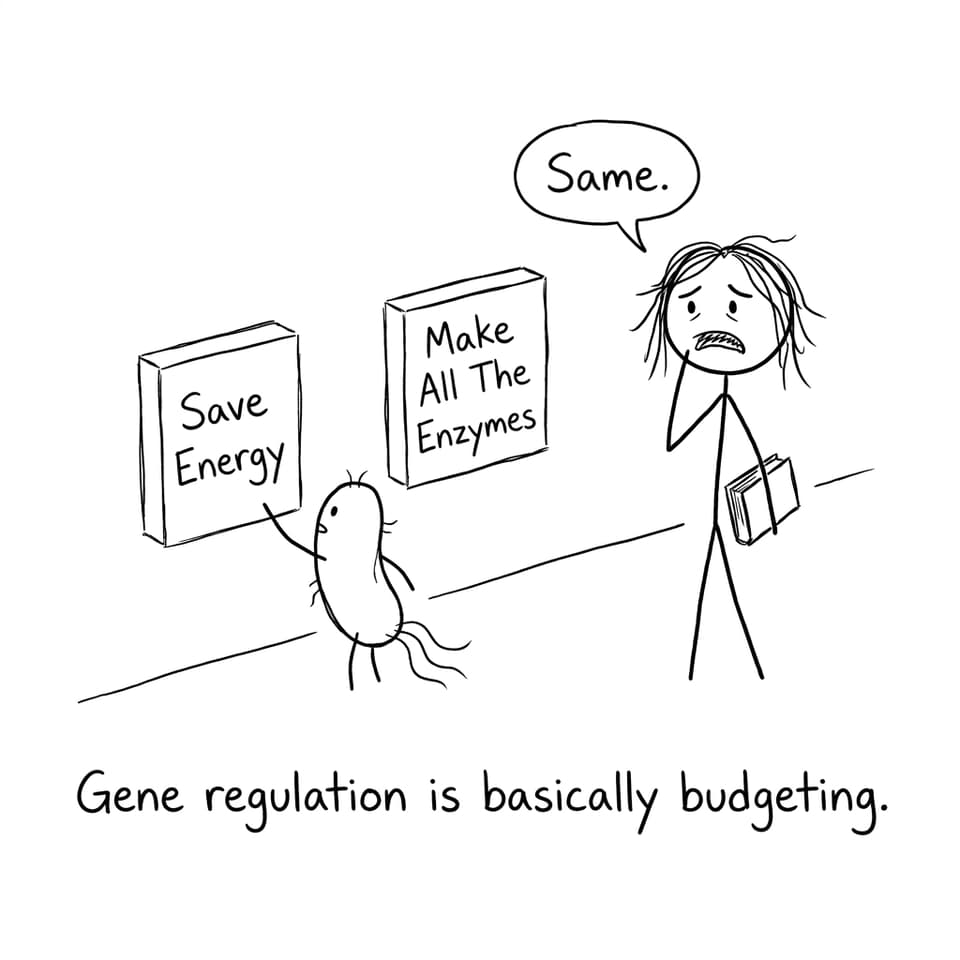
Once you see operons as a budgeting system for cells, the details stop feeling random. In IB Biology, operons regulate prokaryotic genes because speed matters, and waste is costly. The lac operon is the cell refusing to prepare a meal until the ingredients arrive. The trp operon is the cell stopping production when the pantry is full.
If you want to turn that understanding into consistent marks, use RevisionDojo’s Study Notes, Flashcards, and Questionbank, then consolidate with AI Chat and exam-style practice using Mock Exams and Predicted Papers at Biology Predicted Papers (Free).