
In IB Biology, the trp operon is one of those topics that feels simple right until the exam asks you to explain why it is “repressible,” how tryptophan acts, and what attenuation adds. It’s like watching a light switch that’s wired backwards: the genes are on, until the cell decides they should be off. That reversal is the entire point, and it’s also why the trp operon is such a clean model of feedback control.
IB Biology quick checklist: what to name in your answer
If a marker only gave you 30 seconds to prove you understand repressible control, hit these points:
-
The trp operon controls enzymes for tryptophan synthesis in E. coli.
-
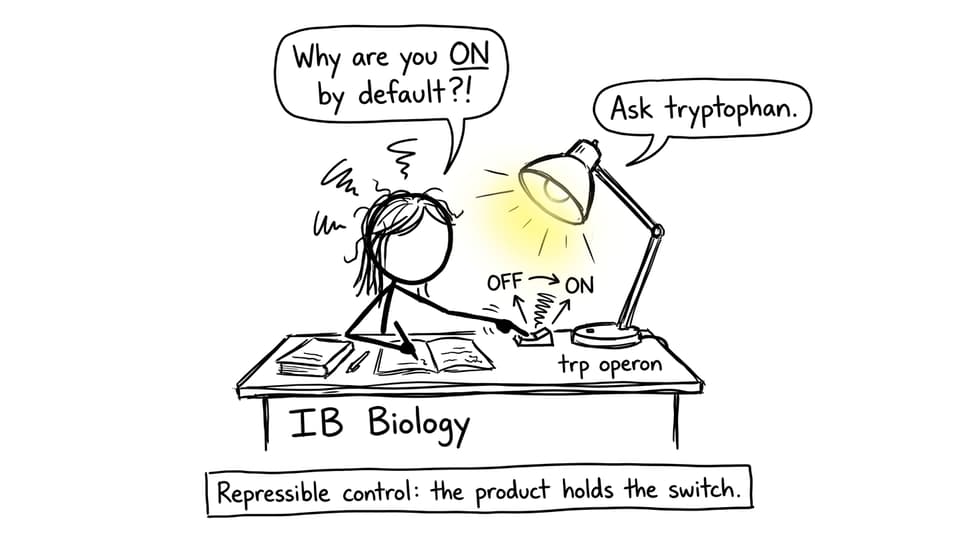
It is on by default (repressible operon).
-
The regulatory gene trpR makes a repressor that is inactive alone.
-
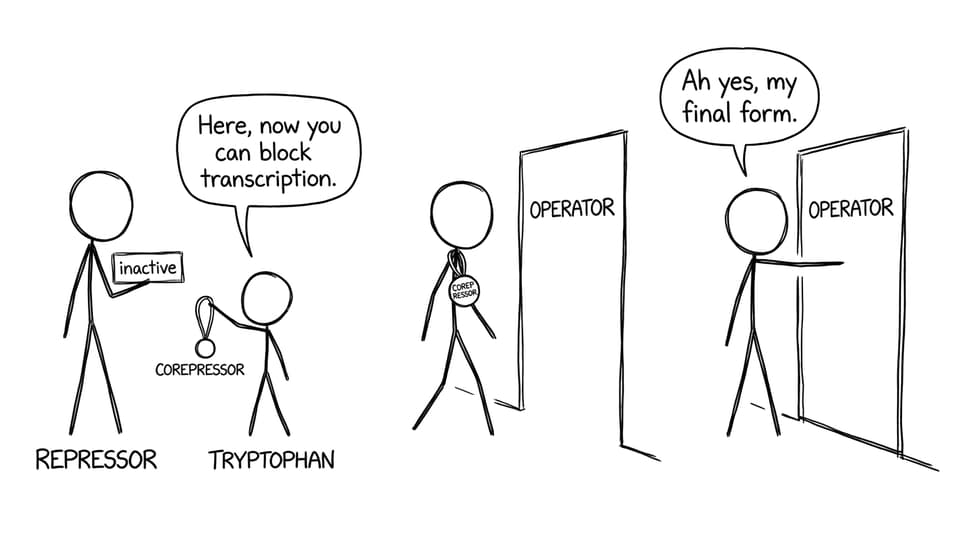
Tryptophan is a corepressor: it activates the repressor by binding to it.
-
The active repressor binds the operator and blocks transcription.
-
Attenuation fine-tunes transcription based on tryptophan availability during translation.
For broader gene-expression framing in IB Biology, pair this with How Activators and Repressors Control Genes and How Gene Structure Controls Expression.
How the trp operon shows repressible control (the core story)
The trp operon exists because making amino acids costs energy. In IB Biology terms, this is homeostasis at the molecular level: if tryptophan is low, the cell should invest in making it; if tryptophan is high, the cell should stop.
The operon includes a promoter and operator, followed by a leader sequence and five structural genes (trpE, trpD, trpC, trpB, trpA) that code for enzymes in the tryptophan pathway. When the operon is transcribed and translated, the cell gains the machinery to synthesize more tryptophan.
Here’s the repressible logic: the system begins on. RNA polymerase can bind and transcribe because the repressor protein (made elsewhere by trpR) is not able to bind the operator unless it’s “switched on” by tryptophan.
So the product of the pathway, tryptophan, ends up controlling the pathway. That’s negative feedback, and it’s why this topic shows up so often in IB Biology exam questions.
The corepressor step that makes it repressible
When tryptophan levels rise, tryptophan binds to the trp repressor and changes its shape (a conformational change). Now the repressor is active and can bind the operator.
Once bound, the repressor physically blocks RNA polymerase from initiating transcription. The result is that the genes stop being expressed, and enzyme production drops. In IB Biology, this is a high-yield phrasing: tryptophan acts as a corepressor that activates the repressor, causing it to bind the operator and prevent transcription.
When tryptophan falls, the corepressor detaches. The repressor becomes inactive again, leaves the operator, and transcription resumes.
To connect this idea to other syllabus-style regulation, see Internal and External Control of Gene Expression for the bigger picture.
Attenuation: the second layer that examiners love
Repression is the “main switch,” but attenuation is the dimmer. In IB Biology, attenuation matters because it shows regulation can happen during transcription depending on what’s happening in translation.
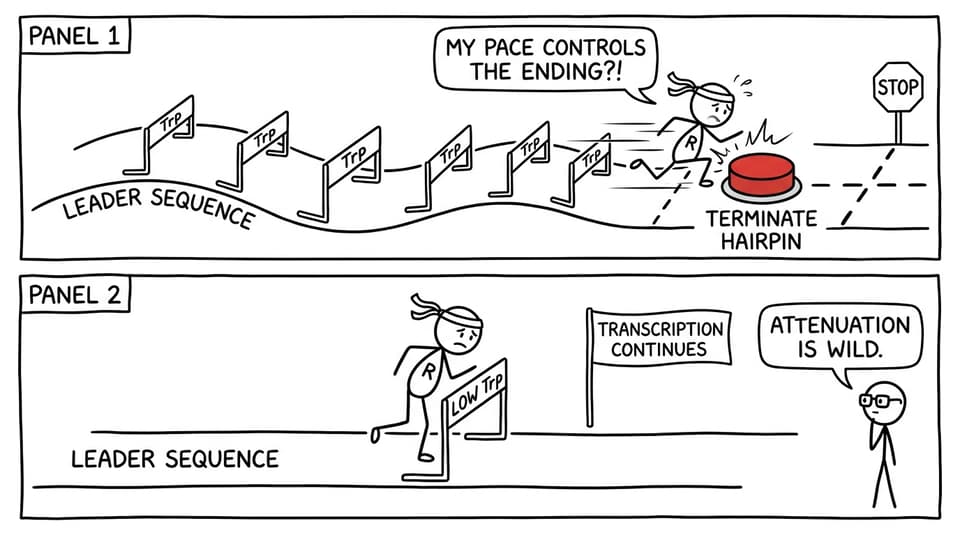
In the leader sequence, the cell effectively “samples” tryptophan availability. When tryptophan is abundant, the ribosome translates the leader quickly, which encourages formation of a terminator hairpin in the mRNA. That hairpin stops transcription early, so the rest of the operon isn’t transcribed.
When tryptophan is scarce, the ribosome stalls at tryptophan codons, a different hairpin forms, and transcription continues into the structural genes.
How to revise this in RevisionDojo (fast, exam-focused)
If you’re studying IB Biology under time pressure, the trick is to practise explaining the mechanism in clean, markscheme-style sentences.
RevisionDojo helps you do that using:
-
The Questionbank to drill operon questions and refine phrasing
-
Study Notes and Flashcards for promoter/operator/corepressor definitions
-
AI Chat to generate exam-style prompts and check your logic
-
Grading tools to see what your answer is missing
-
Predicted Papers and Mock Exams to practise under timed conditions
-
A Coursework Library and Tutors when you want deeper guidance
Start with the syllabus hub for IB Biology Topic D2.2: Gene Expression and then sharpen your exam technique with Biology Predicted Papers.
Closing: turn the mechanism into marks
The trp operon is memorable because it behaves like a sensible budget: spend energy making tryptophan only when you’re running low. In IB Biology, that story translates directly into marks when you can name the operator, repressor, corepressor, and attenuation in one clear chain of cause and effect. If you want to practise writing that chain under exam timing, RevisionDojo’s Questionbank, Flashcards, AI Chat, Predicted Papers, and Mock Exams make the trp operon feel less like a diagram to memorize and more like a mechanism you can explain on demand.