

Paying for IB support can feel unusually difficult to judge. A low hourly rate may produce little progress, while an expensive specialist may solve a precise problem in two sessions. Parents are not simply asking what tutoring costs. They are asking what level of help their child actually needs.
So, how much does IB tutoring cost? Recent public listings suggest that one-to-one IB tutoring commonly falls around $50 to 100 to $150 per hour or more. Rates vary by country, subject, format, experience, and package size.
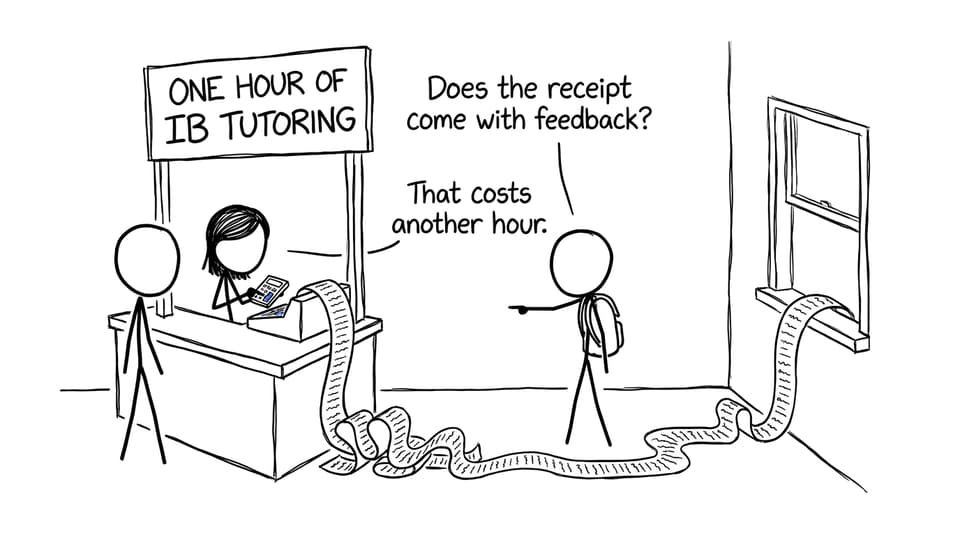
That means one weekly 300 over four weeks** or $2,400 across an eight-month academic period. This is why the right question is not only, "Can we afford tutoring?" It is also, "Where will human attention make the greatest difference?"
IB tutoring cost at a glance
For an IB parent comparing options, these are sensible planning ranges rather than guaranteed quotes:
| Type of support | Typical indicative cost | Usually best for |
|---|---|---|
| Recent IB graduate or university student | 40 per hour | Homework questions, accountability, and basic concept review |
| Experienced independent IB tutor | 80 per hour | Regular subject support and targeted exam preparation |
| Qualified IB teacher or specialist | 120 per hour | Structured teaching, difficult HL content, and exam technique |
| Examiner-level or premium specialist | 150+ per hour | Advanced feedback, complex misconceptions, and focused intervention |
| Small-group IB tutoring | 50 per student per hour |
Prices are often quoted in local currencies, so conversion alone does not provide a perfect comparison. Availability and local demand matter. Public rates can also change, and package discounts may come with expiry dates or minimum commitments.
Before paying, check four things:
- Is the tutor experienced with the student's exact IB subject, level, and current syllabus?
- Does the student need teaching, marking feedback, accountability, or exam strategy?
- Will there be independent practice between lessons?
- Can progress be reviewed after two or three sessions?
Why IB tutoring prices vary so much
IB tutoring is not one uniform service. Helping an SL student review a familiar topic is different from diagnosing why an HL student repeatedly loses marks on multi-step responses.
Tutor experience and IB-specific knowledge
A recent graduate may understand the student experience and provide affordable support. A qualified teacher may bring deeper curriculum knowledge and a more structured teaching method. A specialist familiar with assessment criteria may charge more because the student is paying for faster diagnosis, not merely another explanation.
Higher credentials do not automatically guarantee a better match. A clear, prepared tutor who understands the student's actual difficulty may offer greater value than a celebrated specialist teaching at the wrong level.
Subject and level
Rates can rise for HL mathematics, physics, chemistry, economics, and other areas where specialist supply is limited. Coursework-focused guidance may also be priced differently from ordinary subject tuition.
Parents should be cautious here. Legitimate support can teach methods, explain criteria, and give feedback. It should not cross academic-integrity boundaries by producing assessed work for the student. RevisionDojo's IB resources hub can help families identify the relevant subject and level before approaching a tutor.
Online, in-person, individual, or group support
Online tutoring gives families access to a wider international pool and removes travel. It is often more flexible, although it is not universally cheaper. In-person sessions may carry a premium in cities with high demand, while small groups can reduce the cost per student.
Format should follow the learning problem. A student who needs immediate correction on essay structure may benefit from one-to-one attention. A student who mainly needs guided revision may do well in a small group or through structured independent practice.
Lesson packages and cancellation rules
Providers sometimes lower the per-session rate when families purchase several lessons. The discount matters only if the lessons are used. Ask about expiration dates, rescheduling rules, refunds, session length, and whether preparation or marking is included.
A package that appears inexpensive can become costly when unused hours remain at the end of the term.
Calculate the total cost, not just the hourly rate
Hourly pricing makes tutoring look smaller than it is. The total commitment is what affects a family budget.
Use this calculation:
Hourly rate x sessions per week x number of weeks = expected tutoring cost
At $75 per hour, the totals would be:
| Schedule | Calculation | Estimated total |
|---|---|---|
| Four-session intervention | $75 x 4 | $300 |
| Weekly help for 12 weeks | $75 x 1 x 12 | $900 |
| Twice-weekly help for 12 weeks | $75 x 2 x 12 | $1,800 |
| Weekly help for 32 weeks | $75 x 1 x 32 | $2,400 |
Then add any registration fees, travel charges, diagnostic assessments, or materials. If sessions are sold in blocks, compare the usable cost, not merely the advertised discount.
This simple calculation often changes the decision. A parent may discover that continuous weekly tuition is unnecessary, while four carefully timed sessions around a diagnosed weakness are affordable and useful.
What makes an IB tutor worth the cost?
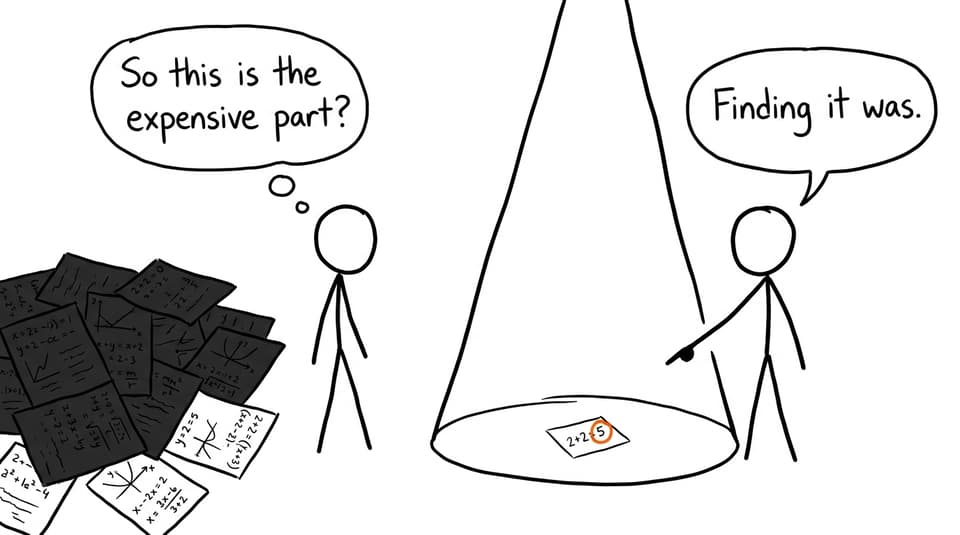
The best tutoring produces something that remains after the call ends: a clearer method, corrected misconception, stronger revision plan, or specific practice task.
A useful tutor should be able to:
- identify the reason marks are being lost;
- explain difficult ideas at the student's current level;
- model a repeatable problem-solving or response method;
- assign focused work between sessions;
- review whether the student can apply the correction independently; and
- adapt to the relevant IB subject, level, and assessment demands.
A pleasant conversation is not the same as measurable progress. Before the first paid block, define one outcome such as improved timing, better use of command terms, or greater accuracy in a named topic.
Students can also follow a structured step-by-step IB exam study guide before requesting tutoring. Sometimes the missing ingredient is not another explanation. It is a repeatable study system.
Questions to ask before hiring an IB tutor
A short screening conversation can prevent an expensive mismatch. Ask:
- Which IB subjects and levels do you teach most often?
- How do you diagnose a student's weak areas?
- What should happen between sessions?
- How will you show that the student is improving?
- Are lesson preparation and written feedback included?
- What are your cancellation and package-expiry rules?
- How do you keep coursework support within academic-integrity expectations?
If possible, begin with one session rather than a large package. Give the tutor a precise problem to investigate. Afterwards, ask the student what method became clearer and what they are expected to do next.
Private tutoring versus a RevisionDojo subscription
Human tutoring and an IB study platform do different jobs. Tutoring provides scheduled individual attention. A platform provides repeatable support between sessions, when much of the learning must actually occur.
| Cost consideration | Private IB tutor | RevisionDojo subscription |
|---|---|---|
| Typical price structure | Commonly 100 per hour, with premium specialists charging more | Free access or a paid plan selected on the live pricing page |
| Access | Limited to booked session time | Resources available whenever the student studies |
| Personal interaction | Direct human explanation and accountability | AI Chat, automated feedback, analytics, and optional Tutors |
| Subject coverage | Usually one tutor and one or a few subjects | Broad IB subject coverage in one account |
| Practice volume | Depends on assigned work and lesson time | Questionbank, Flashcards, Study Notes, Predicted Papers, and Mock Exams |
| Coursework support | Tutor-dependent and may cost extra | Grading tools and a Coursework Library, depending on the plan |
| Best value | Precise problems requiring human diagnosis | Consistent daily study and independent practice across subjects |
Because RevisionDojo prices, promotions, plan lengths, and included features may change, parents should use the official RevisionDojo pricing page for the current checkout amount rather than relying on an old quoted price.
The affordability advantage is structural. One tutoring hour buys one hour of attention. A subscription supports repeated study sessions across the month. That does not make the two services interchangeable, but it can reduce the number of paid hours needed.
RevisionDojo brings the daily learning cycle into one place: Study Notes for understanding, Flashcards for recall, a Questionbank for application, AI Chat for clarification, and Grading tools for feedback. Students can then build exam readiness with Predicted Papers and Mock Exams, while the Coursework Library and Tutors provide additional layers of support.
Parents can explore the RevisionDojo app exam-preparation workflow, review IB study support for parents and families, or begin with free IB revision resources.
A more affordable hybrid approach
For many families, the most efficient model is not unlimited tutoring. It is a combination of independent practice and selective expert help.
A student might use RevisionDojo during the week to:
- review one topic with Study Notes;
- retrieve key ideas with Flashcards;
- complete targeted Questionbank practice;
- record recurring errors;
- attempt a timed section; and
- bring unresolved questions to the next tutorial.
The tutor then spends less time discovering the problem and more time fixing it. Between sessions, the student can use online IB mock exam guidance and examiner-written Predicted Papers to test whether the improvement holds under pressure.
Build an IB tutoring budget around need
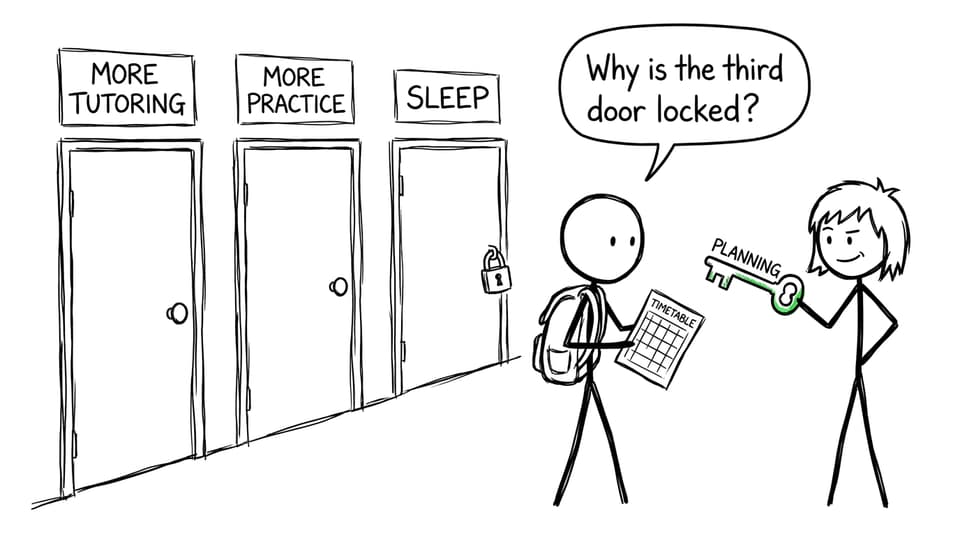
A reassuring budget starts with diagnosis, not fear. Ask the student to complete a timed task and sort each lost mark into one of four categories: missing knowledge, weak application, misunderstood instructions, or poor timing.
Then match the solution to the problem:
- Missing knowledge: use Study Notes, teacher support, or a tutor who can reteach the concept.
- Weak recall: use short, repeated Flashcard sessions.
- Weak application: complete targeted Questionbank sets and review errors.
- Poor timing: schedule Mock Exams under controlled conditions.
- Persistent confusion: book focused tutoring with the work already prepared.
This approach avoids paying a tutor to supervise activities the student can complete independently. It also avoids the opposite mistake: leaving a serious misconception untouched because cheaper resources are available.
The sensible next step
IB tutoring typically costs around $50 to $100 per hour, although the full market extends below and well above that range. The right amount to spend depends on the specificity of the problem, the tutor's fit, and whether the student practises between lessons.
Start small. Diagnose the weakness, calculate the full term cost, and test the arrangement before purchasing a large package. Use human expertise where judgment and individual explanation matter most, then support it with a system the student can use every day.
RevisionDojo is built to be that system. Its Questionbank, Study Notes, Flashcards, AI Chat, Grading tools, Predicted Papers, Mock Exams, Coursework Library, and Tutors help turn occasional support into a continuous learning process. Explore the complete RevisionDojo IB exam-preparation platform and choose the level of support that fits both the student's needs and the family's budget.